Nag Panchami is a very popular festival in the Hindu calendar and is celebrated in the name of Nag Devatas (serpent deities). According to Vedic astrology, this day is considered highly auspicious for performing remedies related to Kaal Sarp Dosha, as it is believed to provide enhanced spiritual protection, remove karmic obstacles and attract divine blessings from the serpent deities.
What Is Kaal Sarp Dosha?
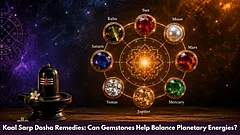
Kaal Sarp Dosha is an important planetary combination described in Vedic astrology. It is said to occur when the seven traditional planets—Sun, Moon, Mars, Mercury, Jupiter, Venus, and Saturn—are positioned between the lunar nodes, Rahu and Ketu, in a person's birth horoscope. Rahu and Ketu are shadow planets and are related to karmic impacts, change and the invisible forces of existence.
There are numerous varieties of Kaal Sarp Dosha depending on the location of Rahu and Ketu in different houses. Classical texts and traditional astrologers suggest that its effects vary widely according to the overall horoscope. Factors such as planetary power, benefic aspects, yogas, ascendant, and current planetary phases (Mahadasha and Antardasha) affect how strongly the yoga affects an individual.
People who believe they are affected by Kaal Sarp Dosha often associate it with repeated delays, career instability, emotional stress, financial fluctuations, relationship challenges, or a feeling that success comes only after persistent struggle. However, many renowned personalities are also believed to have had this yoga in their horoscopes, demonstrating that Kaal Sarp Dosha is not necessarily a sign of failure. Instead, many astrologers interpret it as an indication of intense karmic lessons, inner transformation, and spiritual evolution.


For this reason, Vedic astrology places a higher emphasis on cures that inspire self-discipline, devotion, generosity, and spiritual growth rather than fear of the dosha itself.
Why Is Nag Panchami Associated With Kaal Sarp Dosha?
Nag Panchami is dedicated to the worship of serpent deities such as Sheshnag, Vasuki, Takshaka, Karkotaka, Padma, Mahapadma, Kulika, and Ananta. In Hindu belief, these holy serpents are considered protectors of cosmic order, sacred wisdom, fertility, and hidden spiritual powers.
The association between Nag Panchami and Kaal Sarp Dosha derives from the metaphorical connection of Rahu and Ketu with serpentine energy. Rahu represents the head of the heavenly serpent, while Ketu represents its tail. Because Kaal Sarp Dosha is generated through the impact of these two shadow planets, worshipping the Nag Devatas on this auspicious day is traditionally considered to help calm their karmic repercussions.
Another essential part of Nag Panchami is its link with Lord Shiva, who wears the serpent Vasuki around His neck as a symbol of complete control over fear, ego, and bad forces. Devotees believe that prayers performed to Lord Shiva and the Nag Devatas on this day enhance protection, wisdom, and inner equilibrium.
There is also a bigger spiritual meaning to the festival. Snakes are a symbol of rejuvenation since they shed their skin, a symbol of metamorphosis, release of previous burdens and spiritual enlightenment. So, Nag Panchami is not just a day for astrological cures but also a time to practise humility, appreciation, forgiveness, and reverence for nature.
Many astrologers believe that remedies performed on this day become especially meaningful because the devotional atmosphere encourages sincere prayer and positive intention. While no ritual can erase karma instantly, spiritual practices may strengthen one's ability to face life's challenges with greater resilience and clarity.
Which Remedies Are Traditionally Performed on Nag Panchami?
Various traditional remedies are performed on Nag Panchami to seek blessings of the Nag Devatas and to reduce the ill effects of Rahu, Ketu and Kaal Sarp Dosha and is considered auspicious.
Nag Devta Worship:
Devotees worship idols or pictures of Nag Devatas and appeal to the snake deities. Usually flowers, sandalwood paste, turmeric, kumkum, Akshata (unbroken grains), fruits, coconut and sweets are offered as a token of devotion.
Shiva Abhishekam:
Devotees perform Rudrabhishek by presenting water, milk, honey, curd, ghee and Bilva leaves to the Shiva Linga while reciting sacred mantras like “Om Namah Shivaya” or Maha Mrityunjaya Mantra. Lord Shiva is very much related with snakes.
Chanting the Rahu and Ketu mantra:
Rahu Beej Mantra and Ketu Beej Mantra are traditionally considered to bring mental serenity and spiritual equilibrium. Some devotees also repeat Nag Gayatri Mantra or other prayers relating to serpents depending upon family traditions.
Random Acts Of Kindness And Love:
Many people contribute food, clothes, grain or money to the poor. Charity is an important remedial step in Vedic astrology, as it helps in generating positive karma and also induces humility.
Fasting:
Another traditional practice is to keep a fast on Nag Panchami. Usually following the worship, devotees have fruits, milk or basic vegetarian food.
Respect for the Nature:
Much of the festival is about compassion for snakes and conserving nature. Devotees are advised to worship symbolic representations and not to disturb or capture live snakes and to advocate environmental conservation.
These cures are considered to help in increasing the spiritual consciousness, to decrease the bad tendencies and to bring in inner peace. They are important not just for ceremonial observance but also for developing dedication, discipline and ethical conduct.
Nag Panchami occupies a special place in both Hindu spirituality and Vedic astrology. It is also an important occasion to perform Kaal Sarp Dosha-related remedies because of its association with serpent deities and symbolic energies of Rahu and Ketu. Traditionally, these activities were thought to enhance protection, harmony and spiritual progress. However, astrology also tells us that the real foundations of permanent well-being are human effort, virtuous action and earnest dedication.

FAQs:
Can Nag Panchami completely remove Kaal Sarp Dosha?
In traditional Vedic astrology, Nag Panchami practices are believed to diminish the problems of Kaal Sarp Dosha, but not necessarily to totally eliminate it. The effects of any combination of planets are conditioned by the whole birth chart, the planetary periods and the activities of the individual. Rituals are not definitive answers but helpful spiritual practices.
Who should perform these remedies?
Devotees observe the traditional way of Nag Panchami treatments to gain blessings for health, wealth, family harmony and spiritual protection. Individuals having Kaal Sarp Dosha, Sarpa Dosha or major Rahu Ketu in their horoscope can take these cures after contacting a skilled Vedic astrologer. But anyone can observe Nag Panchami with devotion as a show of faith, thanks and reverence for the divine and the natural world.