Kidney beans (rajma) are consumed all over the world for their nutritional value. In India, rajma is grown traditionally during the kharif (summer and monsoon) season and is considered a high-value cash crop.
In Uttarakhand, several varieties are grown – like Munsyari Rajma from Pithoragarh), Chakrata Rajma in Dehradun, Harsil Rajma of Uttarkashi and Joshimath Rajma (Chamoli). These are distinctive in their quality, taste, and nutritional values.
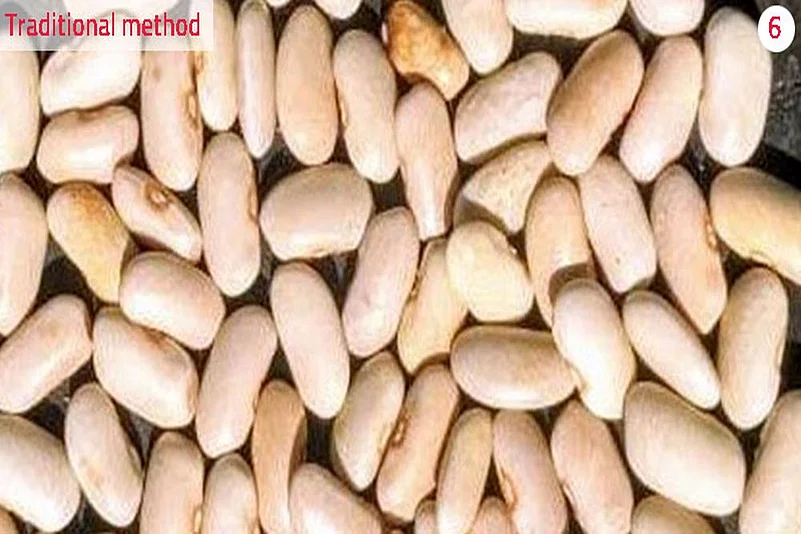
But worms often cut the life of emerging young seedlings. Farmers often sow four or five seeds in the same place, which leads to overcrowding. The optimal plant-to-plant and line-to-line distance cannot be maintained.
These varieties are climbers and once the seedlings germinate, farmers need to harvest bamboo and other trees with straight trunks for use as stakes.
Since every plant needs to be staked, farmers often end up with thousands of wooden stakes on every patch of cultivated land. This practice not only adds many hours to the farmers’ already-busy season, but the forest ecosystem is harmed by the inordinate amount of wood that needs to be collected every season.
Also, due to the dense canopy, the lower leaves of the climbers turn yellow and fall off at an early stage. It also leads to fungal diseases.