



Pakistan has nominated Climate Change Minister Musadik Masood Malik to represent Islamabad at the SCO Civilisational Dialogue Forum in New Delhi from November 20 to 22
The visit will be the first by a Pakistani minister to India since Bilawal Bhutto Zardari attended the SCO foreign ministers' meeting in Goa in May 2023
Prime Minister Narendra Modi is scheduled to inaugurate the forum, which aims to promote cultural understanding and civilisational ties among SCO countries
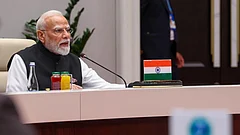
Pakistan is set to send a federal minister to India for the first time in more than three years. Climate Change and Environmental Coordination Minister Musadik Masood Malik will travel to New Delhi for the Shanghai Cooperation Organisation (SCO) Civilisational Dialogue Forum, scheduled from November 20 to 22 and due to be inaugurated by Prime Minister Narendra Modi.
Pakistan’s foreign ministry said Malik will represent Islamabad at the three-day gathering. In a statement, it said the government had nominated Dr Malik, the Federal Minister for Climate Change and Environmental Coordination, to represent Pakistan at the dialogue in New Delhi from November 20 to 22, 2026. It added that Pakistan “remains committed to promoting dialogue among civilisations” and fostering people-to-people contacts within the SCO framework, in a spirit of mutual respect.
The last high-level visit from Pakistan to India was by then Foreign Minister Bilawal Bhutto Zardari, who travelled to Goa in May 2023 for a meeting of SCO Foreign Ministers. Malik’s trip will end a gap of more than three years.




A Forum Built Around Culture
The inaugural forum will bring together representatives of SCO member countries for discussions on cultural understanding and civilisational ties. The Union ministries of Culture and External Affairs are jointly organising the event.
The announcement came as Union Culture Minister Gajendra Singh Shekhawat reportedly said on Friday that 15 countries, including China, Kazakhstan, Iran, Tajikistan and Uzbekistan, had confirmed their participation. He expressed hope that Pakistan would attend as well.
Speaking to reporters at Bharat Mandapam, Shekhawat was asked whether sensitive issues involving Pakistan and China, including terrorism, the border and bilateral disputes, could come up at the forum. According to reports, he said the focus would remain on cultural and civilisational ties rather than geopolitical differences. He argued that India and Pakistan share a common historical and cultural evolution despite their political separation, and said he saw little possibility of differences on that subject. “Their evolution has happened parallelly with us,” he reportedly said of Pakistan.
Shekhawat added that geopolitical, strategic and bilateral issues do exist between countries. The forum, he said, would look at ways to strengthen cultural relations and create greater dialogue and harmony among people.

What The Forum Seeks To Do
The SCO Civilisational Dialogue Forum is an initiative under the SCO framework. It is designed to promote cultural understanding, foster people-to-people ties and showcase the shared historical and spiritual heritage of Eurasian civilisations.
The SCO was established in 2001, when China, Russia, Kazakhstan, Kyrgyzstan, Tajikistan and Uzbekistan came together to form the grouping. It has expanded significantly since then, and its full members now include India, Pakistan and Iran alongside the six founders. India and Pakistan joined as full members in 2017, and Iran secured permanent membership in 2023.
The organisation describes its core objectives as building trust and friendly relations among member states, and using multilateral cooperation to promote regional peace, security and stability. Its wider network also extends beyond full members through observer and dialogue-partner categories.








