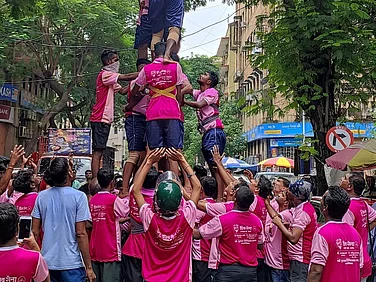
Every year, the day after Krishna Janmashtami, thousands of enthusiastic participants gather across India to celebrate Dahi Handi. The festival is known for its breathtaking human pyramids, where teams of "Govindas" work together to reach and break a suspended earthen pot filled with curd, butter, sweets, or flowers.
While the event is packed with excitement and energy, safety has become a major focus in recent years. Organisers, local authorities, and Govinda teams now follow strict guidelines to ensure that celebrations remain both thrilling and secure.
Here's a closer look at how Dahi Handi human pyramids are organised and the safety rules that help protect participants.
Why Safety Matters in Dahi Handi
Building a human pyramid is a challenging physical activity that requires strength, balance, coordination, and teamwork. In large celebrations, pyramids can reach several levels high, making safety precautions essential.
Over the years, awareness about participant welfare has increased significantly. Today, many cities have established safety measures that focus on reducing injuries while preserving the spirit of the tradition.
The Structure of a Human Pyramid
A Dahi Handi pyramid is carefully planned rather than formed spontaneously.
The Base Layer
The strongest and most experienced members stand at the bottom. Their role is to create a stable foundation capable of supporting the weight of multiple layers above them.
Participants in the base layer maintain a wide stance and remain firmly balanced throughout the attempt.
Middle Layers
The middle section is made up of agile and well-trained participants who distribute weight evenly while helping climbers move upward.
These members act as the connecting support between the base and the topmost climber.
The Top Climber
The youngest and lightest participant often occupies the top position. Commonly known as the "Govinda" or "Pathak's topper", this climber reaches the suspended handi and breaks it to complete the challenge.
Training Before the Event
Successful Govinda teams spend weeks and sometimes months preparing for Dahi Handi.
Training typically includes:
Strength-building exercises
Balance and flexibility drills
Pyramid formation practice
Coordination training
Emergency response preparation
Regular practice helps participants understand their positions and responsibilities within the pyramid.
Use of Safety Gear
Many teams now use protective equipment during practice sessions and competitions.
Common safety measures include:
Helmets for climbers
Knee and elbow guards
Grip-enhancing footwear
Safety mats around the pyramid area
Cushioned landing zones
The use of safety gear has become increasingly common, particularly at large public events.
Water Spraying and Safety Precautions
Traditionally, spectators often spray water on Govinda teams to increase the difficulty of the challenge. However, excessive water can make surfaces slippery and increase the risk of falls.
Many organisers now regulate water usage and ensure that the competition area remains as safe as possible for participants.
Medical Teams on Standby
Large Dahi Handi events generally include emergency medical arrangements.
These often include:
Ambulances stationed nearby
First-aid teams
Medical volunteers
Emergency response personnel
Quick access to medical assistance helps organisers respond effectively if an accident occurs.
Crowd Management Is Essential
Safety extends beyond the pyramid itself. Since major Dahi Handi celebrations attract thousands of spectators, organisers implement crowd-control measures to avoid congestion and maintain clear emergency access routes.
Barricades, designated viewing areas, and security personnel help ensure smooth crowd movement throughout the event.
The Importance of Team Coordination
One of the most important safety factors is communication. Team members constantly coordinate during the pyramid-building process.
Experienced leaders guide participants, monitor balance, and decide whether it is safe to continue climbing. If stability becomes a concern, teams may choose to dismantle the pyramid and try again. This emphasis on coordination helps prevent unnecessary risks.
Modern Technology Is Improving Safety
In recent years, organisers have started using technology to improve safety standards.
Some events now feature:
CCTV monitoring
Drone surveillance
Public announcement systems
Professional event management teams
These tools help organisers monitor crowd behaviour and respond quickly to any safety concerns.
Balancing Tradition and Responsibility
Dahi Handi is much more than a competition. It celebrates teamwork, determination, trust, and devotion to Lord Krishna. While the excitement of building a human pyramid remains at the heart of the festival, modern safety practices ensure that participants can enjoy the tradition responsibly.
The sight of Govinda teams working together to reach the handi continues to inspire spectators every year. Thanks to better planning, training, and safety measures, Dahi Handi remains one of India's most thrilling and beloved festival traditions while prioritising the well-being of everyone involved.
As chants of "Govinda Ala Re" fill the air, the festival stands as a powerful example of how age-old traditions can evolve while preserving their cultural spirit.