



India has made considerable progress in haemophilia treatment, with newer medicines, improved diagnosis and preventive therapies offering patients the possibility of leading near-normal lives. Yet, for thousands of people living with the inherited bleeding disorder, timely diagnosis and access to regular treatment remain major challenges, exposing the gap between medical advances and their availability on the ground.
The concerns came into focus at a two-day conference, ‘Horizon 2026 – Expanding Possibilities in Haemophilia Care’, held recently in the national capital. Experts, clinicians, policymakers and patient representatives discussed the need to strengthen diagnosis, expand preventive treatment and build a more accessible healthcare system, particularly in states where specialised treatment facilities remain limited.
Vaibhav Nehra, Secretary, Haemophilia Society (Delhi), which organised the conference, said the difficulties faced by patients often begin in childhood and extend well into adulthood.
“For people with haemophilia, the challenges are serious and often begin early: delayed diagnosis, uncertain access to clotting factor therapy, repeated bleeds that damage joints and lead to lifelong disability, and the added difficulty of managing inhibitors. Women and girls with bleeding disorders are frequently overlooked. For many families, treatment is far from home and affects schooling, work and independence.
“At HORIZON 2026, specialists including clinicians, policymakers and experts from across the country discussed the need to strengthen early diagnosis and genetic counselling alongside advances in treatment. The programme covered modern factor and non-factor therapies, individualised prophylaxis, inhibitor management, joint protection, home-based care, and treatment access and procurement. It also puts patients’ voices in the room,” Nehra added.


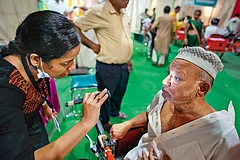
The scale of the problem is evident from the World Federation of Haemophilia's Annual Global Survey 2024, which estimates that India has around 1.4 lakh people living with haemophilia. However, only about 26,352 have been diagnosed and registered, leaving a large proportion outside the formal treatment network.
Also, despite the availability of multiple treatment options, access to preventive care remains uneven across states. Kerala, Karnataka, Tamil Nadu and Maharashtra have introduced government-funded low-dose prophylaxis programmes, while several other states continue to rely largely on on-demand treatment.
Prof Dr Mukul Aggarwal, Additional Professor, Clinical Haematology, AIIMS Delhi called for better accessibility as he discussed the evolution of recombinant Factor VII in haemophilia care and beyond. Patients are vulnerable to prolonged bleeding, including spontaneous bleeds into joints and muscles. Repeated episodes can cause irreversible joint damage, chronic pain and disability, he said.
Haemophilia is a genetic disorder in which the blood does not clot properly because of a deficiency of specific clotting factors. Haemophilia A results from a deficiency of factor VIII, while haemophilia B is caused by a deficiency of factor IX.
Dr Tulika Seth, Professor of Haematology at AIIMS Delhi, noted, "We have moved from an era of plasma-based treatments like FFP and cryoprecipitate to a much more advanced therapeutic landscape. Greater availability of clotting factors and newer treatment options are improving patient outcomes.”
She also stressed the importance of identifying female carriers through appropriate testing and offering prenatal diagnosis to pregnant women with a family history of haemophilia.
Dr Nita Radhakrishnan, Head, Department of Paediatric Haematology-Oncology, PGICH, Noida, also highlighted the potential of non-factor therapies in reducing the burden of frequent infusions.
“Historically, haemophilia management relied on frequent factor infusions, with challenges such as difficult venous access in children, fluctuating factor levels, breakthrough bleeding and substantial treatment burden.
“The emergence of non-factor replacement therapies marks an important shift from treating bleeding to preventing bleeding, offering the possibility of continuous, sustained haemostatic protection. Fitusiran is one such therapy that rebalances haemostasis, with the potential to provide effective bleed prevention irrespective of factor VIII or IX inhibitor status.
“As haemophilia treaters, we look forward to therapies that offer better protection and allow our patients to lead lives as close to normal as possible. Ultimately, when haemophilia no longer dictates their daily choices, children can focus on learning, playing, growing and realising their full potential. These advances are therefore a welcome step forward in haemophilia care.”
Emicizumab is another important development, particularly for people with haemophilia A who develop inhibitors against factor VIII. Unlike conventional factor replacement, it is administered through injections under the skin at less frequent intervals.
Dr Sudhir Atri, Senior Professor of Medicine and Clinical Haematology at Pt Bhagwat Dayal Sharma (PGIMS), Rohtak, Haryana, talked about extended half-life (EHL) clotting-factor therapies, which remain in the body for longer and can reduce the frequency of infusions, easing the treatment burden on patients.
Dr Sheikh Bilal, Head of Department, Pathology, Government Medical College, Srinagar, Kashmir, too opined that timely intervention could make a substantial difference to the lives of people with haemophilia.
Unlike several other rare disorders, haemophilia has established treatment options, and appropriate replacement of deficient clotting factors can help patients lead near-normal lives. Early diagnosis and uninterrupted treatment are therefore crucial.
Dr Nehal Patel, Professor and Head of the Department of Paediatrics at GMERS Medical College and Civil Hospital, Sola, Ahmedabad, too batted for prophylaxis, which she said, had become the standard of care in developed countries, with more than 90% of children and adults receiving preventive treatment in countries such as the Netherlands, Ireland and the UK.
She pointed out that the approach is also gaining ground in emerging economies, although access varies considerably. According to the World Federation of Haemophilia's Annual Global Surveys for 2020 and 2021, around 65% of children and 74% of adults with haemophilia in Brazil were receiving prophylaxis. In South Africa, the corresponding figures were 50% and 30%, while Sri Lanka reported 45% among children. In Côte d’Ivoire, only 27% of children and 2% of adults received preventive treatment.
India, however, continues to lag behind, with fewer than 10% of people with haemophilia estimated to be receiving prophylaxis.
Dr Vandana, a pathologist, also drew attention to the wider problem of underdiagnosis in rare bleeding disorders.
“Many rare bleeding disorders remain undiagnosed, leaving patients to move from one doctor to another without getting the answers and care they need. Recognising these conditions early and reaching an accurate diagnosis can make a real difference,” she said.
However, experts cautioned that treatment choices need to be individualised. Dr Sunita Aggarwal, Director Professor in the Department of Medicine at Lok Nayak Hospital (LNJP) and Maulana Azad Medical College (MAMC), Delhi, pointed out that every patient has different clinical needs and that a uniform treatment approach may not work for everyone.
Prem Roop Alva, President, Haemophilia Federation of India (HFI), spoke about the evolution of haemophilia care and noted that several pharmaceutical companies were now offering a wider range of treatment options. “Preventive treatment can reduce recurrent bleeding, protect joints from progressive damage and allow children to attend school and participate in physical activities with fewer interruptions.”
But access to medicines alone is not enough. Detecting joint damage early, ensuring rehabilitation and making physiotherapy an integral part of treatment are equally important.
Dr Vikash Katewa, a paediatrician based in Jodhpur, Rajasthan, associated with haemophilia care at Umaid Hospital and MDM Hospital, Jodhpur, a listed Haemophilia Treatment Centre, discussed ways to identify early joint deterioration to prevent long-term disability, while Dr Jai Juvekar, haemato-oncologist at KEM, Mumbai, highlighted the role of physiotherapy in helping patients recover and maintain mobility after bleeding episodes.
Health experts stressed that early diagnosis, wider access to preventive treatment and stronger treatment and rehabilitation networks are essential to prevent long-term disability and help people with haemophilia lead healthier, more independent lives.








