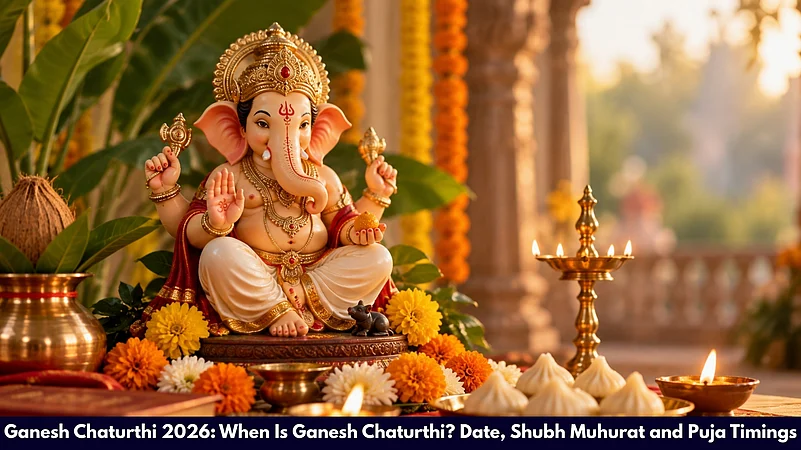
The Ganesh Chaturthi festival will be celebrated on Monday, September 14, 2026. This day will mark the beginning of the Ganesh Utsav, which will continue for ten days and will witness the ceremonial installation of Lord Ganesha in houses and public pandals across India.
When Is Ganesh Chaturthi 2026?
In 2026, Ganesh Chaturthi (Vinayaka Chaturthi) is observed on Monday, September 14. The festival begins on Bhadrapada Shukla Paksha Chaturthi and traditionally concludes with Anant Chaturdashi and Ganpati Visarjan on Wednesday, September 23, 2026.
The Chaturthi tithi (lunar day) for Ganesh Chaturthi starts at 7:06 AM on September 14 and ends at 7:44 AM on September 15, 2026. Because the tithi spans two calendar days, the main worship and idol installation are performed on the first day—September 14—when the tithi is present during daytime.
Shubh Muhurat and Puja Timings:
On September 14, Madhyahna is the period of noon during which Ganesh Sthapana (erection of idols) and Ganesh Puja are considered most auspicious.
The muhurat differs slightly from city to city due to local dawn and panchang calculations, but here is a list of important references:
Madhyahna Ganesh Puja Muhurat: In New Delhi, it is between 11:02 AM and 1:31 PM. The Sthapana Muhurat in Mumbai will be from 11:20 am to 1:48 pm.
The puja muhurat is around two hours and twenty-seven minutes and is considered appropriate for seeking the blessings of Ganesha at the commencement of the festival. If you cannot perform rituals exactly in this window, then the daytime hours on September 14 (when the Chaturthi tithi is active) are still considered auspicious for home pujas and community celebrations.



Tithi and Key Timings at a Glance:
Chaturthi Tithi Begins: 7:06 AM, September 14, 2026.
Chaturthi Tithi Ends: 7:44 AM, September 15, 2026.
Ganesh Chaturthi (main observance): Monday, September 14, 2026.
Ganesh Utsav Duration: 10 days, culminating in Visarjan on September 23, 2026.
How Ganesh Chaturthi Is Celebrated:
Devotees either take-home clay idols of Lord Ganesha or visit the local pandals for darshan from the community. The Sthapana ceremony includes a component called 'pranapratishtha', meaning ‘invoking life into the idol’. Next is the 16-step Shodashopachara puja, in which flowers, incense, lamps, sweets (particularly modak) and Ganesha mantras are offered. Throughout the next ten days, families and communities will perform aartis, bhajans and cultural performances on a daily basis. 23rd September: Anant Chaturdashi: The festival marks the return of Ganesha to Mount Kailash and the cycle of creation and dissolution. In this festival, idols are taken out in processions for Visarjan in water bodies.
Practical Tips for 2026 Observance:
Confirm local muhurat: City-wise timings can differ by 10–20 minutes; check a trusted panchang or temple notice for your area.
Eco-friendly idols: Many cities encourage clay, natural-colour idols to reduce environmental impact during Visarjan.
Avoid Rahu Kaal: For extra caution, some families schedule Sthapana outside Rahu Kaal; the midday muhurat generally avoids this period.
Why the Midday Muhurat Matters:
Madhyahna kala, from late morning to early afternoon, is traditionally favoured as it falls during the peak of the Chaturthi tithi and stable planetary positions, which are most conducive for new beginnings. Offering Sthapana within this time is believed to bring the maximum amount of good fortune in the entire 10-day festival.

Ganesh Chaturthi 2026 arrives as a vibrant celebration of faith, unity, and new beginnings across India and beyond. Devotees welcome Lord Ganesha with elaborate pandals, traditional rituals, and heartfelt prayers, seeking blessings for prosperity and wisdom. The festival fosters community spirit through cultural programs, processions, and immersion ceremonies, embodying devotion and joy.