The fate of 12 lakh voters hangs in the hands of the tribunals formed under the apex court’s instructions. Roughly 30 lakh voters still await adjudication.
As for the assembly segment-wise trend of the 2024 parliamentary elections, the BJP led in 90 assembly segments while the TMC led in 192.
The math, however, is also changing. Thanks to the SIR. The process turned out to be full of flaws resulting in wide-ranging errors.
The Perpetual Warrior: Didi In Her Favourite Shoes
As the political spotlight shifts to Special Intensive Revision deletions, Mamata Banerjee gets a breather—instead of answering uncomfortable questions over her 15-year rule, she is getting to ask questions

Summary
Blue-white slippers may have become a symbol intrinsically associated with West Bengal Chief Minister Mamata Banerjee, but it’s not what comforts her feet the most.
The politician, frequently referred to as “firebrand” and “streetfighter”, has always been most comfortable in the shoes of an opposition leader. The Election Commission of India’s (ECI) Special Intensive Revision (SIR) of the electoral rolls and subsequent administrative orders may have just gifted the Trinamool Congress (TMC) helmswoman that pair of shoes. Instead of facing questions, she is now busy asking them and hurling charges.
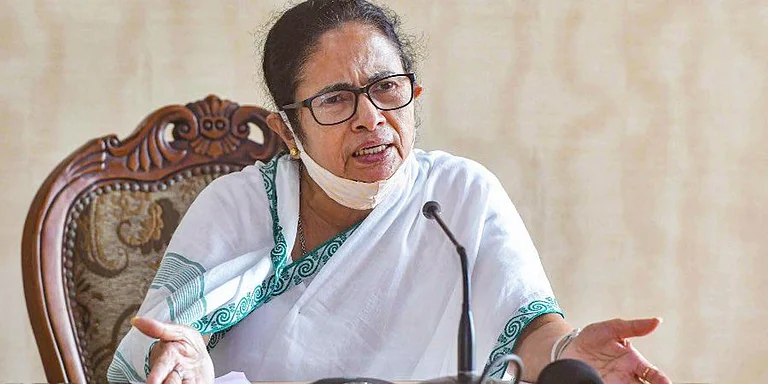
Bengal is undergoing a phase of “an undeclared Emergency and an unpromulgated form of President’s Rule driven by political vendetta”, Banerjee alleged in the third week of March.
She was responding to the unprecedented ECI orders transferring more than 50 senior officials—including the Chief Secretary, Home Secretary, Director General of Police (DGP), additional DGPs, Inspectors General of Police, District Magistrates and District Superintendents of Police—in a span of just 48 hours. Most of them were shunted out of the state, deputed to other poll-bound states on election duties.
The manner in which the ECI has “singled out and targeted Bengal” is deeply alarming, she said. She called the transfers “political interference of the highest order”. She held the removals of senior officers from critical agencies like the Intelligence Branch and the Special Task Force of the Kolkata Police and the Criminal Investigation Department (CID) as “a calculated attempt to cripple Bengal’s administrative machinery”.
The party has made its battle pitch clear: Prime Minister Narendra Modi’s Bharatiya Janata Party (BJP) is using the ECI to unfairly manipulate the electoral management and outcome. The party is fighting, in her words, “a deliberate design to seize control of West Bengal through coercion and institutional manipulation.”
The ECI has frequently hit back, alleging that conducting a free, fair and peaceful election in the state is its priority. Thousands of central paramilitary forces have been deployed soon after the poll dates were announced. The ECI repeatedly blamed the state government in the Supreme Court for creating hindrances. The conflict between the state government, the ECI and other political parties reached such a level that even the Supreme Court started wondering what’s wrong with Bengal.
Advertisement
West Bengal’s final electoral rolls saw the electorate shrink from 7.66 crore to 7.04 crore. Over 62 lakh names were deleted. Many alleged wrongful deletions.
The chaos and uncertainty over the electoral rolls and voters’ anxiety have pushed every other issue in the background, says political scientist Sibaji Pratim Basu, former vice-chancellor of the state’s Vidyasagar University. He senses a growth in public perception that the SIR is a BJP brainchild and that it’s the TMC that is genuinely fighting its illogical and arbitrary outcomes. “This may push people aggrieved by the SIR towards the TMC,” he says.
West Bengal’s final electoral rolls, which was published on February 28, saw the electorate shrink from 7.66 crore to 7.04 crore. Over 62 lakh names were deleted. Many alleged wrongful deletions. Hundreds of appeals against such deletions remain unresolved as of the end of March. The remaining 7.04 crore included another 60 lakh whose names were bracketed as ‘under adjudication’. They were required to submit more clinching documentary evidence afresh.
Advertisement
From the lot of 60 lakh, another 12 lakh have been marked as deleted by the first supplementary roll published in the last week of March. The fate of these 12 lakh voters hangs in the hands of the tribunals formed under the apex court’s instructions. Roughly 30 lakh voters still await adjudication.
The elections will be held in two phases—on April 23 and 29. Will the verdict of tribunals come before the elections? Will clarity on the final electoral rolls come by then? Or, will the election happen without solving the disputes over lakhs of deletions?
It would be a shame for democracy if the elections are conducted without solving disputes around every single wrongful deletion, says senior journalist Aniket Chattopadhyay. He observes that, as of the end of March, a great deal of uncertainty and confusion has kept the electoral rolls scenario in many constituencies unclear. Lakhs of voters are anxious about retaining their basic democratic right.
Advertisement
“The ECI’s abuse of administrative powers is becoming clear to one and all. When in India has the Chief Secretary of a state been removed as soon as the elections were announced? There is no parallel to what they have done in Bengal this time,” he says. Despite all these combined efforts by the BJP and their men holding administrative and constitutional chairs, there is no wind in favour of the BJP, forget any wave, Chattopadhyay says.
The math was on Banerjee’s side anyway. The BJP reached its peak in the state in 2019—winning 18 of the state’s 42 Lok Sabha seats with 40.6 per cent vote share. It marked a lead over other parties in 121 of the state’s 294 assembly constituencies. However, this momentum was lost by the 2021 Assembly election. The BJP won 75 seats, with 38.5 per cent vote share. The party lost 10 more MLAs in byelections and to the TMC’s poaching thereafter.
Advertisement
Soon after Banerjee returned to power for a third consecutive term in 2021, a massive scam in the recruitment of government school teachers and Group C and Group D staff was unearthed through a series of Calcutta High Court verdicts. However, the saffron camp failed to utilise it to regain momentum in the 2024 parliamentary election. They maintained a vote share of 39 per cent, but their tally came down to only 12 Lok Sabha seats. The TMC had managed to increase its vote share significantly since 2019.
As for the assembly segment-wise trend of the 2024 parliamentary elections, the BJP led in 90 assembly segments—still way behind the 147-mark required for gaining majority in the state assembly—while the TMC led in 192.
Immediately after the 2024 Lok Sabha election, large-scale protests broke out against the rape and murder of a junior doctor in Kolkata’s government-run R.G. Kar Medical College and Hospital. That movement lost much of its steam when the federal investigative agency, the Central Bureau of Investigation (CBI), echoed the findings of the Kolkata Police.
This year, the TMC has dropped as many as 74 sitting MLAs from its candidate list. However, the scale of public display of grievances is noticeably low in comparison to previous years.
Recently, in a bid to revive the memories of the movement, the BJP fielded the mother of the R.G. Kar victim from Panihati, a suburban seat north of Kolkata. This has also resulted in a tussle between the BJP and the Left camp over the ownership of the R.G. Kar movement, allowing the TMC to intensify its charge that the protests were a conspiracy jointly hatched by the BJP and the Left.
The BJP, on the other hand, is facing much more internal trouble over candidate selections. The party’s state unit office in Kolkata’s Salt Lake has witnessed a series of agitations, and so have many district unit offices. Basu thinks the way the two parties handled the grievances around candidate selection reflects the TMC’s better grip over party organisation.
“The party is going to come to power in any case. Why rebel? It’s best to wait for the party to give me something else,” says a three-term TMC MLA and former district unit president who got dropped this time.
Union minister Sukanta Majumdar, a former BJP state unit president, sees the internal protests over candidate selection from a different angle. “A section of supporters and organisers are aggrieved because the party’s graph has been high and there are many contenders for every seat,” he argues.
Majumdar sounded confident that the TMC’s attempts to divert public attention from her government’s failure will not succeed. People are getting to see for themselves how the Banerjee government is trying to protect illegal Bangladeshi Muslim migrants, he feels. “People are tired of the TMC’s misrule,” he says.
Most political observers disagree that the BJP’s graph has gone any higher than it was in 2019. They point out that the BJP failed to build any mass movement over the past five years despite having a strength of about six dozen MLAs.
In contrast, the TMC’s graph has risen—from 211 seats with 45 per cent vote share in 2016 to 215 seats with 48 per cent vote share in 2021. Even in the 2024 Lok Sabha election, the TMC’s vote share of 46.16 per cent remained above its 2016 level.
The math, however, is also changing. Thanks to the SIR. The process turned out to be full of flaws resulting in wide-ranging errors. Chief Secretary Nandini Chakravorty, retired Calcutta High Court justice Sahidullah Munshi, university professors, Kargil war veterans and dozens of ECI-appointed booth level officers—all sorts of people found their names in the list of ‘deleted’ or ‘under adjudication’. In many cases, it turns out to be the fault of the ECI-employed artificial intelligence technologies. As a result, lakhs of voters had to run from one office to another, standing in long queues, resembling COVID-19 pandemic-like harassment. This has simultaneously added uncertainty to the electoral equations by altering the composition of the electorate in many seats.
In the list of people ‘under adjudication’, Muslims make up the lion’s share. In the Muslim-majority districts like Murshidabad, Malda and Uttar Dinajpur, Hindus are a marginal minority in several assembly constituencies.
In the list of people ‘under adjudication’, Muslims make up the lion’s share. In the Muslim-majority districts like Murshidabad, Malda and Uttar Dinajpur, Hindus are a marginal minority in several assembly constituencies. There, a split in Muslims votes between the TMC, the Congress and the Left and a consolidation of Hindu votes in the BJP’s favour can push several seats towards the BJP. Such deletions can also backfire on the BJP in the districts of Nadia and North 24-Parganas, where the Matuas, a major saffron voter base, have found thousands of their names deleted.
Since political parties have not been able to strongly resist this de facto citizenship screening in Bengal, it could significantly alter results and margins, believes Sambit Pal, author of the 2021 book, The Bengal Conundrum: The Rise of the BJP and the Future of the TMC. The ECI’s large-scale transfer of officials, though legal, may create administrative chaos and disrupt the ruling TMC’s organisational advantage through heavy central force deployment, he feels.
“For the first time, an election has been announced with lakhs of genuine voters either excluded or uncertain about their voting rights due to adjudication,” Pal says. Despite the BJP’s organisational weakness in Bengal, their micro-management strategy, combined with the SIR, will test how effectively anti-incumbency and Hindutva messaging can influence voters, he feels.

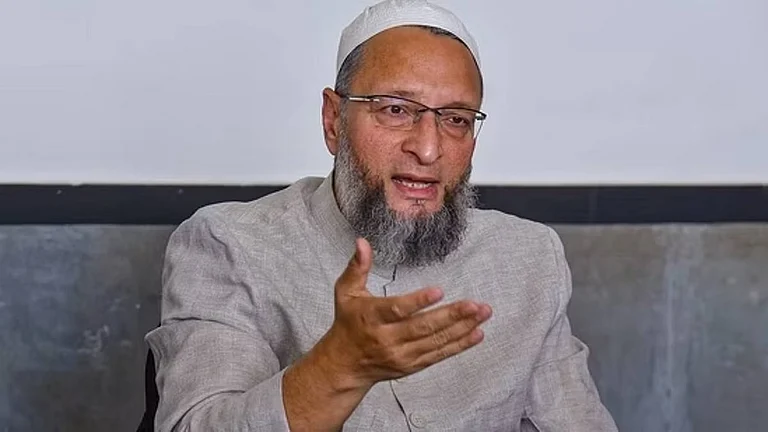
Basu sees the elections largely as bipolar between the TMC and the BJP, with pockets of resistance from the Left and the Congress. However, even in this polarising atmosphere, some new Muslim-centric initiatives are trying to challenge the TMC’s support base among Muslims.
The newborn Janata Unnayan Party (JUP) is tying up with the Hyderabad-based, Asaduddin Owaisi-led All India Majlis Ittehad e Muslimeen (AIMIM). Suspended TMC MLA Humayun Kabir of Murshidabad, the district with the state’s highest Muslim population, launched JUP last year, banking on the sentiments around a Babri Masjid that he has initiated building in the district.
Besides, the Indian Secular Front (ISF), which is in talks with the Left about a seat-sharing arrangement, has also been carrying out a high-pitched campaign in Kolkata’s neighbouring districts like South 24-Parganas and North 24-Parganas, trying to spoil a 2021-like polarisation of Muslim votes in the TMC’s favour.
Basu notes that there has been some disenchantment among Muslims over the TMC, especially with the chief minister’s recent focus on building temples. “Whether or to what extent the sentiments around the Babri masjid can wean Muslims away from the TMC even in such a polarising situation will be an interesting thing to watch out for,” Basu says.
Meanwhile, two opinion polls released in March have predicted comfortable TMC victories. The News18-Vote Vibe survey puts TMC in the lead in 184 to 194 seats, while the BJP remains ahead in only 98 to 108. IANS-Matrize projected 155–170 seats for the TMC and 100–115 for the BJP.
For the TMC, the uncertainty over SIR appears to have removed the complacency factor to a large degree. Apart from promising several new welfare schemes, Banerjee is going all guns blazing, targeting what her party calls the BJP-ECI combine. She alleged that the BJP was “misusing the Vanish Commission” to erase legitimate voters from electoral rolls. She said that Bengal has never bowed to intimidation and it never will. “Bengal will fight, Bengal will resist, and Bengal will decisively defeat every attempt to impose a divisive and destructive agenda on its soil.”
That’s the mood in which her support base wants to see her—the perpetual warrior against powerful rivals.
Snigdhendu Bhattacharya is a journalist, author and researcher
This article appeared in Outlook’s April 11 issue titled ‘ Warlord’ that focuses on the aggression unleashed on Iran by US President Donald Trump and the repercussions that are being felt across the globe with no end in sight.
Published At:
Tags