Muslim workers and organisers were central to Left mobilisation across India but remain missing from official histories.
From Bihar’s railway colonies to Bengal’s mills, their labour built the movement while leadership remained upper-caste and Hindu.
A century-long pattern of erasure, from Hasrat Mohani to modern unions, weakened the Left’s connection with Muslim communities.
Forgotten By The Left — How Muslim Organisers Built Labour Movements And Were Written Out
How generations of Muslim organisers built India’s Left movements yet vanished from party memory and leadership

Summary
Growing up in Patna I never met my nana. When I finished high school and began asking about my grandparents, Ammi told me he had abandoned his wife and children and that the family was estranged. Years later, almost in a whisper, I learned he had been a “Communist”, a word that carried stigma in our conservative Muslim household. Being a Communist meant stepping outside the boundaries of community respectability. Two years later, I finally met him.
He was a short, wiry man in his late sixties, almost fragile in appearance, yet his eyes held a quiet determination. Introverted, he moved through the old neighbourhoods of Patna with a familiarity that suggested decades of relationships. I began meeting him secretly. After coaching classes, I wandered through the lanes he frequented, hoping to encounter him. Once, he told me about the Emergency—how he had gone “underground,” and how he and his comrades spent nights pasting anti-Congress posters across the city, disappearing before dawn. He spoke without pride, only with the matter-of-fact acceptance of someone who had lived through the consequences. Then I left to Delhi for college.

A few months later Ammi told me he had died alone; the neighbours discovered it a day later. I cried in my hostel room, grieving a man I barely knew. Years later, as a journalist, I tried to trace the outlines of his political life, but most of his comrades had died or drifted away. The search left me with a deeper question: How many Muslim communists, organisers, cadre, and foot soldiers in Bihar gave their lives to the movement and left behind no trace? What happened to the Muslims the Left forgot?
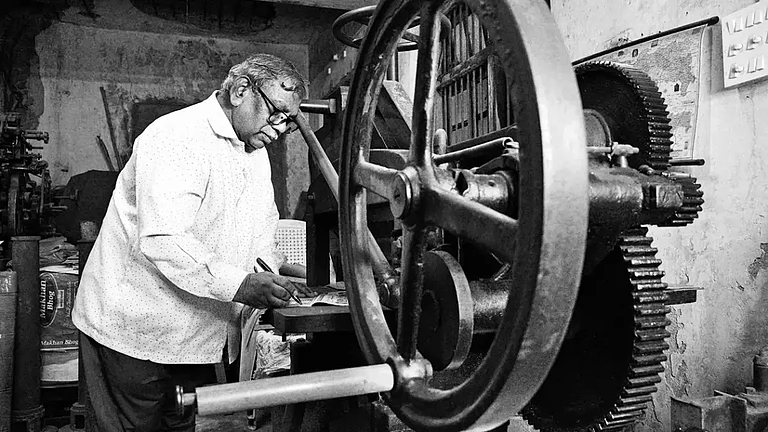
In the railway colonies of Samastipur, a labyrinth of machine sheds, quarters, and the clang of repairing engines, the name Mohammad Jalees appears occasionally in conversation. He seems absent from party monographs, memoirs, ideological journals, and Left histories. His presence survives only in bureaucratic margins: scattered references in All India Railwaymen’s Federation (AIRF) circulars and CITU-linked meeting minutes from the late 1980s and early 1990s. These modest documents confirm his significance. Jalees served as an organiser for railway workshop workers during a period of profound transformation, when contractorisation, and administrative restructuring reshaped public-sector employment. His work—representing labourers in departmental inquiries, mediating wage disputes, organising strikes—placed him at the centre of one of Bihar’s most important labour sectors.
Advertisement
Workers across Samastipur, Darbhanga, Barauni, and Muzaffarpur encountered him in union rooms and negotiation halls, yet the official record retains only his name. His contributions exist without biography.
This is not an anomaly. It is a structural pattern. Most Muslim organisers in Bihar’s Left history appear just enough to confirm their existence but not enough to inhabit institutional memory.
Across the state, similar figures surface briefly in economic surveys, labour studies, election records, or cooperative documents. Leaders such as Md. Samsuddin in Araria, Md. Yunus Ansari in Jokihat, and Md. Nausar Ahmad in Kishanganj are visible in electoral archives but invisible in party histories. Labour-sector organisers like Enhus Ansari in Darbhanga and Naushad in Bhagalpur appear in weaving and silk studies, not in political narratives. Women like Rukhsana Khatoon and Sabina Parveen show up in research on women’s labour but not in AIDWA or CITU commemorations. Their erasure reveals something essential: the Left depended deeply on Muslim labour but rarely recorded Muslim leadership.
Advertisement
The question then becomes: Was Bihar exceptional, or was it a microcosm of a national pattern?
The National Picture: Muslims Built the Left, but the Left Forgot Muslims
To understand whether Bihar’s story reflects a broader truth, one must examine the major arenas of Left politics—Kerala and West Bengal. Despite their regional differences, the same architecture of erasure emerges. In Kerala, where Muslims constitute a large and visible part of society, the CPI(M) has had Muslim ministers and MLAs. Yet the deeper landscape of representation reveals stark limits. Muslims formed the backbone of coir, cashew, and beedi labour movements; Muslim women were central to cashew workers’ struggles in Kollam. Their work is documented in labour histories, yet CPI(M)’s official narratives emphasise upper-caste male leaders and theoreticians. Even in India’s most inclusive Left terrain, the leadership pipeline remained dominated by Hindu upper-caste men for decades.
Advertisement
In West Bengal, the marginalisation was even more pronounced. Muslims constituted significant portions of jute mill labour, bidi workers in Murshidabad, agricultural labour in Malda, and powerloom workers in Howrah and Metiabruz. Yet during 34 years of Left Front rule, fewer than fifteen Muslim MLAs were elected on Left tickets, despite Muslims forming nearly 27 percent of the population. Muslim organisers appear in wage board submissions, tribunal records, and union minutes, but not in CPI(M)’s official histories.
The Politburo and State Committee remained overwhelmingly Hindu upper-caste throughout the period. Bengal most clearly illustrates the national pattern: Muslim labour participation was substantial; Muslim leadership remained negligible. The bhadralok-dominated communist leadership never seriously invested in producing Muslim leaders or intellectuals from the rural districts. Bengali communists, drawn largely from the bhadralok, did not allow the Muslims of Bengal to emerge as educated people in the rural areas, and that a Muslim chief minister from the communist fold was structurally unthinkable. That is itself a form of erasure: an entire community is present in the party’s electoral arithmetic and in its mass organisations, but mostly absent from its history books and top committees.
Advertisement
Why This Happened Nationally: A Shared Architecture of Erasure
But most importantly, the story of Muslim participation in India’s Left begins long before the railway colonies of Samastipur or the weaving lanes of Darbhanga. It begins with men like Hasrat Mohani, whose politics embodied a paradox the Left never fully resolved. Mohani prayed five times a day, went for Hajj, and kept Ramadan, even as he articulated some of the earliest socialist principles in India. He travelled to Baku in 1921 for the Congress of the Peoples of the East, aligning Indian anti-colonial struggles with global communist thought. He demanded Poorna Swaraj before anyone in Congress dared, and he wrote poetry that carried the emotional weight of rebellion — “Inquilab Zindabad” — a slogan that communists, socialists and revolutionaries would later claim as their own.
Yet Mohani’s ideological daring and intellectual labour rarely appear at the centre of the Left’s self-narration. He is remembered, when at all, as a romantic revolutionary or a side character in the freedom movement — not as a founder whose ideas anticipated much of what the Left later formalised. His marginalisation at the origin point of Indian communism foreshadowed a century-long pattern: Muslims were crucial to the Left’s construction, but rarely included in its memory or leadership.

After Mohani came others who attempted to bridge intellectual radicalism with social transformation. Muzaffar Ahmad, another Muslim pioneer, helped establish the Communist Party of India in the 1920s and faced repeated colonial repression. Kunwar Mohammad Ashraf, an eminent historian and CPI organiser, brought Marxist analysis into conversation with India’s diverse cultural and religious life. He questioned caste, defended peasant rights, and theorised syncretic traditions within a radical framework. Yet their names, like Mohani’s, stand at the edges of Left historiography, overshadowed by upper-caste Hindu leaders who became the canonical faces of communism.
The pattern that began at the top deepened at the bottom. As the Left expanded into working-class and agrarian struggles, Muslims became some of its most committed organisers — not through theoretical debates but through the precarious worlds of mills, workshops, bidi factories, looms, quarries, and agricultural fields. They built the everyday infrastructure of Left mobilisation: union rooms, clandestine meetings, strike committees, relief work after riots, and tenant struggles against landlords. They served as shop-floor negotiators, district convenors, and block-level organisers. Their commitment rested not only on ideological belief but also on their lived experience of poverty, discrimination, and vulnerability.
Yet, despite their indispensable labour, most of these organisers remained undocumented. Their names appear in wage tribunal petitions, cooperative filings, industrial surveys, or scattered minutes of union meetings — but not in the historical memory of CPI, CPI(M), or CPI-ML. The theoretical lineage of the Left was preserved; the labour lineage was not.
This selective memory was not accidental. It reflected a hierarchy embedded in the Left’s institutional culture. Leadership and ideological authorship were dominated by upper-caste Hindu intellectuals whose entry into the movement had been mediated by universities, reading circles, and student activism. Muslim organisers, by contrast, entered through their workplaces and lived struggles. They organised strikes, not seminars; negotiated with contractors, not with manifestos. Their political vocabulary was shaped by exploitation, not by theory. And so, while their labour fueled the movement, their biographies were never codified into its formal narrative.
The consequences of this erasure were most visible in states like Bihar, Uttar Pradesh, West Bengal, and Maharashtra, where Muslims made up significant portions of the industrial and artisanal workforce. In Darbhanga and Bhagalpur, Muslim weavers and silk workers sustained the economic backbone of entire districts as well as the trade union infrastructure of the Left. In Samastipur, Muslim railway workers and organisers — like the scarcely remembered Md. Jalees — helped negotiate the transition from permanent to contractual labour.
In West Bengal, Muslim workers filled jute mills, powerlooms, and bidi factories, yet the Left Front’s leadership remained overwhelmingly non-Muslim for three decades. In Maharashtra, Muslim mill workers, leather workers, and dock labourers participated in major union actions, but they disappeared from the monumental histories of Girangaon and the Bombay textile strike.
Everywhere, the same structure repeated itself: Muslim labour sustained the Left, but Muslim leadership never emerged as its public face.

Why this happened is rooted in the dynamic that began in Mohani’s time but sharpened over the decades. Marxist universalism treated minority-specific oppression as “secondary,” class-first rhetoric overshadowed communal vulnerabilities, and caste-based electoral mathematics consistently displaced Muslim organisers from leadership pathways. State repression — through surveillance, riot-related detentions, and communal profiling — disproportionately pressured Muslim activists, forcing many to withdraw from visible roles. And as communal politics intensified from the 1980s onward, Left parties often feared elevating Muslim leaders lest they be labelled “minority-oriented,” a charge they sought to avoid in majoritarian political climates.
The irony is stark: a movement that once drew strength from its secular imagination began internalising communal caution in its organisational decisions. Muslim organisers continued to work — sometimes at enormous personal cost — but their names remained at the margins of party narratives.
Today, this erasure is not merely a historical oversight; it shapes the Left’s weakened present. A movement that once thrived on cross-class and cross-community solidarities has struggled to retain the confidence of the very groups that built its foundations. The absence of Muslim organisers from leadership and historical memory feeds the perception that the Left speaks about minorities but rarely speaks through them.
The lineage from Hasrat Mohani to the railway colonies of Samastipur is not a linear story of decline. It is a story of labour rendered invisible, of political loyalty that was never fully reciprocated, and of a secular promise that was undermined from within. To trace this throughline is not simply to mourn what was lost; it is to recognise that a central element of Indian radical politics has been systematically excised from the record.
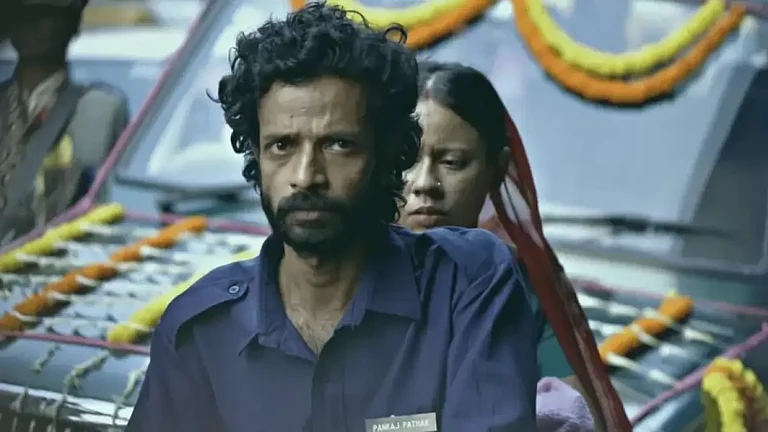
Muslim organisers once stitched together the social fabric of Left mobilisation — from the halls of Baku to the looms of Bhagalpur. Their erasure is not just a historical distortion; it is a measure of how much the Left forgot about its own origins, and how much India forgot about the Muslim contribution to its radical dreams.
Published At: