Left trade unions rose as a dominant force in Mumbai’s industrial workforce but declined after the 1982 textile strike, deindustrialisation, and neoliberal reforms.
Post-decline, collectives like the Girni Kamgar Sangharsh Samiti and broader alliances helped revive labour organising beyond traditional union models.
Despite shrinking industrial bases and new challenges like gig work and labour codes, unions continue to secure worker gains and expand base through sustained struggles.
Rise, Fall And The Revival Of Left Trade Unions In Maharashtra
From Mumbai’s textile mills to today’s fragmented workplaces, Left trade unions in Maharashtra have shaped, lost, and are struggling to reclaim workers’ collective power. Rooted in militant mill-era organising, they faced a decisive rupture after the 1982 textile strike and the onset of liberalisation. Yet, through new alliances and contemporary labour struggles, Left unions continue to reinvent their relevance.

Summary
On one of the cold December evenings in Mumbai, Comrade Vitthal Ghag, a CITU leader, wearing a white shirt, trousers and a beige jacket, pointed to the skyscrapers rising across south-central Mumbai. In the cold breeze of the evening, with flocks of birds returning to their nests and the sky washed in the colours of the setting sun, Ghag, himself a mill worker, recalled the history of textile workers, their struggles and their unions. He speaks like an encyclopaedia, but in a cinematic way, as though a black and white film with workers and unions as the main protagonists unfolds through his storytelling.
Ghag, now 77, migrated from the Konkan and worked at the Swan Textile Mill from 1975 to 2000. He recalls earning about Rs. 2,000 as his first monthly salary, an amount roughly equivalent to the cost of three pizzas today. Despite the modest pay, he remembers a sense of contentment. Mill jobs were secure and came with social security and a badge of social respect.
But their salaries never rose significantly. Even strikes under the leadership of communist leader Shripad Amrut Dange did not result in raises beyond fifty rupees. Ghag, a committed Marxist, participated in and led many strikes after 1975 as a worker and as a member of the Lal Bawta Mill Mazdoor Union, a Centre of Indian Trade Unions (CITU)-affiliated left trade union.
“Communists dominated the labour union movement in Mumbai then. From Lalbaug to Girgaon, communist leaders were known for their commitment and loyalty to the working class. Even Ganesh festival mandals had communist activists as presidents. After the historic struggle of 1982, it saw a decline in popularity,” says Vitthal Ghag, a CITU member since 1977. He was introduced to Left ideology at home, shaped by family and an ecosystem linked to mills.
“Since then, I have been fighting for textile mill workers’ rights and the fight is still on,” says Ghag.
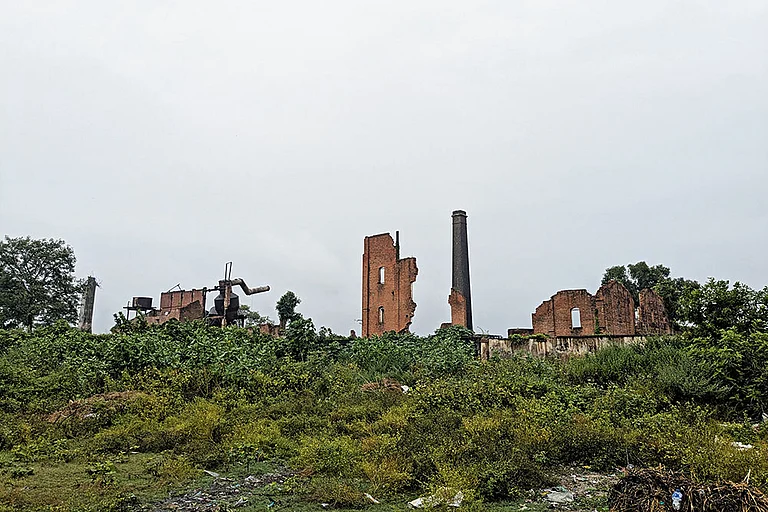
Brief history of Left Unions in Maharashtra
When Mumbai emerged as an industrial hub under British colonial rule, lakhs of labourers, largely migrants from rural Maharashtra, formed a vast workforce. Textile mills became their livelihood and home, shaping the city’s social and cultural fabric alongside cotton threads.
Advertisement
Narayan Meghaji Lokhande pioneered India’s labour movement in Mumbai in the 19th century, when textile and factory workers laboured under precarious conditions with little social protection. A close associate of Mahatma Jyotiba Phule and the Satyashodhak Samaj, Lokhande organised mill workers and in 1884 led campaigns demanding a weekly day off, eight-hour shifts, timely wage payments and improved working conditions. This marked the first organised effort to negotiate collectively with British employers and laid the foundation for unionisation and labour legislation in Maharashtra and India.
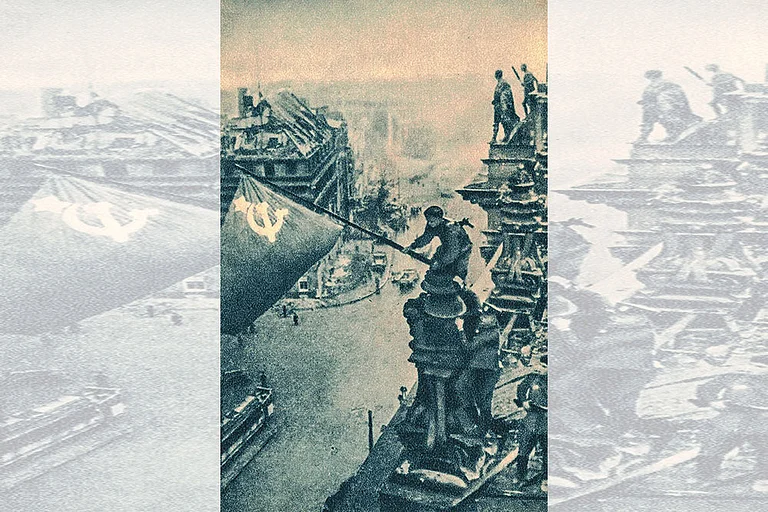
As the textile industry expanded, Mumbai consolidated its position as an industrial centre. In the early 20th century, Left-affiliated trade unions began organising workers across textiles, railways and port-based industries. The Girni Kamgar Union, founded in 1928 under Communist Party of India (CPI) leader SA Dange, emerged as a powerful force, leading major struggles for wages, hours and conditions. After the CPI split, the CPI(M) formed the Lal Bawta Mill Mazdoor Union, affiliated to CITU.
After Independence, Left unions consolidated through the All India Trade Union Congress (AITUC) and CITU, expanding into engineering, transport, banking and the public sector. Maharashtra also saw the rise of influential non-Left unions, notably Dr Datta Samant’s Maharashtra Girni Kamgar Union.
Advertisement
Ghag says workers aligned with Left unions across mills, docks, railways and civic bodies shaped nation building, from strikes after Tilak’s arrest to Quit India and Samyukta Maharashtra, and later resisted the loss of affordable working-class spaces like the Bharatmata theatre, where films could be watched at a fraction of the cost compared to multiplexes.
When asked if he shops at malls, Vitthal Ghag says, “No! We go to D-mart for groceries; otherwise, expensive shopping in malls isn’t for us. How will we enjoy anything which is built there on our mill lands by eroding mills?” The downward spiral of Mumbai’s mills coincided with the advent of malls in Mumbai, many of which were housed in erstwhile mill compounds.
Prominent Marathi writer and journalist Jayant Pawar’s short story Phenoixchya Rakhetun Uthala Mor depicts the fate of Shyam Hadkar, a third-generation mill worker and the story’s protagonist, who enters a Phoenix mall hoping to buy basic necessities but lacks the money. After stealing underwear, Hadkar is caught by security personnel and beaten to death. The title refers to the peacock symbol atop Phoenix malls, suggesting it has risen from the ashes of the former Phoenix mill.
Advertisement
Pawar himself worked in a textile mill before becoming a journalist. His iconic play Adhantar portrayed the socio-economic crisis faced by mill workers after the 1982 strike, including the erosion of unions and the growing influence of local strongmen. The work captures a tragic chapter in Mumbai’s labour history that many workers, including union leader Vitthal Ghag, lived through.
Vitthal Ghag recalls that workers such as Pravin Ghag and Bal Nar organised gate meetings that drew complete participation. During strikes, workers occupied mill gates day and night, barring entry to owners and police alike. For the first time, labour groups felt more powerful than management. He adds that communist leaders, including Prabhakar Sanzgiri, Ahilya Ranganekar and Dinkar Kadav, continued to support the movement even after 1982, though the prolonged strike later devastated lakhs of lives.
“I have seen mill workers; women had to do anything for survival. From selling utensils to being hawkers to even those things (hinting at prostitution). One of the women from the mill worker’s family, set herself ablaze and died in Kurla. That was the time I felt broke as a worker, as a union leader. Who are we fighting this battle for, when my workers are dying in front of me?” says Ghag with uncontrollable tears.
Advertisement
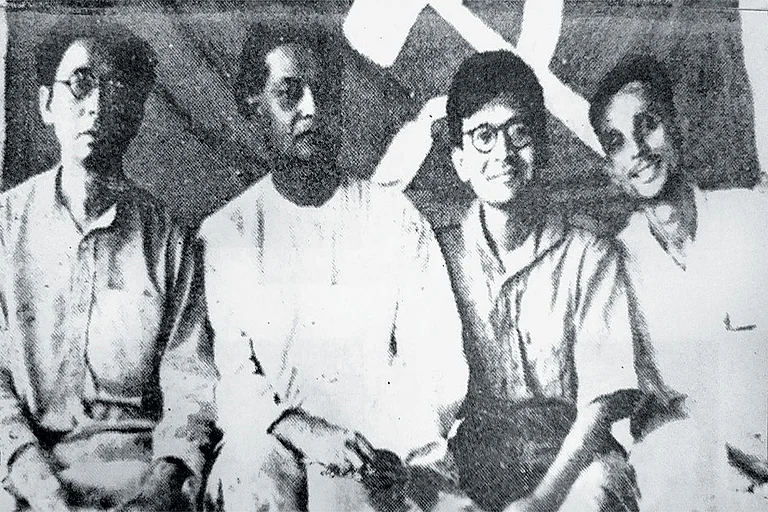
Textile mill workers, unionisation and challenges post-Independence
Vitthal Ghag traces the decline of Mumbai’s textile mills to automation, policy neglect and state apathy in the 1970s, followed by liberalisation-driven land speculation in the 1990s. Taking the analysis further, Dr Sanjeev Chandorkar, a former professor at the Tata Institute of Social Sciences, examines this shift beyond trade union rhetoric.
“Textile mills and their economy were weakened by international monopoly in trade and the lack of Indian policies and framework, that would address macroeconomic issues was absent. Leftist trade unions with all their commitment and important struggles failed to address this much larger issue,” says Chandorkar.
According to Pravin Ghag and several other workers, the Rashtriya Mill Mazdoor Sangh, the only recognised union under the Bombay Industrial Relations Act, 1946, failed to effectively protect workers’ rights during the 1970s. Left unions also had limited success in securing wage hikes. In 1974, SA Dange managed to negotiate only a Rs 4 increase, leaving workers dissatisfied with monthly wages of Rs 600 to 700. At the same time, the rise of the Shiv Sena after 1967 created space among Marathi mill workers through appeals to language and regional identity. Balasaheb Thackeray’s oratory offered hope. However, during the 1982 strike, Thackeray withdrew support after meeting the chief minister, calling off the agitation without consulting workers or union leaders. Many workers felt betrayed.
“All the workers went to Dr Datta Samant’s office at Ghatkopar from Kamgar Maidan, the very next moment when Thackeray made an announcement of calling off a strike. The crowded Maidan was empty within five minutes. Workers met Dr Samant and requested him to lead the strike,” says Vitthal Ghag.
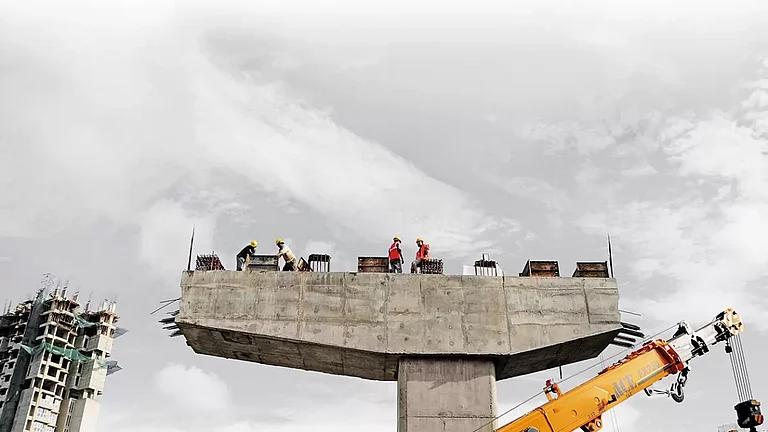
An Era of Dr Datta Samant and Datta Iswalkar: unusual chapters of unionisation
Vitthal and Pravin Ghag, both mill workers and union leaders, recall multiple meetings with Dr Datta Samant during the 1982 strike. Samant’s reputation, built on decisive wage victories in other industries, resonated strongly among textile workers. Pravin Ghag recalls that Samant secured pay hikes of Rs 400 to 500 elsewhere, earning the respect of industrial workers. Known for his uncompromising, pro-worker leadership, Samant brought the same commitment to the textile sector. The strike held firm for the first six months before prolonged resistance set in.
“I think Dr Samant’s strategy failed on one important aspect. He asked people to store rations for six months and go to the village, not show up at the mill gates as a part of the strike and many did. Full force of workers (might) at the mill gates could have created a different impact,” says Vitthal Ghag, adding that with workers absent, mill owners gained an opening. They brought in labour from other states, restarted operations selectively and invited sections of the press to project the false impression that workers themselves had called off the strike.
Later, when negotiations with trade unions took place and only a few mills reopened, operating with barely one-fifth of the workforce, the old pride never returned. Textile workers who once carried a prestigious identity and protested with raised hands and slogans later entered the mills with bowed heads to retain their jobs, journalist and writer Meena Menon chronicles.
Revival of trade unions with broader alliances and collectives
After the 1982 strike, which was never formally withdrawn, unions and workers were left despondent. Although a handful of mills reopened and functioned until around 2000, most shut down permanently. Workers remained vulnerable, burdened by unpaid dues and unresolved housing rights.
Unionisation took a necessary turn during this period through broader alliances, later described as the Datta Iswalkar model. Iswalkar, himself a mill worker and socialist activist, along with Meena Menon, advocate Gayatri Singh, Vitthal Ghag, Pravin Ghag, Rajaram Verma, Dinkar Kadav, Bal Nar and others, founded the collective Band Girani Kamgar Sangharsh Samiti at Nare Park in Parel on October 2, 1989, to fight collectively for workers’ rights.
The collective welcomed people and unions from Left and progressive traditions and adopted non-traditional, pragmatic methods. Its work ranged from organising conferences on textile policy at the Tata Institute of Social Sciences to mobilising workers and unions, staging innovative protests involving workers’ children and negotiating with the state to secure land for housing. Despite repeated legal and administrative hurdles, the Samiti succeeded in acquiring around 33 acres of land in Mumbai for workers’ housing. It continues to fight for those still denied these rights.
At the Samiti’s Parel office, Suresh Mahadev Masaye, a relative of mill worker Mahadev Masaye, recently arrived with laddus and flowers to share news that his housing application had finally been approved. For years, his claim had been rejected due to a lack of documents. With the Samiti’s help, he reapplied with additional evidence. Recalling deprivation during the 1982 strike, Masaye said he would preserve the subsidised home as a memory of his father, who lived and died working for the city.
Alongside this, movements in Pune’s industrial belt and unorganised workers’ mobilisations, led by the Lal Nishan Party and later CPI(ML) Liberation through the Sarva Shramik Sanghatana, have remained a formidable force in labour organising.
Occasional revival of Left trade unions in recent times
Post 1990, despite economic liberalisation, privatisation, globalisation and the onset of deindustrialisation, Left unions achieved notable victories through the 1990s and 2000s in companies such as Hindustan Lever and CEAT and within the public sector, while also organising contract workers, domestic workers and plantation labour. Left trade unions continue to anchor struggles around wages, social security, labour rights and resistance to privatisation across Maharashtra’s workforce.
Though the struggle continues and victories are often incremental, strikes, protests and negotiations continue to shape workers’ lives. In November 2025, workers at the Goodyear Tyres plant in Chhatrapati Sambhajinagar secured a major union victory, with an agreement granting an annual salary hike of Rs 25,400 to 663 permanent employees, along with festival bonuses, health insurance support and welfare benefits, following a sustained CITU-led campaign.
“It is an important victory for us in the current economic and political crisis. It definitely inspires us to push our boundaries and we are determined to strengthen our unionisation,” Dr DL Karad CITU’s Maharashtra president and convener of the Maharashtra collective of all like-minded unions, told Outlook. “These unions, organisations that came together have formed a collective to unitedly fight against the current economic and political crisis, including protesting for recent enforcement of labour codes,” Dr Karad added.
With over 65 lakh members nationwide and about two lakh in Maharashtra alone, CITU has a strong presence, including women leaders across several unions. Dr Karad says the organisation aims to double its membership in the coming years despite mounting challenges.
Why are left trade unions witnessing decline in recent times?
The decline of Left trade unions in Maharashtra stems from economic, political and social shifts since the late 1980s. Neoliberal policies informalised work, dispersed labour and weakened unions, while industrial exit from Mumbai, state repression and ‘NGO-isation’ further eroded collective organising strength.
Dr Karad of CITU says state repression, anti-worker labour codes and a neoliberal economy that has dismantled industries and workplaces have weakened unions, even as they continue to introspect on failures to reach the masses.
While these factors matter, Sanjeev Chandorkar offers a different view. He argues that while unions remain vital, their approach must change. “Winning pay hikes and social security is only a small part of the struggle. Unions must fight for broader frameworks that strengthen both industries and workers, with the state ensuring accountability,” he says. Younger Left activists also cite job losses due to artificial intelligence and the insecurity of gig work, which has eroded spaces for collective organising.
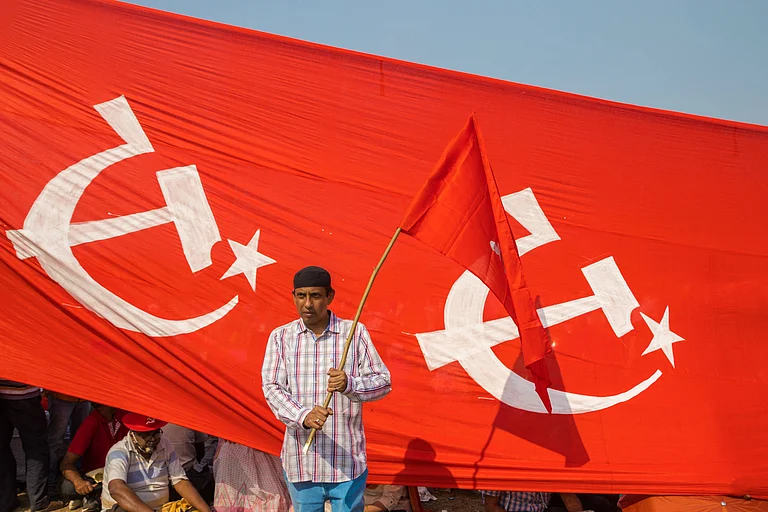
“If we, as a revolutionary force, want to change the present, we must begin by understanding the history that produced it. In that sense, 1991 marks a decisive rupture in the trajectory of India’s trade unions. Liberalisation reshaped both the spatial and temporal conditions of labour: key industries that once enabled militant unionism were pushed out of cities like Mumbai, Chennai, Ahmedabad, Delhi and Kolkata, eroding the very geographies where collective power had been built,” says Hitesh Potdar, a young researcher and a political economy scholar.
“Today’s challenges for the Left stem from these structural shifts but also from within. An older generation of leaders could have cultivated younger cadres, leaving unions and the broader Left still led largely by those now in their seventies without passing the baton,” he adds.
Amid adverse conditions, what sustains Left unions even today is ideological clarity, often idealistic from a pragmatic view, and an enduring commitment to struggle. This resolve drove Sangeeta Kamble, a CITU leader, to Nagpur to sit on the streets during a bone-chilling winter. A Mumbai-based anganwadi worker, Kamble also leads the Anganwadi Karmachari Sanghatana of CITU. Along with 7,000 anganwadi workers from across the state, she marched to press their demands during the Maharashtra Assembly’s winter session. Though she returned to Mumbai midway to attend a conference on Marathi schools, she remained in constant touch with her comrades. Subsequently, fellow leaders Shashi Kale, Preeti Parate, Chanda Wasnik and Manisha Bele met Women and Child Development Minister Aditi Tatkare and held successful negotiations.
“This is the first time, where not only a delegation headed by top leaders but also a few anganwadi workers met with the minister and conversed,” says Sangeeta while preparing for other programmes planned.
References & Acknowledgement
Punha Sangharsh - Marathi Book by Datta Iswalkar
Phoenixchya Rakhetun Uthala Mor (collection of Marathi short stories) by Jayant Pawar
Adhantar - Play written by Jayant Pawar
Pravin Ghag and Girni Kamgar Sangharsh Samiti
Lived experiences & collective scholarship of textile mill workers and trade union leaders.
Published At: