



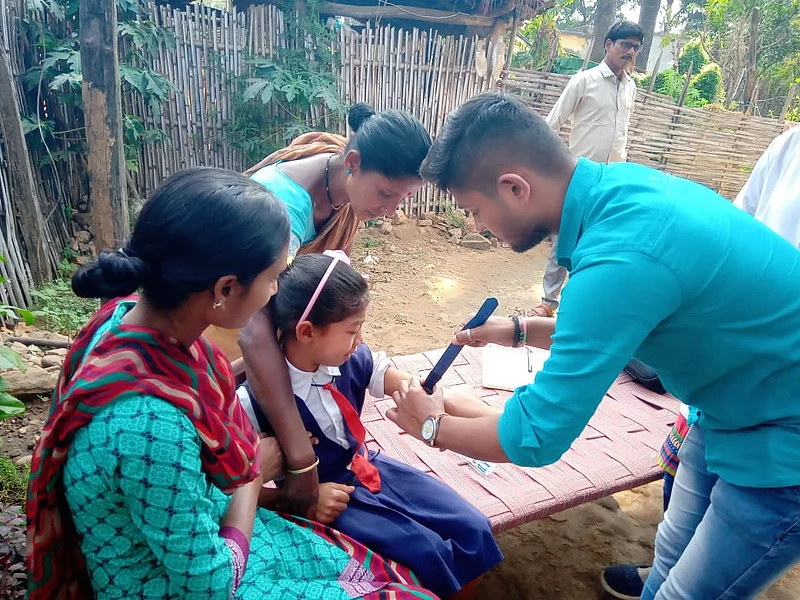
A new study by researchers from the Indian Council of Medical Research (ICMR) and the country's leading medical institutions has called for a more systematic approach to eliminate anaemia, particularly among children. The suggestion comes amidst concern that despite years of government efforts, millions of Indian children continue to suffer from the condition, raising questions about whether screening and iron supplementation alone are enough to tackle the problem.
Published in the Indian Journal of Medical Research (IJMR), the study has proposed a treatment and tracking framework for children and adolescents aged six months to 18 years. It seeks to address a major weakness in the Anaemia Mukt Bharat programme: the lack of a clearly defined mechanism to monitor whether children respond to treatment and what should be done when they do not.
The study, titled Treatment and Tracking Algorithm for Iron Deficiency Anaemia among Children and Adolescents – A Policy-informed Evidence-based Framework for India, has been authored by Dr Priyanka Gupta Bansal, Dr Ketaki Chandiok and Dr Reema Mukherjee from ICMR, along with Dr Dheeraj Shah of University College of Medical Sciences, Delhi, Dr Jagdish Chandra of Lady Hardinge Medical College, Delhi and Dr Bharati Kulkarni of ICMR-National Institute of Nutrition, and Dr Kapil Yadav of AIIMS Delhi.
The scale of the problem remains significant. According to the National Family Health Survey-5, around 67% of children below five years and 59.1% of adolescent girls in India are anaemic.

Launched in 2018, Anaemia Mukt Bharat follows a test, treat and track strategy, with iron and folic acid supplementation, screening and treatment forming its key components. However, the researchers point out that limited coverage, poor adherence to supplementation, shortage of trained workers and inconsistent follow-up continue to undermine implementation.
Monitoring data also indicate inadequate coverage of the biweekly iron and folic acid supplementation programme among children aged six months to five years, said D Bansal in the study.
The researchers argue that identifying anaemia and starting iron supplementation are only the first steps. Children also need regular assessment to determine whether their haemoglobin levels are improving. Without a structured follow-up system, those who fail to respond may remain undetected, delaying the identification of other underlying health problems, noted the researchers.
To address this, the team developed two separate treatment and tracking algorithms, one for mild anaemia and another for moderate to severe anaemia. The framework provides guidance on treatment initiation, follow-up intervals, assessment of response and referral for further investigation where necessary.
Haemoglobin measurement is recommended as the first-line test to identify anaemia. For children who do not respond adequately to treatment, additional investigations such as a complete blood count, serum ferritin and C-reactive protein (CRP) are suggested.
Serum ferritin helps assess the body's iron stores, while CRP helps identify inflammation that can affect the interpretation of ferritin levels. This is important because anaemia is not always caused by iron deficiency. Infections, chronic illnesses, nutritional deficiencies and inherited blood disorders can also contribute to the condition.
The proposed framework recommends a change in haemoglobin of at least 1 gram per decilitre as an indicator of response to treatment. If the expected improvement does not occur, healthcare providers are advised to first review whether the child has been taking the prescribed supplements regularly and assess possible barriers to adherence.
Dietary history, recent infections, deworming status, chronic illness and menstrual history among adolescent girls should also be considered before deciding on further investigations.
The researchers have recommended weight-based iron dosing wherever feasible, particularly in clinical settings. Oral iron remains the first-line treatment, while severe cases or children who do not respond adequately may require specialist evaluation and escalation of care.
Another important feature is the emphasis on continuing monitoring even after anaemia has resolved. Children should be shifted to preventive supplementation to reduce the risk of recurrence, said the doctors.
The study also highlights the limitations of relying only on conventional ferritin thresholds to identify iron deficiency. Research reviewed by the team suggested that iron deficiency may begin at higher ferritin levels than traditionally used in some settings. However, inflammation can artificially raise ferritin levels, making interpretation more difficult.
The researchers suggested that the proposed algorithms can be integrated into existing healthcare platforms, including Anganwadi services, school health programmes and the Rashtriya Kishor Swasthya Karyakram. Frontline health workers and primary healthcare providers can undertake screening, treatment initiation and routine follow-up, while children requiring specialised investigations can be referred to higher-level facilities.
Importantly, the authors cautioned that the proposed framework is not yet a formally validated national guideline. It is an evidence-based operational approach developed after reviewing national and international recommendations and consulting experts. Its feasibility and effectiveness need to be tested in different settings before wider implementation. Field validation is currently being undertaken as part of the ICMR PRAKASH study.
The figure, from the National Family Health Survey-5 (2019–21), shows that the problem has not followed a steady downward trend. Anaemia among children in this age group declined from 69.5% in NFHS-3 (2005–06) to 58.4% in NFHS-4 (2015–16), but rose again to 67.1% in NFHS-5.
The burden also varies sharply across states and Union Territories. Ladakh reported the highest prevalence at 93.9%, followed by Gujarat at 79.7%. Rajasthan recorded 71.5%, Haryana 70.4%, Bihar 69.4% and Delhi 69.2%. Kerala, at 39.4%, reported one of the lowest levels.
However, the country is yet to get a fresh national estimate from NFHS-6. Although the National and State/UT fact sheets for the 2023–24 survey were released in May 2026, anaemia figures were not included.
In a written reply in Parliament on August 4, 2026, the Union Health Ministry said it had decided to adopt anaemia prevalence estimates from an independent survey conducted by the ICMR. The survey will use the intravenous method of blood collection for haemoglobin testing, which the government described as the gold standard.
The decision is significant because the NFHS estimates were based on capillary blood samples collected through finger-prick tests. The method of testing has been a subject of debate among public health researchers, with concerns that capillary sampling may produce different estimates from venous blood testing.







