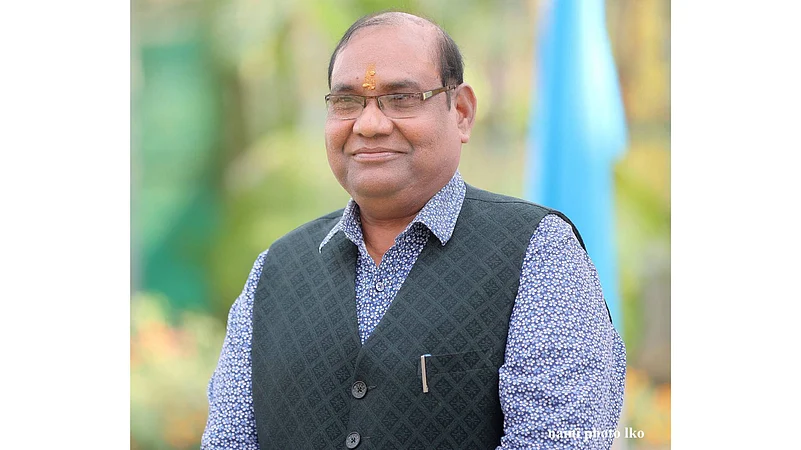
As the former Director General of Police of Uttar Pradesh, I closely witnessed and managed the state's law and order situation. Today, as a Member of Parliament in the Rajya Sabha, I consider it my moral responsibility to present the truth before society and the nation. The findings of the Special Investigation Team (SIT) and the High-Level Inquiry Commission regarding the violence that occurred in Sambhal on November 24, 2024, have now been made public. As a former police officer and public representative, I firmly believe that what unfolded in Sambhal that day was not a spontaneous outburst of anger but a well-planned conspiracy to engineer a communal riot.
Sambhal's Ancient History and the Harihar Nath Temple
The history of Sambhal is not merely a history of disputes; it has long been regarded as one of the most sacred centres of Sanatan culture. Since ancient times, Sambhal has been a renowned place of faith for Hindus. The famous Harihar Nath Temple, dedicated to Lord Harihar Nath (Lord Vishnu), stood here. According to scriptures and popular belief, Lord Vishnu is destined to incarnate here as his tenth avatar, Kalki.
In 1526, the Mughal invader Babur allegedly demolished this ancient temple. The remains and debris of the temple were reportedly used to construct the structure now known as the Jama Masjid of Sambhal. When a court-ordered scientific survey of this historic site was initiated, a carefully orchestrated atmosphere of protest and unrest was allegedly created by those fearful that the truth would come to light.



The Violence of November 24, 2024, and the Alertness of the Police and Administration
During the survey, an agitated mob allegedly launched life-threatening attacks on the police and the survey team. Rioters resorted to stone-pelting and opened fire, leaving several police personnel seriously injured. Their primary objective, it is alleged, was to plunge Sambhal into a Hindu-Muslim communal riot. I congratulate the Uttar Pradesh Police and the local administration for their promptness, firmness, and effective strategy, which enabled them to bring the situation under control immediately and prevent the violence from escalating into a large-scale communal conflict.
Sambhal has witnessed a long and painful history of riots, but this was the first instance in which 123 rioters were arrested and sent to jail immediately after the incident. Trial proceedings have already commenced in court based on the chargesheets filed by the police, and the guilty are expected to face stringent punishment.
The Main Players in the Riot: From Power Theft to a Dubai-Based Network
The SIT investigation and the evidence collected have, according to the author, exposed those allegedly behind the conspiracy. Samajwadi Party MP Ziaur Rehman Barq allegedly played the principal role in planning the protests against the survey and the ensuing violence. Barq is not only accused in the riot conspiracy but has also been found guilty of electricity theft. A recovery of ₹1.91 crore has reportedly been ordered against him in connection with the electricity theft case, of which only ₹6 lakh has been deposited.
For an elected Member of Parliament to violate the law and allegedly incite communal tension is deeply unfortunate. The strict legal action being taken against him sends a message that no one is above the law.
Suhail Iqbal, son of Samajwadi Party MLA Iqbal Mehmood; Zafar Ali, President of the Jama Masjid Intazamia Committee; committee secretary and advocate Masood Ali Farooqui; advocate Qasim Zamal; and Natatan (Laddhan) Khan also played key roles in the conspiracy. The violence was also allegedly linked to an international criminal syndicate. Fugitive criminal Tariq Satta is alleged to have operated the network from Dubai. Tariq orchestrated the theft of 300-350 luxury vehicles annually from Delhi and the National Capital Region, which were then smuggled abroad through Nepal and India's northeastern routes. The proceeds from this illegal operation were allegedly used to finance the trafficking of foreign-made weapons and supply arms to rioters in places such as Sambhal.
The Impartial Inquiry Commission and the Samajwadi Party's Politics of Appeasement
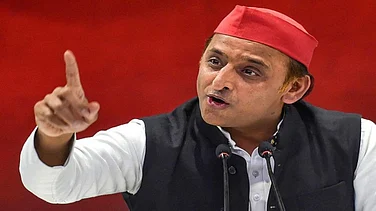
Given the seriousness of the incident, Chief Minister Yogi Adityanath constituted a high-level inquiry commission on November 28, 2024. The commission comprised a retired judge of the Allahabad High Court, retired IAS officer Amit Mohan Prasad, and retired IPS officer A.K. Jain. The commission's detailed investigation identified Samajwadi Party MP Ziaur Rehman Barq and Suhail Iqbal, son of a Samajwadi Party MLA, as the principal figures behind the violence. Despite these findings, Samajwadi Party president Akhilesh Yadav, along with his party colleagues, visited Sambhal and publicly stood in support of the MP accused in the case. This represents the extreme manifestation of vote-bank politics and appeasement.
Demographic Changes in Sambhal
Since the 1920s, Sambhal has witnessed 16 major communal riots. Previous governments' policies of appeasement prevented effective action against rioters, resulting in significant demographic changes. At the time of independence, Sambhal's population consisted of approximately 45 percent Hindus and 55 percent Muslims. Repeated riots, persecution, and insecurity forced many Hindus to migrate from the town. Today, Hindus constitute only about 15-20 percent of Sambhal's population.
The Dark Truth of the Brutal Holi Riots of 1978
On March 29, 1978, Sambhal witnessed severe communal violence on the day of Holi. 184 Hindus were brutally killed, hundreds were injured, and widespread looting of Hindu-owned properties took place. Prominent businessman Banwari Lal Goyal was allegedly killed inside his own factory, where dozens of Hindus had taken shelter. Another businessman, Lala Ram Sharan Rastogi, was reportedly murdered, and his body was thrown into a well located in front of his shop.
The Mulayam Government's Controversial Decision
The police had filed chargesheets in connection with the 1978 riots, and the cases were nearing conclusion in court. However, after Mulayam Singh Yadav became Chief Minister for the second time in December 1993, his government withdrew all pending cases against the accused within just 18 days. This decision was taken under pressure from leaders such as Shafiqur Rehman Barq and Azam Khan. Following the withdrawal of the cases, many Hindus in Sambhal were forced to abandon their land, homes, ancestral temples, historic wells, and stepwells and leave the town.
A Changing Uttar Pradesh and the Rule of Law
Since the 1978 riots, criminals and rioters in Sambhal had long enjoyed political patronage. However, under the leadership of Chief Minister Yogi Adityanath, the rule of law has now been firmly established in Uttar Pradesh. The government's response to the events of November 24, 2024, has demonstrated that no individual, regardless of how influential, including political leaders and Members of Parliament, will be spared if they threaten the state's peace and security. For the first time, the alleged rioters are behind bars, and the judicial process is underway, with stringent punishment expected for those found guilty. This determined legal battle against all those who undermine law and order will continue without compromise.
Vande Mataram. Jai Harihar Nath
About the Author: Brij Lal is a Member of Parliament (Rajya Sabha) and former Director General of Police, Uttar Pradesh.
Disclaimer: The views and opinions expressed in this article are those of the author(s) and do not necessarily reflect the official policy or position of the publisher. While every effort has been made to ensure the accuracy of the information, the publisher is not responsible for any errors or omissions, or for the results obtained from the use of this information.