Despite the Left government’s emphasis on welfare and development, the most basic concerns of the tribal community—land, education support, living conditions and political representation—remain inadequately addressed in Kerala.
Dalits and Adivasis have long been a key support base for the Left in Kerala, but since the early 2000s, growing disenchantment and assertiveness have begun to reshape this relationship.
Dalit and Adivasi groups have long demanded a re-examination of Kerala’s celebrated land reforms, arguing that these measures failed to adequately address the landlessness of Dalits and Adivasis.
Whose Development? Why Were Muslims In Kerala Disenchanted With The LDF
While disenchantment among Dalits and Adivasis in Kerala reflects a shift in the Left’s orientation in the state towards an aspirational middle class, the unease among Muslims underscores the dilemmas of electoral balancing

Summary
In Mananthavady, a small hill town in Kerala’s Wayanad district, electioneering is in full swing. State Tribal Affairs Minister O.R. Kelu, the Left Democratic Front’s candidate from this reserved constituency, exudes confidence as votes are set to be counted on May 4.
Along his campaign trail, his pitch is consistent. Like his counterparts across Kerala, Kelu is leaning on the developmental work undertaken over the past decade by his government. Big-ticket infrastructure projects, including the proposed tunnel road linking Kozhikode to Wayanad, form the core of the Left’s political pitch in the district.
Conversations with small business owners and employees at a nearby supermarket suggest that many are persuaded by this development narrative and the efforts of the local MLA.
Yet, this dominant narrative finds limited resonance among grassroots activists. Manikkuttan, a tribal rights activist, remains unconvinced, arguing that the lived realities of the community tell a markedly different story.
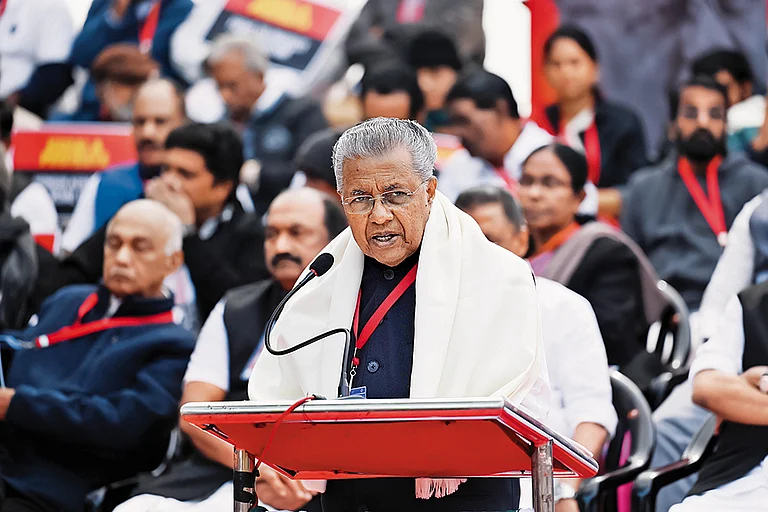
He argues that the ‘mainstream’ narrative of development finds little reflection in the lives of a significant section of the district’s tribal population. Mananthavady, in Wayanad, is one of the two tribal assembly constituencies in Kerala. Wayanad district is home to nearly 1.5 lakh tribals.
A visit to a tribal colony on the outskirts of the municipality underscored what Manikkuttan describes as “developmental absenteeism”. Chamadipoyil Paniya Colony, which has around twenty houses, presents a stark picture; most homes accommodate two or three families, crammed into small, inadequate spaces.
“When it rains, water seeps through the dilapidated concrete roofs into our homes. During the monsoon, the area gets inundated, forcing us to move to relief camps for weeks, sometimes even a month,” says Anju, a resident of the colony, offering a contrasting perspective to the development narrative projected by the ruling front.
Advertisement
“The fundamental issue with the Left government is its failure to address the concerns of marginalised communities through structural reforms.”
“The hardships we face have rarely entered the mainstream discourse. Even as the state celebrated the eradication of extreme poverty, many tribal students were on the verge of discontinuing their education due to delays or denial of government grants. Overcrowding is another persistent issue; two or three families are often forced to share two small rooms, with little to no privacy,” says Manikkuttan.

For him, these conditions point to a deeper structural gap in governance. He argues that despite the Left government’s emphasis on welfare and development, the most basic concerns of the tribal community—land, education support, living conditions and political representation—remain inadequately addressed, revealing a disconnect between policy claims and lived realities.
Marginalised communities, particularly Dalits and Adivasis, have historically formed a crucial support base for the Left in Kerala. However, from the early 2000s, signs of disenchantment began to surface, accompanied by growing political and social assertiveness among these groups.
Advertisement
“The emergence of a new generation of intellectuals, who began to question the status quoist positions of the Left parties, marked the beginning of this disconnect,” says historian Dr. Vinil Paul, who has written extensively on Dalit histories in Kerala.
As independent Dalit and Adivasi organisations began to take shape, articulating demands outside traditional party structures, the Communist Party of India (Marxist) responded by promoting its own tribal platforms. However, according to Paul, these organisations largely remained within the party framework and failed to raise fundamental issues confronting marginalised communities within either the party or the government.
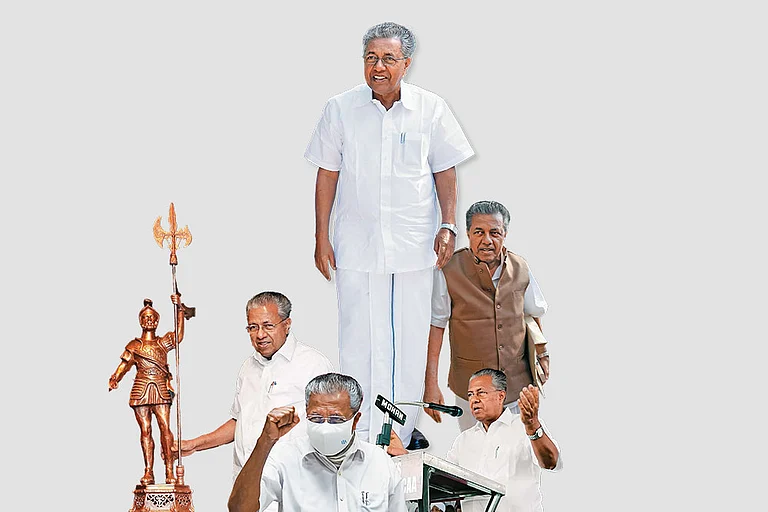
“The fundamental issue with the Left government is its failure to address the concerns of marginalised communities through structural reforms,” says Vinil Paul. “At the centre of this is the question of land. Kerala has witnessed sustained struggles for land rights by Adivasi and Dalit communities, yet the demand for a second phase of land reforms has largely been sidelined by both the government and the CPI(M).”
Advertisement
He adds that the question of political representation has also remained inadequately addressed. “Party leadership and legislative representation continue to be dominated by groups beyond their demographic share. Despite its egalitarian rhetoric, the Left has not engaged seriously with these structural imbalances,” he argues.
Dalit intellectuals point out that it was the LDF government that first implemented the Economically Backward Reservation. “This was an attempt to placate higher-caste organisations like Nair Service Society (NSS),” Paul adds.
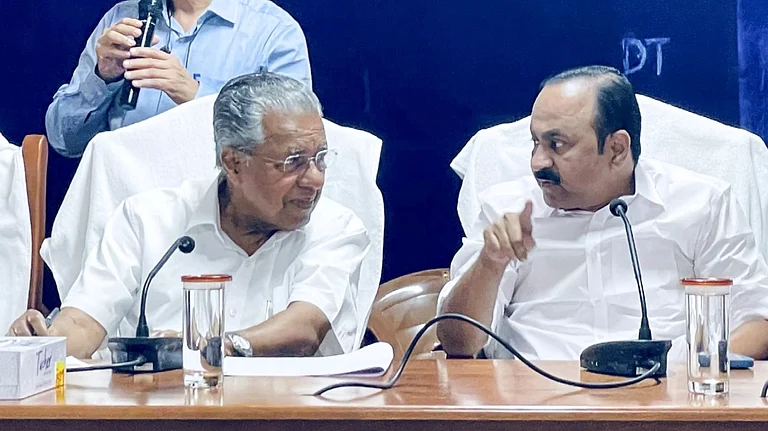
M. Geethanandan, veteran activist and convenor of the Ambedkarite Democratic Front—a collective of around 65 Dalit and Adivasi organisations—argues that the development model showcased by the LDF government has largely bypassed marginalised communities, including Dalits, Adivasis and fishing communities. He alleges that over the past nine years, Rs. 7,411 crore earmarked under the SC/ST sub-plan remained unspent, reflecting gaps in both prioritisation and implementation.
Advertisement
A key point of contention continues to be land. Dalit and Adivasi groups have long demanded a re-examination of Kerala’s celebrated land reforms, arguing that these measures failed to adequately address the landlessness of Dalits, many of whom remain agricultural labourers. A consortium of these organisations has submitted a charter of demands to both the LDF and the UDF, seeking land redistribution and stronger rights for the landless.
Observers suggest that the growing distance between Dalits and the Left is rooted in this evolving political consciousness. As marginalised communities asserted greater agency and began demanding structural changes, particularly around land ownership, their relationship with the Left became more contested.
While Dalit discontent is rooted in unresolved structural questions, the Muslim issue appears to be shaped more by the CPI(M)’s shifting electoral priorities and political recalibrations.
“The Muslim community has become more and more sceptical about the Left,” says N.P. Chekkutty, senior journalist and author of Mappila and Comrades: A Century of Communist-Muslim Relations in Kerala, which explores the historical relationship between Muslims and Communists in Kerala. “The short-term strategies adopted by the Left, bypassing its own declared positions, are the main factor behind this,” he argues, adding that the consolidation of the BJP at the national level has heightened insecurity among Muslims, pushing many towards the Congress as the most viable counterforce.

Chekkutty adds that this shift has been compounded by what he describes as a rightward drift in the CPI(M)’s Kerala unit, reflected in certain political positions and rhetoric. Together, these factors, he suggests, have contributed to a perceptible alienation of sections of the Muslim community from the Left.
Over the last several decades, the CPI(M) has made a concerted effort to broaden its social base by reaching out to the Muslim community, often taking strong positions on issues important to them. However, the outcome of the last Lok Sabha election prompted a reassessment within the party. Despite these efforts, a significant share of Muslim votes appeared to consolidate behind the Congress.
At the same time, there were indications that sections of the Ezhava community—traditionally a core support base of the CPI(M)—were showing signs of drifting towards the BJP. According to party insiders, this dual shift triggered concerns within a section of the leadership that overt political positioning on Muslim issues may have contributed to alienating Ezhava voters.
What followed, they suggest, was a ‘course correction’. The party adopted a more critical stance towards certain Muslim organisations, and its response to controversial remarks targeting the community came under scrutiny. Vellappally Natesan, leader of the Sree Narayana Dharma Paripalana Yogam (SNDP), made contentious comments about Malappuram district and its Muslim-majority demographic. Critics argue that the CPI(M), in its attempt to retain Ezhava support, appeared restrained in its response to such polarising statements.
“The party’s reaction to the abusive remarks against Malappuram and Muslims marked a new low,” says senior journalist O. Abdurehman. “Even those Muslims who were critical of the CPI(M) earlier did not question its secular credentials. But the recent stance of the state leadership has deepened the sense of alienation within the community,” he adds.
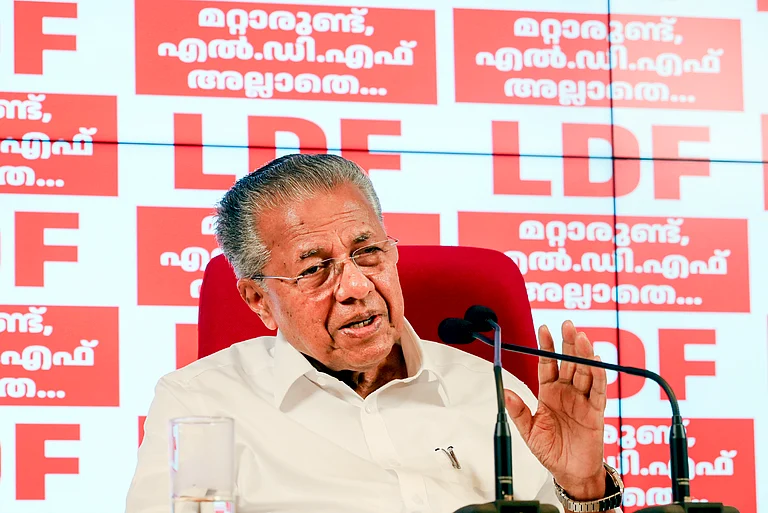
Muslims constitute around 26 per cent of Kerala’s population and their electoral choices are decisive in several constituencies, particularly in north Kerala. While the LDF has sought to consolidate this support, with allies such as the Indian National League, a breakaway faction of the Indian Union Muslim League and the People’s Democratic Party (PDP) led by Abdul Nasar Madani, the broader political drift suggests a more complex reality.
“Earlier, it was the RSS and other Sangh Parivar groups that spread canards about Malappuram district, alleging that Hindus and Christians were unsafe here. Now, the CPI(M), by going soft on such vilification campaigns led by people like Vellappally Natesan, is indirectly lending them credibility,” says Nasser, a resident of Kottakkal in Malappuram, reflecting a sense of disenchantment among a section of the Muslim community.
Yet, despite these strains, some observers caution against reading this shift as a permanent rupture. “It is difficult to say that the Left has permanently lost Muslim support, or that Muslims are irreparably alienated,” says Dr. P.K. Yassar Arafat, professor at Delhi University. “Historically, the relationship has seen phases of proximity and distance. What we are witnessing now is more tentative than structural, a form of corrective distancing.”
However, Arafat points to a deeper issue within the Left’s political engagement. “There is a palpable deficit of grounded knowledge among the Left’s rank and file when it comes to Muslims. While the community has largely negotiated and moved beyond earlier theological hesitations towards communism, the Left in Kerala has not developed the epistemic depth required to sustain a durable relationship,” he argues. He adds that the current phase could serve as a moment for introspection, urging the Left to engage more seriously with the internal complexities of the community and its intellectual voices, rather than relying on superficial forms of outreach.

Beyond electoral arithmetic, this perceived disconnect with both marginalised communities and sections of the Muslim minority points to a broader political challenge for the Left in Kerala. While disenchantment among Dalits and Adivasis reflects a shift in the party’s orientation towards an aspirational middle class, the unease among Muslims underscores the dilemmas of electoral balancing. Whether or not the Left returns to power, these underlying tensions are likely to persist in the political landscape in the years ahead.
N.K. Bhoopesh is an assistant editor, reporting on South India with a focus on politics, developmental challenges, and stories rooted in social justice
Published At:
Tags