The LDF government identified over 64,000 families and used tailored, multi-phase interventions to address extreme poverty.
Despite its scale, the programme needs independent evaluation, beyond the government’s “poverty-free” claim.
The LDF has downplayed the scheme in election campaigns, prioritising more visible infrastructure and overarching welfare achievements.
Assembly Elections 2026: Kerala Says It Ended Extreme Poverty, Why Isn’t It A Poll Issue Then?
The Extreme Poverty Eradication Programme was positioned as a radical step by the Pinarayi government. Despite its efficient implementation, it is not on the election campaign agenda of the LDF for multiple reasons.We do a deep dive.

Summary
Pinarayi Vijyan’s cabinet 2.0 imagined the ‘Athidaridrya Nirmarjana’ - Extreme Poverty Eradication Programme (EPEP) in Kerala. The government announced it in 2021 - the year that followed the worldwide Covid-19 pandemic and the ensuing economic crisis. Vijayan even declared the state as extreme poverty free on November 1, 2025 on the occasion of Kerala Piravi. The day commemorates the formation of Kerala as a linguistic state. The government’s claim of eradication of extreme poverty was made before local body elections in the state.
Did the Vijayan government achieve its vision of eliminating poverty? If yes, why has it not been talked about in election campaigns by LDF ahead of assembly polls? How much weight does the government’s claim carry, especially in the light of no independent third-party evaluation? There are many questions and many complex answers. Before deep diving into it, let's understand : what is the Extreme Poverty Eradication Programme (EPEP)?
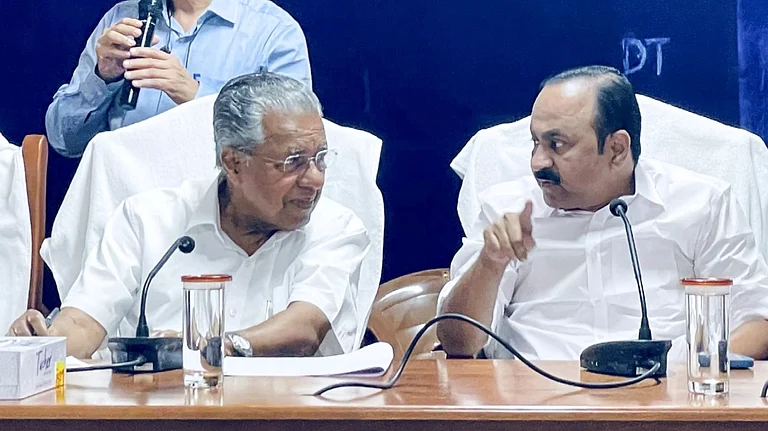
What is Kerala's Extreme Poverty Eradication Programme?
Through a comprehensive poverty identification process carried out by Local Self-Government Institutions (LSGIs), 64,006 extremely poor families were identified across the state. The government tracked down these families on a few parameters that included families excluded from ongoing welfare schemes.
Unlike most of the cash transfer schemes across many states in India, the Kerala government designed tailor made-micro-plans for each family. In its first phase, the government ensured access to food and healthcare services. Phase two was about securing sustainable livelihood and income sources and safe and permanent houses were provided in a third phase.

Strong communication and co-ordination between local body governance and other stakeholders is the key feature of this programme. With the coordinated efforts of local bodies, various government departments, missions, voluntary organisations, and the active participation of the people, the state government tried to ensure food security, health care, livelihood opportunities, and safe housing, enabling these families to lead a life of dignity.
Advertisement
Campaigns and initiatives such as “Avakasham Athivegam” (Right on Fast Track), “Ujjivanam” (Rejuvenation), and “Manassodithiri Mannu” (Land with Compassion) were launched with the objective of providing land, housing, ownership documents, educational support, and free travel facilities to the beneficiaries.
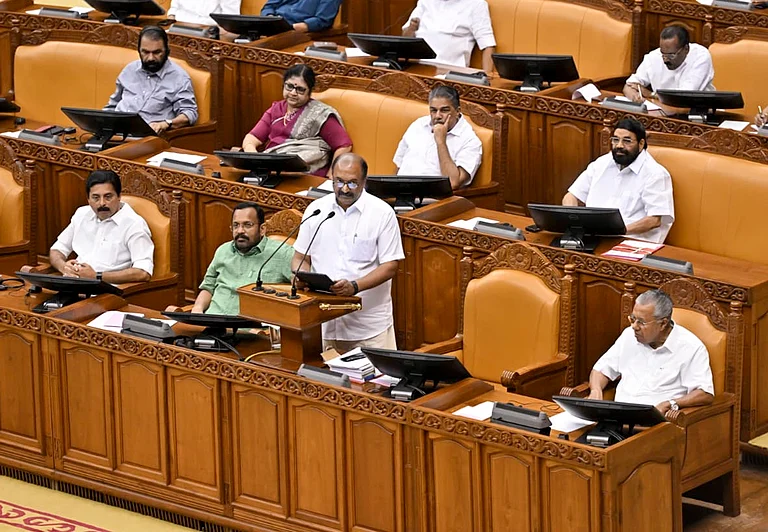
“In our council ward, there was just one extremely poor family, which was tracked by the local bodies and it was supported with enrolling the family under PDS. The demands of the family members for food security, help for senior citizens and medical intervention were ensured by the local governance. Women who work under the Kudumbashree initiative played a key role in it,” says Mohan T, a resident of Kollam district.
Kudumbashree in Kerala is more than a government scheme—it’s a network of women launched in 1997. It brings lakhs of women—many from low-income households—into small neighbourhood groups where they save money, support each other, and build livelihoods. From running small businesses to accessing credit and even participating in local governance.
Advertisement

The other side
However, there is a criticism around the Extreme Poverty Eradication Programme (EPEP) that it is yet to be independently evaluated by a third-party organisation.
“Extreme Poverty Eradication Programme (EPEP) is a very good welfare programme - a much-needed step in the right direction. But it is difficult to say that extreme poverty is entirely eliminated from the state. After all, it's the government’s claim. So far, I haven’t seen an external evaluation of the programme by any organisation, although all party leaders of local bodies didn’t oppose the initiative, nor criticise it, which also shows the intent and implementation by the LDF government,” says Jairam R Prabhu, a policy researcher based in Kochi.
Why hasn't LDF emphasised upon the 'success' of this programme in its election campaign? Prabhu provides an insight, “The LDF did talk about the Extreme Poverty Eradication Programme (EPEP) during its campaign for local body elections in Kerala;. That did not make much impact in electoral gains. For the assembly election, elimination of extreme poverty can’t drive the narrative because it's not as tangible as other deliverables to show the people. For example, The township project, which provided more than 4 lakh houses for people who were affected by the 2024 landslide, is a much bigger and tangible delivery of promises that gives good visibility,” explains Prabhu.
Advertisement
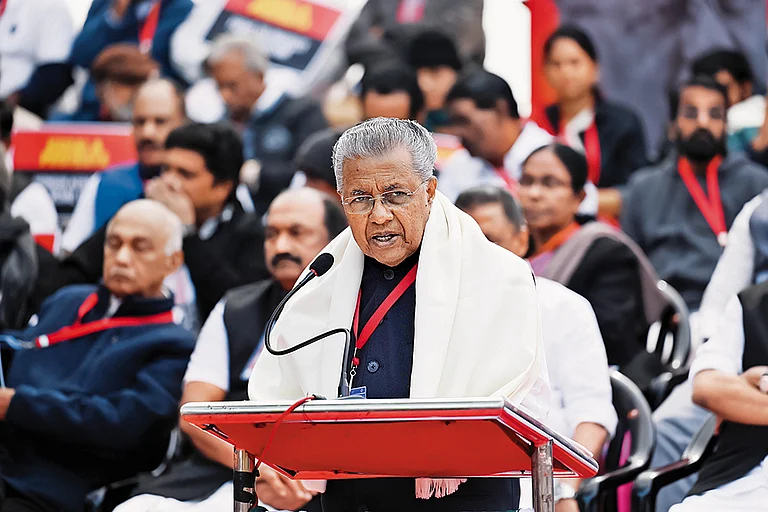
“The LDF in Kerala is using a theme of its delivery of overarching welfare schemes and development during elections campaigns. However, it is avoiding mentioning a particular scheme or programme in big rallies and sabhas, in order to put up a front that is working for all the classes and not only the poor. The ministers and sitting MLAs are also talking about infrastructure development and investments to boost employment,” says a CPIM activist based in Thiruvananthapuram.
However, specific welfare schemes and their implementation is discussed during door-to-door campaigns, according to an activist who is campaigning for Kerala's sitting finance minister and CPIM leader K.N. Balagopal, in the Kottarakkara constituency.

Advertisement
Published At: