The significance of the figure six lies in its implication in the anti-defection framework.
It represents two-thirds of UBT's nine-member parliamentary party, a threshold that occupies a central place in discussions around the Tenth Schedule.
However, the development could weaken one of the BJP's principal opponents in Maharashtra while strengthening an ally whose political clout within the ruling coalition would grow considerably.
From 7 To 13 MPs: How One Defection Wave Could Send Tremors Through Maharashtra Politics
The larger political question is whether a move that weakens Uddhav Thackeray could also leave the BJP dealing with a stronger Eknath Shinde.

Summary
A reported move by six Shiv Sena (UBT) MPs to join the Eknath Shinde-led Shiv Sena has once again put Maharashtra's political landscape in focus. If it materialises, the crossover would raise Shinde Sena's strength in the Lok Sabha from seven MPs to 13 while reducing Uddhav Thackeray's tally from nine to three. It would also bring renewed attention to the anti-defection law and its application in cases involving large-scale defections.
The significance of the figure six lies in its implication in the anti-defection framework. It represents two-thirds of UBT's nine-member parliamentary party, a threshold that occupies a central place in discussions around the Tenth Schedule. At the same time, the development could weaken one of the BJP's principal opponents in Maharashtra while strengthening an ally whose political weight within the ruling coalition would grow considerably.
The numbers game
The mathematics behind the speculation is quite straightforward.
Shinde's Shiv Sena has seven Lok Sabha MPs at present, while the Shiv Sena (UBT) has nine. If six MPs switch sides, Shinde Sena's tally would rise to 13 and UBT's would fall to three.
The figure is politically important because it amounts to exactly two-thirds of UBT's parliamentary party. Under the Tenth Schedule, the two-thirds mark is significant in discussions involving merger-related protections.
That is why the reported number has attracted attention far beyond routine party manoeuvering.
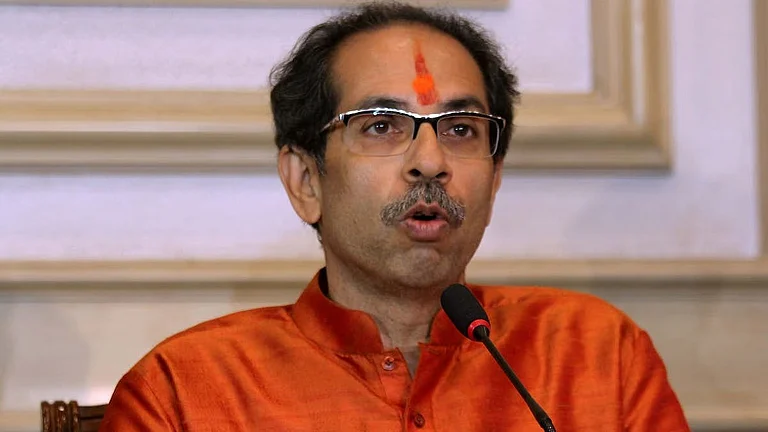

What happens if six MPs cross over?
The political impact of such a move would be immediate. The legal consequences, however, may be more complex.
The anti-defection law contains an exemption linked to mergers involving the support of at least two-thirds of a legislature party. That has made the six-MP figure central to the current discussion.
Yet legal experts have repeatedly argued that the matter cannot be reduced to numbers alone. In analyses published during the Shiv Sena split, LiveLaw pointed out that the Constitution no longer recognises a separate exemption for a "split". The relevant provision was removed through the 91st Constitutional Amendment in 2003. What remains is an exemption linked to a merger and subject to constitutional conditions.
Advertisement
As a result, any crossover involving six MPs would likely trigger scrutiny not only in political circles but also in relation to the anti-defection framework.
Why should CM Fadnavis care?
For Chief Minister Devendra Fadnavis and the BJP, the political implications are significant.
A successful crossover would further weaken Uddhav Thackeray's faction, which remains part of the opposition camp in Maharashtra. It would simultaneously strengthen Shinde, whose 2022 rebellion reshaped the state's politics.
The battle between the two Sena factions is also a contest over political legitimacy, organisational strength and influence within the party's traditional support base. Any movement of MPs from UBT to Shinde would therefore be viewed as a setback for Thackeray and a boost for Shinde's claim to represent the dominant faction.
Why the BJP might not mind?
From the BJP's perspective, the immediate political outcome appears favourable.
A weakened UBT would mean a diminished parliamentary presence for an opposition rival. At the same time, a stronger Shinde-led Sena would remain within the NDA fold, reinforcing the political arrangement that emerged after the 2022 split.
Advertisement
The move would also strengthen Shinde's position in Parliament and widen the gap between his faction and UBT in the Lok Sabha.
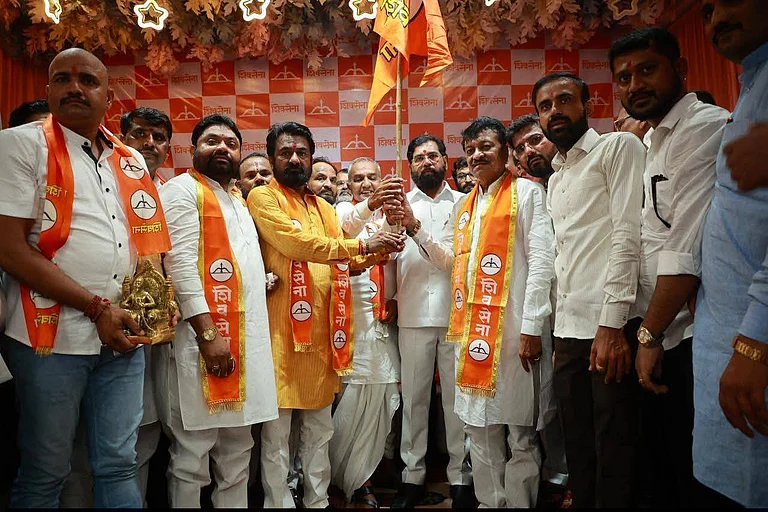

Why it may prove to be a headache for the BJP?
The same development could create challenges for the BJP within the ruling alliance.
A Shiv Sena with 13 MPs would command greater political weight than one with seven. That could strengthen Shinde's hand in future discussions involving electoral strategy, representation and seat-sharing.
Despite the continuing partnership within the Mahayuti alliance, a larger parliamentary contingent could strengthen Shinde's position within the ruling coalition.
That is what makes the reported crossover significant. The immediate story is about six MPs. The larger political question is whether a move that weakens Uddhav Thackeray could also leave the BJP dealing with a stronger Eknath Shinde.
Advertisement
Published At: