Bangladesh has mobilised 120 BGB platoons amid escalating political violence across at least 14 districts.
Police recorded 101 vehicles set on fire and 100 crude bomb explosions between November 7 and 27.
The Awami League has called a two-day nationwide lockdown ahead of Sheikh Hasina’s proposed December 16 return.
What's Brewing In Bangladesh Ahead Of Sheikh Hasina’s Return Plan?
More than 100 vehicles torched and 100 crude bomb explosions recorded across 14 districts as Bangladesh tightens security ahead of Sheikh Hasina’s proposed return from India on December 16.

Summary
Bangladesh has mobilised 120 platoons of Border Guard Bangladesh (BGB) personnel amid escalating political unrest over former prime minister Sheikh Hasina’s proposed return to the country on December 16. Of these, 116 are stationed across seven districts, while four additional platoons have been kept on standby. Arson attacks, crude bomb explosions and clashes have been reported across at least 14 districts, with police recording 101 vehicles set on fire and 100 crude bomb explosions between November 7 and 27.
The deployment comes as the Awami League, whose political activities have been banned, has called for a two-day nationwide lockdown on November 29 and 30. Hasina’s hometown of Gopalganj has witnessed attacks on properties linked to political figures, while security restrictions and disruptions to transport and banking services have affected residents. The district has the largest concentration of BGB personnel, with 56 platoons stationed there.
Bangladesh Deploys 120 BGB Platoons As Violence Spreads
According to Bangladesh Sangbad Sangstha (BSS), the BGB deployment announced on November 28 covers seven districts: Dhaka, Gazipur, Narayanganj, Mymensingh, Gopalganj, Chattogram and Cox’s Bazar.
The published allocation accounts for 116 platoons stationed across these locations: 17 in Savar and Ashulia in Dhaka, 19 in Gazipur, seven in Narayanganj, two in Bhaluka in Mymensingh, 56 in Gopalganj, eight in Chattogram and seven in Cox’s Bazar. Four more platoons have been kept on standby, taking the total deployment and reserve strength to 120. BGB personnel are working with district administrations and other law enforcement agencies, with surveillance increased around key installations and industrial areas.
The security measures follow a series of arson attacks and crude bomb explosions. The Business Standard (BS) reported that more than 20 incidents had been recorded across at least 14 districts in the preceding 24 hours. Police data cited by BS showed that 101 vehicles had been set on fire and 100 crude bombs detonated nationwide between November 7 and 27. Four police installations and 28 police vehicles were also attacked or damaged. Police also filed 46 cases and arrested 80 people in connection with the incidents during the period, the newspaper reported.
Advertisement
Recent incidents included attacks on buses in Dhaka, Savar, Rajshahi and Narayanganj, and a petrol bomb attack on the residence of BNP leader MA Malek in Sylhet. In Rajshahi, attackers targeted the Paba-2 electricity substation, held employees at gunpoint and hurled petrol bombs. Two petrol bombs exploded, setting a transformer on fire, although power supply was later restored.
Gopalganj Faces Heightened Security And Disruption
Two police stations and several other buildings were torched in Gopalganj during the recent unrest, with the attacks attributed to alleged supporters of Hasina in local reporting. The ancestral home of SM Jilany, a lawmaker from the ruling Bangladesh Nationalist Party (BNP), was also set on fire during the recent violence.
AFP reported the impact of the security measures on residents. Khatun, a 35-year-old mother of two who withheld her full name, said she had stopped sending her children to tuition after a police station was torched.
Advertisement
“I have not been sending my boys to tuition since the day villagers torched the police station,” she told AFP, saying she feared her teenage sons could be detained. Her husband, who works in Dhaka, had also stopped planning weekend visits home because of concerns over harassment and possible attacks.
Jaber Alam, a lawyer and former Awami League member, told AFP that residents were facing continued pressure through criminal cases. “Hundreds of people were sent to jail before the election,” he said, adding that cases were still being filed against ordinary supporters.
Mobile financial services have also been disrupted, with some accounts suspended and local agents reporting instructions to restrict transactions. At least 14 residents told The Daily Star they had faced difficulties accessing the services. Train connections to Gopalganj have remained suspended since November 15 following the violence, leaving residents with fewer affordable travel options.
The lockdown has also disrupted local business and transport. The Gopalganj Market Committee has decided to keep shops closed for two days, while bus services between Dhaka and Gopalganj were suspended from Saturday afternoon, The Daily Star reported.
Advertisement
Between November 10 and 25, 104 Grameen Bank branches and offices were affected by incidents, while 29 branches suspended operations for security reasons, Bangladesh Bank said.
Awami League Lockdown Call Raises Fears Of Further Attacks
The Business Standard reported that 14 Ansar platoons had been assigned to 38 railway stations to prevent sabotage and protect passengers.
In Madaripur’s Kalkini, more than 50 crude bombs exploded during a two-hour clash between Awami League and BNP activists on November 27. At least five people were injured and a motorcycle was set on fire, according to the newspaper. In Bagerhat, a procession by Awami League activists reportedly triggered tensions with local BNP supporters.
Hasina’s Proposed December 16 Return Adds To Political Tensions
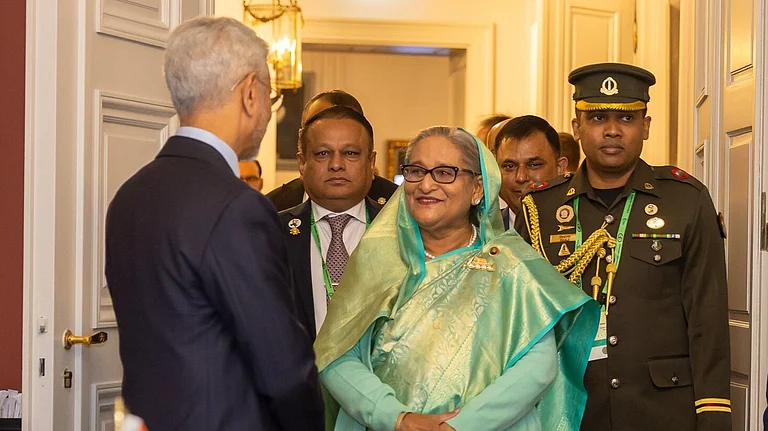
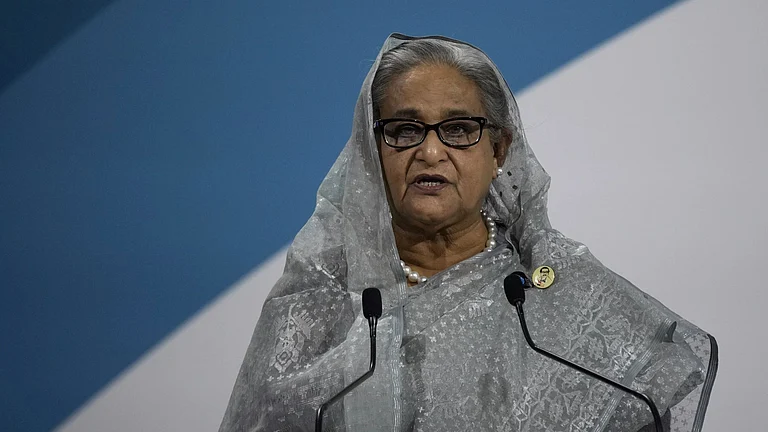
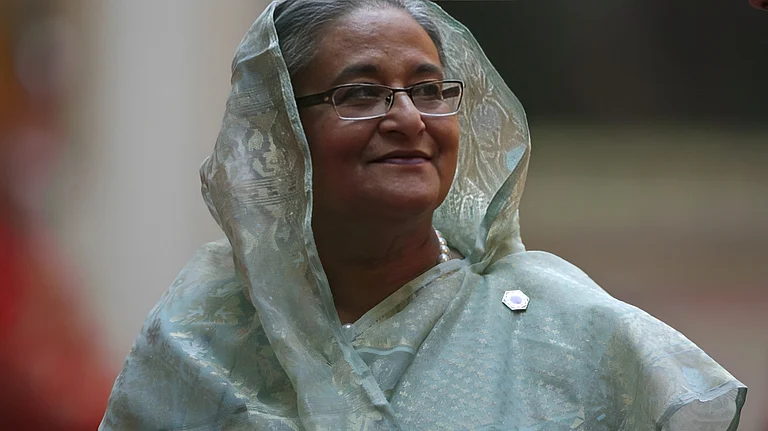
Hasina’s spokesperson, Syed Mozammel Ali, announced that she intended to return to Bangladesh on December 16, the country’s Victory Day, and asked the government to arrange a flight from Delhi to Dhaka on the national carrier, Biman Bangladesh Airlines.
Advertisement
However, The Indian Express reported that Hasina was also considering returning through a land-border crossing, as she cannot board a flight without a valid passport. Awami League leaders and supporters have reportedly surveyed possible entry points along West Bengal and Tripura, including the Petrapole–Benapole crossing.
Hasina’s diplomatic passport was revoked on August 22, 2024, and her national identity card on February 16, 2025. On November 9, her lawyers at London-based Matrix Chambers wrote to Bangladesh’s High Commission in New Delhi seeking fresh documents. The High Commission said it could not verify whether the request had been authorised by Hasina. Bangladesh has maintained that it will not issue her a passport and insists that she must return through extradition. Hasina, meanwhile, has said she is willing to return voluntarily and does not require extradition. The land-border option has not been officially confirmed.
Hasina fled Bangladesh on August 5, 2024, following the student-led uprising that ended her 15-year rule. In November 2025, she was sentenced to death in absentia by Bangladesh’s International Crimes Tribunal over crimes against humanity linked to the crackdown on protesters. She has rejected the charges and the verdict.
Bangladesh has sought her extradition from India and said she would be arrested if she returned. State Minister for Foreign Affairs Humaiun Kobir told Reuters that she could return only through the extradition process, adding that she would be brought back “in handcuffs” or under strict surveillance.
India said on November 25 that Hasina’s stated intention to return voluntarily on a travel document was separate from Bangladesh’s extradition request. MEA spokesperson Randhir Jaiswal said the request was being examined through established procedures.
Published At: