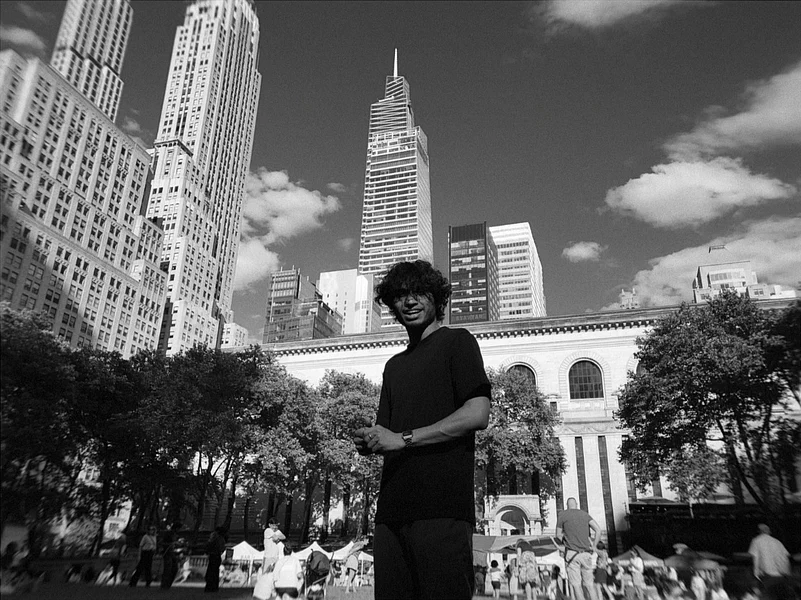
It’s always surreal to learn about a few highly driven, high-performing founders, creative minds, and professionals who, instead of following the established norms of their chosen industry, go beyond the conventional to create a unique niche for themselves, while inspiring the gen-next with their incredible body of work. It’s also essential to put more light on such creative forces who have been working for a larger purpose, to bring about a wave of great positive change in their sectors. This is precisely what Nivedkrishna Thavarayil, based between New Jersey and New York City, has consistently done as a creative director, strategist, filmmaker, writer, and entrepreneur.
In independent cinema, sometimes, a conversation about marketing can eventually lead to script discussions, production planning and long-term creative involvement. One such example could be a collaboration with Infamous Coconuts, led by Abi Varghese, a NYU-trained director/producer. What began as an effort to strengthen the studio’s online presence has today expanded into creative participation across multiple stages of filmmaking.
The collaboration started with a precise objective of revitalizing the studio’s social media presence and helping it reconnect with audiences with its catalogue of work. The early focus therefore was on presenting the studio’s body of work in a more organized and engaging manner. This included highlighting legacy productions along with newer projects, while also creating content that reflected the studio’s identity rather than simply promoting individual releases. This very approach unlike aggressive advertising, centred on audience engagement, archival storytelling, and community conversations surrounding the studio’s earlier work. The response it garnered showcased how audiences often reconnect with familiar stories when they are presented with context and consistency. As the engagement grew, the conversations behind the scenes also grew.




As discussions kept on growing, the collaboration gradually shifted beyond digital communication strategies. Regular conversations began revolving around future feature films, animated projects, short films, and emerging formats such as micro-dramas and vertical storytelling. More creative meetings increasingly focused on development rather than distribution, with brainstorming sessions covering scripts, production possibilities, and long-term content ideas. One feature film had even progressed during early development before eventually being postponed because of scheduling conflicts involving an actor.
Another aspect of the collaboration involved identifying people who could contribute to future productions. Often, independent productions depend on flexible creative networks. Hence, finding animators, designers, illustrators, writers, and technicians who align with a project’s vision has become an essential part of modern film development. The ongoing collaboration therefore expanded to include introducing artists and creative professionals for potential projects under discussion.
The understanding of audience behaviour had also been shaped through earlier work in film campaigns. While working as a creative strategist in India, Nivedkrishna Thavarayil contributed to the marketing campaign for the Hollywood horror film The Pope’s Exorcist. One theatre-based marketing move attracted widespread online attention after videos capturing audience reactions circulated across social media, later being reported by national publications. These experiences and learnings later influenced approaches towards storytelling and digital engagement in independent cinema.
Today, marketing decisions are often discussed while scripts are still evolving. Audience expectations influence development conversations long before a trailer is even released. In a similar fashion, creative collaborations are expected to understand how stories will eventually reach viewers across cinemas, streaming platforms, and social media. In this very evolving environment, Nivedkrishna Thavarayil became gradually involved in discussions that extended beyond campaign execution. The collaboration continued through creative planning, identifying potential collaborators, and exploring ideas for future productions, while remaining aligned with the studio’s marketing responsibilities for upcoming releases.
Notably, Nivedkrishna, who founded Thava Studio in November 2025, transformed it in just a few short months into a dynamic creative agency, overseeing social strategy, content production, and brand identity for clients ranging from restaurants and hospitality brands to wellness studios and entertainers across New York, New Jersey, and Los Angeles. At the same time, he co-founded Growvior Software in July 2025, an AI product company officially recognized by both the Government of India and the Kerala Startup Mission. Alongside these roles, he also engages in writing, directing, and filmmaking, applying storytelling techniques to his work in branding and product development.
What began as a conversation to strengthen a production house’s digital identity gradually evolved into a broader participation in creative development, talent discovery, and long-term planning. The collaboration today continues to showcase how modern filmmaking is no longer confined to isolated departments but is built through individuals contributing wherever their skills create value.