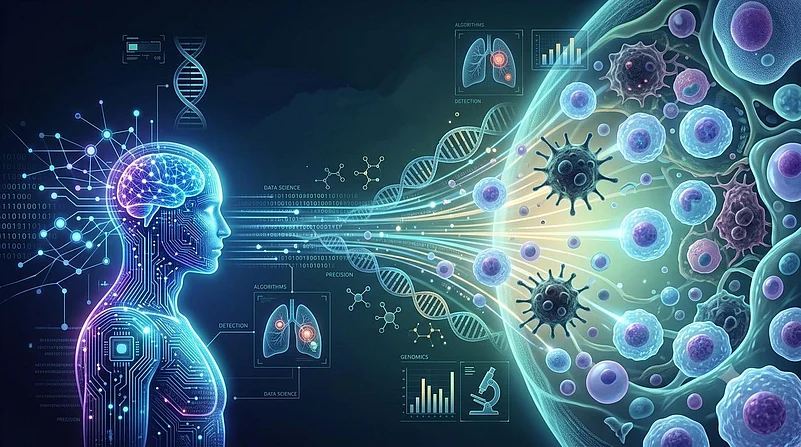
For generations, cancer has stood as one of humanity’s most relentless adversaries—adaptive, unforgiving, and responsible for millions of deaths every year. A diagnosis once carried a near-universal sense of fear and finality. Yet today, something extraordinary is happening. Quietly but decisively, cancer care is undergoing one of the most profound transformations in the history of medicine.
This change has not come from a single drug or discovery but from a convergence: biology, data, technology, and clinical insight working together. From early chemotherapeutic agents such as methotrexate to the immunotherapy revolution led by James Allison to the gene-editing breakthroughs of Emmanuelle Charpentier, medicine has steadily pushed forward. Now, artificial intelligence (AI) has emerged as the central force accelerating this journey—reshaping oncology from reactive and generic care into precision medicine with curative intent.
The most fundamental shift in cancer care has been conceptual. Cancer is no longer understood simply as a disease of organs—breast, lung, colon—but as a disease driven by molecular aberrations: genetic mutations, disrupted signalling pathways, and immune evasion. Next-generation sequencing has enabled clinicians to read the tumour genome in extraordinary detail, uncovering actionable targets that guide therapy. Yet with this capability came a new challenge: data overload.
This is where AI has become indispensable. Machine-learning systems rapidly analyse genomic data, identify driver mutations, predict treatment response, and match patients to targeted therapies or clinical trials. What once took weeks can now be achieved in hours, with greater accuracy and consistency. Precision oncology, once aspirational, is now becoming routine in many cancer centres.


The impact of this revolution is tangible. In colorectal cancers driven by specific genetic defects, single-agent immunotherapy has produced response rates approaching ninety percent. In head and neck cancers, neoadjuvant immunotherapy followed by surgery has improved organ preservation and extended survival from months into years. These are not incremental gains; they are paradigm shifts.
Immunotherapy has further redefined what is considered curable. Immune checkpoint inhibitors—drugs that release the brakes on the immune system—have transformed outcomes in melanoma, lung cancer, renal cancer, and beyond. Patients with advanced disease, once offered only palliative intent, are now living for years, some without evidence of disease.
Cellular therapies have pushed the boundary even further. CAR-T cell therapy, in which a patient’s immune cells are engineered to attack cancer, has brought certain leukaemias and lymphomas close to a cure. Once experimental, these approaches are now part of standard care in selected settings, marking one of the most remarkable achievements of modern medicine.
AI is also reshaping how cancer drugs are discovered. Traditional drug development can take more than a decade. AI systems now screen millions of compounds in silico, predict drug–target interactions, and accelerate the identification of promising therapies. This has fueled the rapid expansion of targeted agents, antibody–drug conjugates, and bispecific antibodies across solid and hematological cancers.
Equally transformative is the promise of personalised cancer vaccines. Built on mRNA platforms validated during the COVID-19 pandemic, these vaccines are designed using an individual patient’s tumour profile. Early trials in melanoma have shown dramatic reductions in recurrence when combined with immunotherapy, while studies in pancreatic cancer and glioblastoma are generating cautious optimism.
Cure also depends on early detection. AI-powered imaging now detects subtle cancers on scans and pathology slides with accuracy comparable to expert clinicians. Liquid biopsies—simple blood tests that detect circulating tumour DNA—enable non-invasive detection, real-time monitoring, and early identification of relapse, often before conventional scans. When combined with AI, these tools offer a powerful early-warning system.
Yet despite extraordinary technological progress, cancer care remains profoundly human. AI does not replace clinicians; it amplifies them. Oncologists interpret data within the context of patient values. Nurses provide empathy that no algorithm can replicate. Supportive and palliative care now stand alongside survival as essential outcomes of good oncology.
For India, this moment carries both opportunity and responsibility. The country faces a rising cancer burden but also possesses world-class scientific talent, digital infrastructure, and a growing biotech ecosystem. Strategic public investment in genomic testing, AI-enabled diagnostics, and affordable access programmes can ensure that these advances do not remain confined to elite centres. Policies that integrate AI into national cancer control programmes, expand insurance coverage for precision therapies, and support indigenous innovation will determine whether India becomes a consumer of innovation—or a global leader in curing cancer. This choice will shape outcomes for millions.
The narrative of cancer is being rewritten. Once defined by fear and inevitability, it is increasingly defined by precision, possibility, and hope. Artificial intelligence is not curing cancer alone, but it is accelerating every step of the journey. The path ahead is illuminated by data, guided by intelligence, and sustained by human resolve. The time to act decisively, collaboratively, and inclusively is now for governments, clinicians, industry, and society everywhere worldwide.
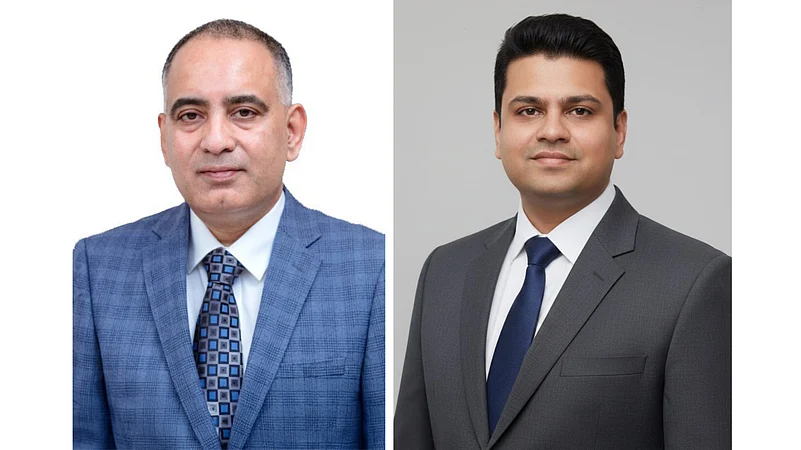
About The Authors:
Dr. T. Raja, Director and Sr. Consultant – Medical Oncology, Apollo Cancer Centres, Chennai
Dr. Vedanta Ray, Consultant – Medical Oncology, Apollo Cancer Centres, Chennai
044 – 6115 1111 | apollocancercentres@apollohospitals.com