Rashtriya Poshan Maah Special
The Yogi government’s efforts lead to improvement in the height and physical growth of UP’s children
Stunting among children below 05 years of age in the state has declined by 8.2% points
The percentage of such children was 39.7 in NFHS-5, which has declined to 31.5%.
Lucknow, September 18: Positive changes are becoming visible in the health and nutrition profile of Uttar Pradesh children due to the efforts of the Yogi government. A significant decline has been recorded in stunting, that is, the problem of low height in proportion to age, among children below five years of age in the state. While the percentage of such children in the state was 39.7 in the National Family Health Survey-5 (NFHS-5), it has declined to 31.5% in NFHS-6. This means that over about four years, stunting declined by 8.2 percentage points.
Dr Pinky Jowal, Mission Director, National Health Mission, stated, “Decline in stunting is significant in a large and demographically diverse state like UP because improvement in a child’s height does not happen in a day. It results from better nutrition, health services, and family care over a long period. The decline in stunting figures between NFHS-5 and NFHS-6 is therefore an important indication of the changing health profile of children in the state. The challenge now is to accelerate this improvement further and ensure that every child gets adequate nutrition and an opportunity for healthy development during the early years of life. To this end, under the directions of Chief Minister Yogi Adityanath, campaigns are being conducted to raise awareness among pregnant women, along with distributing Poshan Potli to them. The 31.5% figure in the survey report also shows that many children are still affected by this problem. Therefore, there is a need to continuously focus on nutrition monitoring during the early years, nutrition of pregnant women, exclusive breastfeeding for six months, timely complementary feeding, prevention of infections and regular growth monitoring of children, and focused work is being undertaken in this direction.”


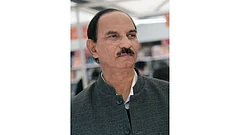

According to Dr Shalini Tripathi, Professor, Department of Paediatrics, King George’s Medical University, “The first 1,000 days of a child’s life are extremely important for their physical and mental development. Malnutrition can be reduced by focusing on adequate nutrition, regular health check-ups, timely vaccination, breastfeeding, and appropriate complementary feeding from pregnancy until the child reaches two years of age. In this direction, the role of nutrition and maternal and child health programmes implemented at Anganwadi centres by the Health Department and at the community level is important. Under the directions of CM Yogi, fresh, hot and nutritious cooked food is being regularly provided to children aged 3 to 6 years through the 'Hot Cooked Meal Scheme' operated under 'Saksham Anganwadi' and 'Poshan-2.0 guidelines'. Around 32.88 lakh children coming to approximately 1.45 lakh co-located and 0.44 lakh non-co-located Anganwadi centres in UP are regularly benefiting from this.”
The professor pointed out, “Stunting is considered an important indicator of long-term malnutrition among children. It is not merely a problem limited to a child’s height. Maternal nutrition during pregnancy, the child’s condition at birth, breastfeeding, complementary feeding after six months, recurrent infections, and nutrition received during the early years all play an important role. Therefore, the decline in these figures can be seen as an important indicator of improved nutrition and child health services. In NFHS-5, stunting among children below five years of age in Uttar Pradesh was recorded at 39.7%. In the same survey, 17.3% of children were in the wasting category and 32.1% were in the underweight category. NFHS-6 figures also show that nutrition-related indicators among children have improved across the country. At the national level, stunting among children below five years of age has declined from 35.5% to 29.3%, while in Uttar Pradesh, stunting has declined from 39.7% to 31.5%.”