Europe and Ukraine have launched a coalition to develop a shared ballistic missile defence architecture.
The plan aims to reduce reliance on expensive US-made interceptors and strengthen Europe’s defences against missile threats.
Ukraine will contribute battlefield experience from defending against Russian ballistic missile attacks.
What Is Europe’s New Ballistic Missile Shield Plan And Why Is Ukraine Involved?
Ten countries, including Ukraine, are working on a new missile defence coalition as Europe seeks to strengthen protection against ballistic threats from Russia.

Summary
Europe is moving to build its own ballistic missile shield after Russia’s war in Ukraine exposed gaps in the continent’s defences, shortages of expensive interceptors and continued reliance on US-made systems.
Nine European countries and Ukraine have launched the Integrated Anti-Ballistic Missile Coalition, a programme aimed at creating a shared European missile defence architecture through collective effort, technological cooperation and shared industrial capacity. Announced on Monday in Paris, the initiative brings together some of Europe’s largest defence industries and Ukraine, the only country on the continent with real combat experience against ballistic missile attacks. Although the coalition has described the plan as “purely defensive”, its creation comes as Russia’s ballistic missile campaign against Ukraine has placed pressure on Europe’s limited existing systems.
Who is part of the coalition — and who is not?
The 10 founding members of the Integrated Anti-Ballistic Missile Coalition are Denmark, France, Germany, Italy, the Netherlands, Norway, Spain, Sweden, the UK and Ukraine.
The announcement was made on the sidelines of the “Coalition of the Willing” summit, a wider grouping of 35 nations led by the UK and France that has coordinated military support for Ukraine since March 2025 and is preparing security guarantees for Kyiv in any eventual peace agreement.
Around 25 heads of state and government attended the Paris meeting, which also focused on further arms deliveries, maintaining sanctions pressure on Russia and supporting Ukraine’s energy sector ahead of winter.
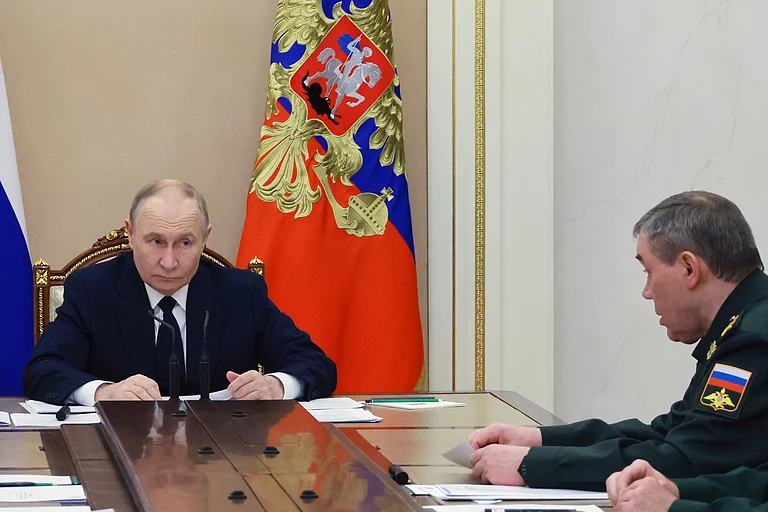

The missile defence coalition combines some of Europe’s largest defence industries with Ukraine’s battlefield experience. Its members intend to build an integrated system through shared industrial capacity, allowing countries to combine technological development, manufacturing capabilities and defence expertise.
Ukraine’s role is particularly significant because it is the only country in Europe with direct combat experience against ballistic missile attacks and has spent years defending against Russia’s missile arsenal.
Advertisement
The absences are also notable. Poland, the Baltic states and Finland — countries closest to Russia — are not among the signatories. The United States, whose missile defence systems remain central to Europe’s current capabilities, is also not part of the coalition.
Why does Europe need its own missile shield?
The coalition is being developed because Russia’s ballistic missile campaign against Ukraine has exposed weaknesses in Europe’s ability to defend itself against advanced missile threats.
European countries currently rely heavily on a limited number of expensive systems, many of them supplied by the United States. The Patriot system, which has played a central role in Ukraine’s air defence, uses interceptors that cost millions of dollars each. Production has struggled to keep pace with global demand, leaving these interceptors scarce and expensive.
The coalition leaders said Europe needs a shared missile defence architecture that can deter and defeat future threats.
“We believe that the protection of Europe requires a global solution of integrated missile defence architecture to deter and defeat future missile threats, developed through collective effort, technological openness and trusted industrial cooperation,” the leaders of the Integrated Anti-Ballistic Missile Coalition said in a statement.
Advertisement
French President Emmanuel Macron said the initiative was aimed at strengthening Europe’s ability to protect itself and Ukraine.
“Faced with the ballistic threat, we are making a clear choice: protect Ukraine, strengthen our collective security, and build the Europe of defence,” French President Emmanuel Macron wrote on X, adding that with the programme “we are strengthening the capabilities Europe needs”.
Ukraine’s President Volodymyr Zelenskyy highlighted the immediate challenge facing Kyiv, saying that Ukraine sometimes lacks the missiles required to intercept ballistic targets. He said this shortage was one of the reasons Ukraine joined the coalition.

Does Europe already have missile defence?
Europe already has missile defence systems, but they remain fragmented, expensive and largely dependent on foreign-made technology.
Several European countries operate the US-built Patriot system, which remains the main defence against ballistic missiles.
Advertisement
The Franco-Italian SAMP/T system is Europe’s main homegrown alternative. It has been used in Ukraine but has had more limited combat experience, and its missiles have also faced shortages.
Europe has also developed missile defence cooperation through the German-led European Sky Shield Initiative, launched in 2022. The project brings countries together to procure and integrate existing systems, including US Patriot batteries and Israel’s Arrow 3 interceptor.
France stayed outside that initiative because of concerns over its reliance on American and Israeli systems.
“This is not a replacement for existing systems… nor is it a substitute for the European Sky Shield initiative, which operates through coordinated procurement and integration into NATO-compatible systems”, Olesia Horiainova, deputy head of the Kyiv-based think tank Ukrainian Security and Cooperation Centre, told Al Jazeera.
“It can be described as the formation of a new European air defence architecture, in which Ukraine currently plays a significant role, outside the scope of NATO and the EU”, she said.
Advertisement
The coalition is not intended to replace NATO or EU defence structures, but to create a separate European missile defence architecture that works alongside existing systems while relying more on European industrial capacity and Ukraine’s operational experience.
What role does Ukraine play?
Ukraine is expected to play a central role because of its experience defending against Russian missile attacks during the war.
“Ukraine has unique experience in countering ballistic and missile weapons,” Horiainova said, pointing out that even the US, the world’s biggest superpower, does not have “the same experience as Ukraine of constantly countering massive barrages of high-tech ballistic weapons whilst facing an enemy with superior firepower.”
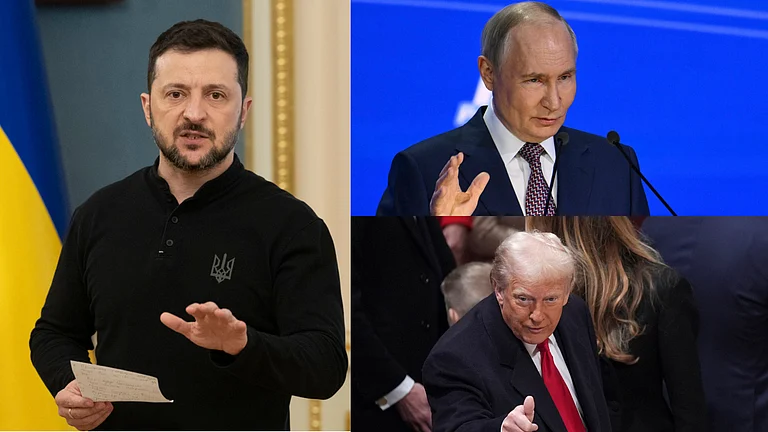
Ukraine’s battlefield experience includes responding to Russia’s Iskander ballistic missiles and Kinzhal missiles. Kyiv has developed practical knowledge of how these systems are used, which interception methods are effective and where current missile defence capabilities face limitations.
Ukraine is also contributing its defence industry. President Zelenskyy has promoted the domestically developed Freyja interceptor programme as a possible European model for producing a lower-cost anti-ballistic missile system.
Washington has separately pledged to license Ukraine to manufacture Patriot interceptors.
The economic argument behind Ukraine’s involvement is partly based on the possibility of producing cheaper interceptors. Fire Point, the developer of Freyja, says Ukrainian-made interceptors could cost a fraction of the price of Patriot missiles. However, the system has not yet been proven in combat.
What happens next — and how long will it take?
The coalition’s declaration commits the 10 countries to establishing common operational requirements, creating joint technical working groups and preparing a roadmap towards the first operational capabilities.
However, the declaration does not provide a timeframe for deployment, according to The Associated Press.
Zelenskyy has argued that the project can move quickly. He told leaders in Paris that Ukraine and its partners could jointly develop a mass-produced, low-cost anti-ballistic system within 12 months, based around Ukraine’s Freyja programme.
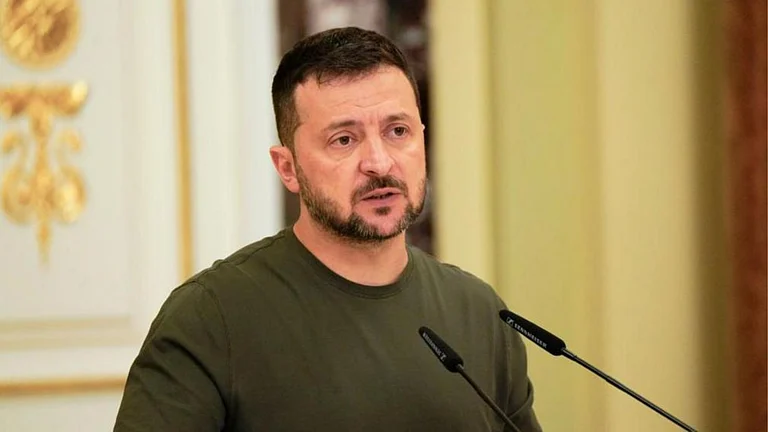
“We need to move as quickly as possible,” he wrote on X after the meeting.
However, bringing a missile defence system into service usually takes years. Olesia Horiainova told Al Jazeera that Europe’s ability to deploy such a system quickly would depend on the speed of political decisions and the ability to move through EU bureaucracy.
Existing programmes show the challenge. Germany ordered Israel’s Arrow 3 system in 2023, activated its first battery in December 2025 and does not expect the full system to become operational before 2030.
The new coalition will therefore have to balance the urgency created by Russia’s missile campaign with the long development and deployment timelines normally required for advanced missile defence systems.
(With inputs from Al Jazeera)
Published At: