Owaisi and Azad are seeking to bring Muslim and Dalit voters together under a common political platform ahead of the 2027 UP Assembly elections.
While the two communities have significant electoral strength, whether their support can translate into a consolidated vote bank remains uncertain.
The alliance could eat into the SP and BSP's traditional support bases, while its impact on the BJP will depend on whether it fragments opposition votes or builds a viable alternative.
Owaisi-Azad Alliance: Can Muslim-Dalit Arithmetic Reshape UP Polls?
AIMIM chief Asaduddin Owaisi and Azad Samaj Party president Chandrashekhar Azad have joined hands ahead of the 2027 Uttar Pradesh Assembly elections. Their alliance aims to consolidate Muslim, Dalit and minority voters and challenge the BJP's electoral dominance.

Summary
AIMIM chief Asaduddin Owaisi and Azad Samaj Party (Kanshi Ram) president Chandrashekhar Azad on November 12 announced the debut of their alliance: Samajik Parivartan Morcha (SPM) for the upcoming assembly elections in Uttar Pradesh. The assembly elections in UP for 2027 is met with a battle of political alliances with the BJP-led NDA, the INDIA Bloc alliance anchored by the Samajwadi Party and Indian National Congress and now the SPM, acting as the third front for the polls.
Both AIMIM and ASP(KR) are strongholds for minority voters, with the former influencing muslim voters and the latter influencing Dalit voters. With the elections encroaching, the freshly formed alliance may prove to be a factor that changes the state's political landscape.
What Is The Owaisi-Azad Alliance And What Is Its Electoral Plan?
Announced in a joint press conference in Lucknow by Owaisi and Azad, the SPM made official their bid for the 2027 elections with Azad as the candidate for chief minister.
Azad claimed that the coalition was open to other parties, including the Samajwadi Party and Congress, if they wanted to contest the elections in support of the alliance to prevent the BJP from returning to power in Uttar Pradesh.
The alliance seeks to become a political platform representing the depressed, oppressed and marginalised sections of UP. Azad rejected the terminology of 'third front' in the election race and said, "People have been calling it a third front, but it is not a third front. It is the Samajik Parivartan Morcha. If you understand its depth, you will realise that it is the first front." He added that the alliance aimed to bring together weaker and deprived communities and help them use their electoral strength to gain political power and address their concerns.
Azad, MP of Nagina, is a prominent Dalit leader from the Jatav community. Meanwhile, Owaisi and the AIMIM capitalise on the Muslim vote. Together, the two are poised to have significant sway over the minority vote in the upcoming elections.
Advertisement
Statistically, an estimated 19% of UP's electorate are Muslims, 21% are Dalits, and 41% are OBCs. Together, Muslims and Dalits, the two groups at the core of the new alliance, account for about 40% of the electorate.
What does this alliance mean for other parties?
The alliance is expected to cause an electoral impact for parties that monopolise minority votes, such as the Bahujan Samaj Party.
The BSP's alliance has always valued oppressed classes and minorities, especially the Jatav vote. Additionally, Mayawati has repeatedly tried to garner support from Muslims. As a result, the SPM coalition may increase competition for voter segments that the BSP has historically aimed to hold onto. As per reports, the BSP’s declining electoral presence over the decades in UP has created space for Azad to expand his support among Dalit voters.
The alliance is also largely expected to hurt the principal Opposition Samajwadi Party (SP) by eating into the anti-incumbency votes. The SP strategy to win votes is now threatened by the SPM alliance. The PDA (Pichhda, Dalit, Alpsankhyak) strategy aims to form a broad electoral coalition against the BJP by uniting minorities, Dalits, and backward castes. Outside of the INDIA bloc opposition framework, the Owaisi-Azad coalition is also making an effort to rally these same constituencies now under a joint banner. Akhilesh Yadav's greatest immediate risk is the Muslim vote. Muslims make up about 19% of the population in Uttar Pradesh, and they have strongly supported the SP as the main opposition party against the BJP in recent elections.
Advertisement
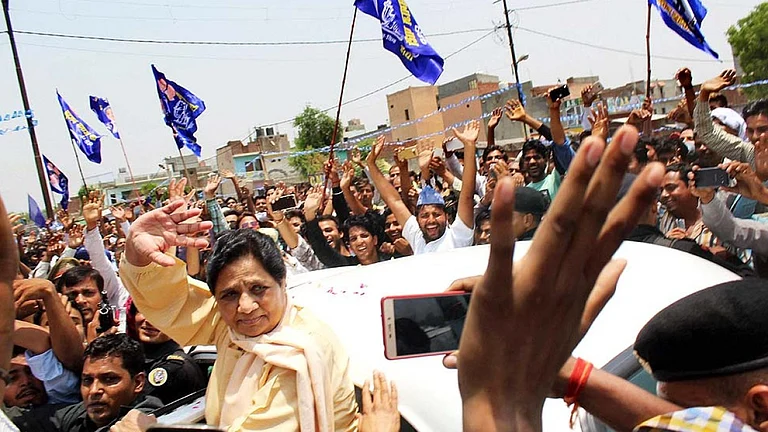
Both Akhilesh Yadav and Mayawati face the electoral challenge posed by the combined political appeal of Owaisi and Azad.
The alliance could give Owaisi a stronger political pitch, allowing him to move beyond seeking a share of the Muslim vote and instead project a broader Dalit-Muslim coalition. Azad brings a Dalit support base and the electoral credibility of having won the Nagina Lok Sabha seat in 2024. Together, the two leaders could position themselves as an alternative social and political formation, rather than being seen merely as players who divide the opposition's Muslim vote.
For Mayawati, the challenge extends beyond the emergence of a younger Dalit leader in Azad. His attempt to combine Dalit political assertion with Muslim representation could create a new social justice platform, potentially attracting voters looking for an alternative to established political formations, including the BSP.
Advertisement
Can the Alliance Threaten BJP?
For the BJP, the alliance could be both an advantage and a challenge. If Owaisi draws Muslim voters away from the SP and Azad attracts Dalit voters from the SP and BSP, a fragmented opposition could benefit the ruling party. In the 2022 Assembly elections, the BJP won 255 seats with 41.29 per cent of the vote, against the SP's 111 seats and 32.06 per cent.
However, Azad's outreach to Dalits and backward communities could challenge the BJP's own social coalition, particularly its support among non-Yadav OBCs and non-Jatav Dalits. The BJP has consolidated these communities through welfare outreach, political representation and alliances with smaller caste-based parties. While the BJP retains a stronger organisational network, the alliance's ability to draw these voters away could make the 2027 contest more challenging.
Chief Minister Yogi Adityanath last week claimed the Samajik Parivartan Morcha was the Samajwadi Party’s “B-team”. He said, “When the SP and the Congress lost all hope (of winning the 2027 polls), they fielded them as their B-team. The SP wants to sail in two boats, but knows that it will drown. Therefore, the party has brought the maulana of Hyderabad (a reference to Owaisi) and Chandrashekhar together to vitiate the atmosphere here.”
Advertisement
He additionally claimed that the SP cannot win over Dalit votes because it has “always insulted the great people from the community”.
“This is why the Dalits never care for them. They (the SP) have brought together these two outfits (AIMIM and ASP) to scuttle the BJP’s prospects. I, however, assure the maulana of Hyderabad that his dream will never come true. By the time he returns to Hyderabad, it will become Bhagyalakshmi Puram,” he said, referring to the alliance.
Whether Owaisi and Azad can consolidate a majority of Muslim and Dalit voters behind their alliance, or merely eat into the existing support bases of the SP and BSP, remains to be seen. Its ability to translate this social arithmetic into votes and seats will ultimately determine whether it emerges as a serious challenger to the BJP or ends up reshaping the opposition's electoral calculations in 2027.
Published At: