The BSP’s electoral dominance in UP has eroded, from 206 seats in 2007 to just one in 2022.
The party has lost support among Dalits, OBCs and Muslims as the SP and BJP expand social coalitions.
Mayawati’s centralised leadership and the exit of key leaders pose major challenges to the BSP’s revival ahead of the 2027 polls.
Column | Behind BSP’s Fall In UP: Lost Dalit Support, A Rising BJP And Mayawati’s Leadership Style
Once a formidable force in Uttar Pradesh politics, the Bahujan Samaj Party has seen its electoral base shrink amid changing caste alignments, the BJP's expansion and weakening party leadership. Can Mayawati revive the party ahead of the 2027 Assembly elections?

Summary
Uttar Pradesh is often called India's ‘political heartland’ due to its size, location, and demography. With 80 Lok Sabha seats, the state's electoral outcomes can shape the country's political direction. Its outsized influence was captured by Rammanohar Lohia when he reportedly said that Article 1 of the Constitution should be read like ‘India is UP and UP is India.’ All but four Prime Ministers have come from the state, and the present Prime Minister Modi also chose to contest from Varanasi, underlining the importance of the state.
Apart from elections, the state has been the platform where major political churnings have happened in recent India, be it Mandal or Mandir. The former led to the politics of social justice and representation, paving the way for parties advocating for backward caste communities. The latter saw the rise of a right-wing party, invoking cultural nationalism, fuelled by religiosity.
The social churning, however, had started much earlier in the ‘Hindi heartland’ state, in the late 60’s itself, as the numerically strong and newly economically empowered peasant middle/intermediate castes gradually shifted their allegiance from the Congress to regionally located parties, most having ‘socialist’ agenda.
The state during those decades witnessed two variants of politics: first, the ‘kisan politics’ by Charan Singh, aimed to bring together middle and upper-backward peasant castes; and second, the ‘politics of representation’ by Rammanohar Lohia, aimed at bringing together backward castes and minorities. The twin politics caused considerable loss to the Congress, the party even losing the 1967 elections.
However, it was only in the aftermath of Mandal, that the state witnessed a ‘silent revolution’ – a non-violent transfer of political power from traditionally dominant land-holding upper castes to Other Backward Castes (OBCs) and Dalits through electoral route.
Anchoring their politics to caste-based reservation in the aftermath of Mandal, parties like Samajwadi Party managed to bring together OBCs as a voting community. What also helped these ‘socialist’ parties was that Muslims veered away from the Congress after the destruction of Babri Masjid. Nineties was also the decade when the BJP gained ascendancy in the state, drawing overwhelming support from the upper castes while shedding its Jana Sangh days’ image of being primarily a party of Bania and Brahmin communities.
Advertisement
BSP's Electoral Performance Over The Years
Similar to the Samajwadi Party, the BSP, formed in 1984 by Kanshi Ram, focussed on capturing political power by mobilising ‘Bahujan Samaj’, consisting of Dalits, backward castes, and minorities. In terms of electoral politics, the strategy proved quite effective in Uttar Pradesh; it allowed the BSP and the Samajwadi Party to form governments alternatively, together or in alliance with the Bharatiya Janata Party (BJP) in the 1990s.
In 1990, due to his failing health, Kanshi Ram, who set up the organisational base of the BSP by recruiting cadres across the state, transferred the party leadership to Mayawati. Under her leadership, the BSP, in alliance with the Samajwadi Party and BJP, came to power in short spells in 1993, 1995, 1997 and 2002. It finally won a majority on its own in the 2007 Assembly elections when the party secured an overall majority, winning 206 seats and 30.43 percent of the vote.
But tides turned, and in the next 2012 elections, the BSP lost 4.5 percentage points in votes and lost 126 Assembly seats. The loss of a core support base was evident as the BSP, which had won the 61 seats reserved for scheduled castes, could manage only 15 out of the 85 reserved seats. The incremental sharp decline of the party continued in the subsequent 2017 and 2022 elections, as the party could manage only 19 and one seat with vote shares of 22.72% and 12.88 %, respectively.
Advertisement

Under Mayawati’s leadership, the party’s decadal decline has also been evident in all other states where it has had some electoral presence, such as in Uttarakhand, Haryana, Madhya Pradesh, Rajasthan, Maharashtra, Chhattisgarh, to name a few.
Punjab has a larger scheduled caste population (31.94%) than Uttar Pradesh (20.7%); it is also Kanshi Ram's home state, where he won a Lok Sabha seat from a general constituency in 1996. The BSP initially made significant electoral gains in Punjab, winning nine Assembly seats with 16.2% of the vote in the 1992 elections. However, the party has since suffered a steep decline. It managed to win one seat in the 1997 elections (vote share 6.37 %), no seat in 2002 (5.6%), two seats in 2007 (4.13%), no seat in the 2012 elections (4.29%), no seat in the 2017 elections (1.52%), and one seat in 2022 (1.77%).
Advertisement
What Explains The Decline Of BSP
So, what could be the possible reasons for the party’s decline in UP as this is the only state where the BSP really succeeded in coming to power?
The first and foremost reason for the party’s decline has been its failure to retain the core support base of Dalits. An ‘ethnic’ party which had championed and gained electorally by taking the cause of all Dalits and other members of the Bahujan Samaj, the BSP has over the period come to be identified as the party of Jatavs-Chamars, which constitute more than half of the state’s Dalit population and are divided into 66 castes.
Second, the dwindling support of the communities, other than the Dalits, namely the non-Yadav OBCs, who had extended substantial support to the BSP in the past, has been an important factor for the decline in its electoral fortune. The party had earlier also received considerable support from Muslims, who constitute 19.26 % of the state’s population.
Advertisement
The BSP had important leaders coming from the Muslim community like Naseemuddin Sidiqqui and from OBC community, it had leaders like Swami Prasad Maurya, Ram Achal Rajbhar, Jang Bahadur Patel, to name a few. However, most of these leaders have left the party to join the BJP and the Congress, taking their community’s support along with them. Muslims, of late, have been tactically voting for the Samajwadi Party because they consider it capable of defeating the BJP, especially if it’s in alliance with the Congress.
"Mayawati has been viewed as the leader who can flip positions swiftly, like abruptly breaking the alliance with the SP just after the 2019 elections."
Third, the BJP’s electoral strategy has been an important factor in taking away the traditional support of the BSP and SP. Numerically strong OBCs like Kurmis as well as smaller castes like Rajbhars and Mauryas have been gradually shifting their support to the BJP. The tactical alliance BJP has entered with smaller caste-based parties like Apna Dal, as well as the decision to give key positions to OBC leaders has helped the party in UP. The improved leader-centric delivery of public and private goods to the lower classes, better law and order situation, popular image of both Modi and Yogi are the other factors which has served the BJP well to the detriment of the BSP and SP. Along with this, the BJP has retained the core support base of upper castes.
Fourth, the leadership of Mayawati has to ultimately take the blame for the party’s decline. She has kept the party under her personal control. Meanwhile, her repeated decisions to appoint and remove her nephew, Akash Anand, have reinforced perceptions of dynastic politics as well as indecisiveness. She also has not allowed the younger leaders to emerge, especially non-Jatavs. She has been viewed as the leader who can flip positions swiftly, like abruptly breaking the alliance with the SP just after the 2019 elections. Moreover, her personal image has been tainted due to corruption charges. It has been alleged that she has not been very politically active due to the fear of government agencies.
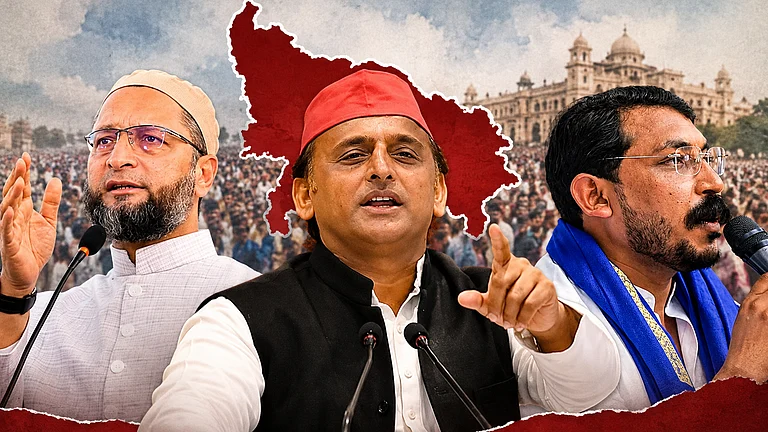
Finally, as the state approaches the 2027 Assembly elections, an attempt to revive the BSP amid shifting caste and political alignments is going to be a tough task for Mayawati. With the Samajwadi Party expanding its PDA coalition, the BJP continuing its outreach among Dalit communities with its iconisation of Dalit and OBC heroes, and Chandrashekhar Azad, the young and articulate Dalit leader emerging as an alternative voice in alliance with Owaisi, where does this leave the BSP’s already frayed traditional support base is the moot question.
(Views expressed are personal)
(The author is a professor at the Department of Political Science, Panjab University.)
Published At: