The ICJ ruled 9-6 that Myanmar committed genocide against the Rohingya in 2017, the first time it has held a state responsible for committing genocide.
Myanmar’s spokeswoman called the ruling unfair and not unanimous, while the court ordered investigations, restitution including safe return, and compensation to be set later.
The ICJ has no direct means of enforcement, and the ruling could affect arguments over Rohingya refugees in India.
Myanmar Calls ICJ Genocide Ruling “Unfair”: What The Court Found, And What Comes Next
Myanmar called the ICJ’s 9-6 ruling that it committed genocide against the Rohingya “unfair”, as the court ordered reparations, prosecutions and a safe return it has no direct power to enforce

Summary
Myanmar’s reply came within a day, and it was not a defence on the facts. It was a complaint about the vote. A day after the International Court of Justice found, by nine votes to six, that Myanmar committed genocide against the Rohingya, the government spokeswoman, Khaing Khaing Soe, told a press conference in Naypyitaw that her country had been “unjustly accused”.
Not all 15 judges agreed, she said, so the decision was “not fair”. Her words, relayed by Reuters and AFP, are the government’s first response. A delegation led by a minister, Ko Ko Hlaing, had attended the reading in The Hague.

What The Court Found, And Ordered
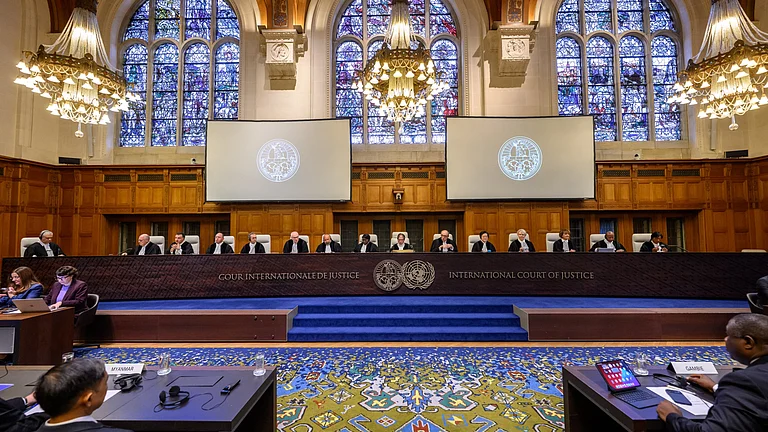
The judgment, read out on Thursday, is the first time the ICJ has held a state responsible for committing genocide in its 80-year history. It came seven years after the case was filed by The Gambia, in a hearing where Aung San Suu Kyi defended Myanmar in 2019.
The court found that Rohingya villages were systematically destroyed and replaced with non-Rohingya inhabitants, and that the only reasonable inference was an intent to destroy the group. It also rejected Myanmar’s claim that it was conducting counter-insurgency operations, saying there was no evidence the army distinguished civilians from fighters.
Security forces, the court found, killed about 10,000 Rohingya and committed widespread atrocities, including sexual violence and attacks on children.

The court ordered Myanmar to end continuing violations, investigate and punish suspects, give assurances against repetition and provide restitution, including conditions for a safe, voluntary and dignified return, and compensation. The amount is for a later phase, and Myanmar must report on its measures within two years.

Judgment Without A Bailiff
Enforcement is the weak joint. The ICJ has no direct way to enforce its ruling, and non-compliance can only be reported to the UN Security Council, where China holds a veto. China, a rare enduring partner for Myanmar since the 2021 coup, has raised concerns of judicial overreach, and the Chinese judge on the bench voted in Myanmar’s favour on all but one count.
Advertisement
UN human rights chief Volker Türk said the judgment “must now translate into real action”. An analyst in Cox’s Bazar cautioned that repatriation would not begin immediately. Bangladesh welcomed the ruling and urged Myanmar to implement it. It shelters about 1.2 million Rohingya.
For India, the ruling lands on an unsettled question. UNHCR has counted nearly 79,000 refugees from Myanmar in India, including around 22,000 registered Rohingya, and rights groups say the Supreme Court declined in May 2025 to stop their deportation, saying the right to reside in India is reserved for citizens.
One legal analysis argues the judgment could shape arguments in Indian proceedings on Rohingya refugees and deportation. Advocates have urged continued support for Rohingya in India and other countries, where they face mistreatment, detention and the fear of deportation.
Advertisement
A court has now said, in law, what survivors have said for nine years. Whether that sentence ever reaches Rakhine is a question the court cannot answer.
Published At: