India's response to terrorism has expanded significantly since the 26/11 Mumbai attacks
The PRAHAAR strategy connects intelligence, military action, counter-radicalisation and financial investigations
India is increasingly targeting cross-border networks, terrorist financing and recruitment alongside armed groups
What 26/11 Changed: India Is Going After The Machinery Of Terror, Not Just Its Foot Soldiers
From taking its case against cross-border terrorism to international summits to strengthening intelligence networks, military deterrence and financial investigations, India's counterterrorism strategy has expanded well beyond security operations. The focus is increasingly on dismantling the networks and support systems that sustain terrorism.

Summary
The 26/11 Mumbai attacks changed India's approach to domestic security and sharpened its campaign against cross-border terrorism. Eighteen years later, that campaign has become a recurring feature of New Delhi's diplomatic engagement, from the United Nations and BRICS to the Shanghai Cooperation Organisation (SCO). India's message remains consistent: no double standards on terrorism, no safe havens and accountability for those who finance or support terrorist organisations.
The changing security landscape is reflected in the casualty figures. In 2001, the year terrorists attacked Parliament, the South Asia Terrorism Portal (SATP) recorded 3,005 militants and insurgents killed across India, alongside 883 security personnel and 1,508 civilians. In 2008, the year of the 26/11 Mumbai attacks, the corresponding figures were 1,232, 366 and 915. By 2026, the provisional all-India figures had fallen to 135 militants, 22 security personnel and 84 civilians. These SATP estimates draw on media reporting and cover multiple conflict theatres, including Jammu & Kashmir and the Northeast frontier.
The decline accompanies a wider transformation: India has moved towards preventing attacks, disrupting recruitment and financing, pursuing perpetrators across borders and using diplomatic and economic pressure against terrorist networks.
26/11 And The Rebuilding Of India's Security Architecture
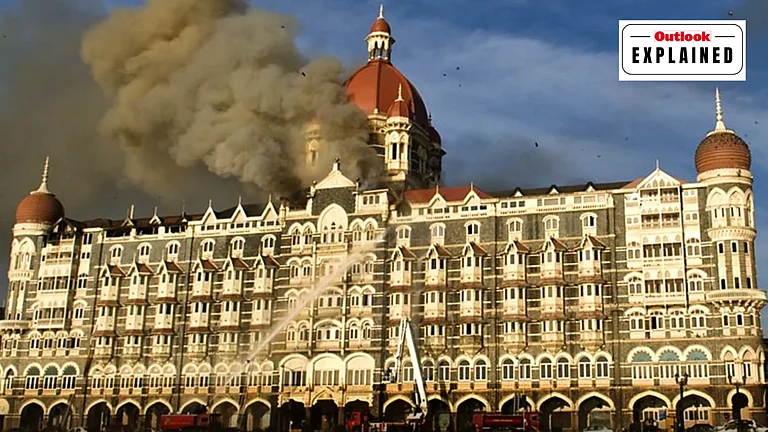
The 1999 hijacking of Indian Airlines flight IC-814 and the December 2001 Parliament attack had exposed serious gaps in India's security response. The 60-hour Mumbai siege in November 2008 brought weaknesses in intelligence coordination, coastal surveillance and rapid deployment into sharp focus.
The UPA government established the National Investigation Agency (NIA) under the NIA Act, 2008, and introduced regional National Security Guard hubs in Mumbai, Chennai, Hyderabad and Kolkata. The Multi-Agency Centre (MAC), which facilitates intelligence-sharing between central and state agencies, was also strengthened.
Subsequent governments expanded this architecture through NATGRID, which connects authorised agencies to information held across government databases, and the Crime and Criminal Tracking Network and Systems (CCTNS), which links police stations across jurisdictions. The Modi government further expanded the NIA's reach and strengthened the legal and intelligence framework.
Advertisement
The institutional changes initiated after 26/11 thus became the foundation for a broader, intelligence-led approach.
From Detecting Attacks To Dismantling Networks
The Home Ministry's 2026 National Counter-Terrorism Policy and Strategy, PRAHAAR, seeks to bring India's expanding capabilities under a common framework. Its priorities include prevention, coordinated responses, international cooperation, counter-radicalisation, rule-of-law safeguards and societal resilience.
The strategy identifies a more complex threat environment involving drones, encrypted messaging, social media, cryptocurrency and the dark web. Terrorist networks can also overlap with narcotics trafficking, illegal arms syndicates and organised crime.
India's response increasingly relies on connecting intelligence from different agencies. MAC has been expanded towards district-level coordination, while NATGRID, the Intelligence Bureau, NIA and state Anti-Terrorism Squads form part of a wider information-sharing network. Data analytics and digital forensics are being used to identify links between individuals, financial transactions and logistical networks.
Advertisement
At the NIA's counterterrorism conference on November 19, Home Minister Amit Shah called for a coordinated framework extending down to the police-station level. He also announced approval for 16 additional NIA branches and two zonal offices. The emphasis is on identifying networks and building investigations before they translate into attacks.
Cross-Border Deterrence And The Pakistan Question
India's response to major terrorist attacks has acquired a more visible military dimension. Following the 2016 Uri attack, the government announced surgical strikes against terrorist launch pads across the Line of Control. The February 2019 Pulwama suicide bombing, which killed 40 CRPF personnel, was followed by Indian Air Force strikes at Balakot.
Operation Sindoor followed the April 2025 Pahalgam attack, in which 26 people were killed. The government said nine terrorist infrastructure sites in Pakistan and Pakistan-occupied Jammu and Kashmir were targeted in the initial strikes. It presented the operation as a measured response to cross-border terrorism.
Advertisement
This approach reflects India's growing willingness to use military force against infrastructure it identifies as supporting terrorist activity. Defence Minister Rajnath Singh has described it as deterrence by punishment, signalling that major attacks could invite a response beyond the immediate site of an incident.
The military response has also been accompanied by diplomatic and economic measures. After Pahalgam, India placed the Indus Waters Treaty in abeyance, closed the Attari Integrated Check Post and prohibited direct and indirect imports of goods originating in or exported from Pakistan. Bilateral trade had stood at $558.24 million in FY2024–25, just 0.05% of India's total global trade. The restrictions carried greater strategic and diplomatic significance than their immediate effect on commerce.
Regional Security Approaches Differ
Jammu and Kashmir remains central to India's concerns over cross-border terrorism, particularly foreign operatives, infiltration and local recruitment. Government figures show terrorist-initiated incidents in the region declining from 228 in 2018 to 12 in 2025. Civilian fatalities fell from 55 to 28, while security-force fatalities declined from 91 to 16.
Advertisement
At the November 2026 NIA conference, Shah said Kashmir no longer had locally recruited terrorists born in India following the killing of Lashkar-e-Taiba operative Latif Bhat.
The Northeast demonstrates the role of political settlements alongside security operations. The Home Ministry reports an 82% decline in insurgency incidents between 2014 and 2025, alongside reductions of 90% in security-force casualties and 97% in civilian deaths. Peace agreements with groups including the NDFB and Karbi insurgents enabled thousands of cadres to surrender, disarm and enter rehabilitation programmes.
A similar combination of security and development has shaped the campaign against Left-Wing Extremism. The government declared that no district remained officially LWE-affected from March 31, 2026, while continuing to monitor legacy and thrust districts. Former security camps are also being converted into Seva Dera Kendras providing healthcare, welfare access and skill development.
These experiences show why India's responses differ across regions. Military pressure and intelligence remain important, but negotiations, rehabilitation, infrastructure and local governance have also contributed to reducing violence.
Following The Money And Taking The Campaign Abroad
Terrorist organisations require financing, weapons, logistics and recruitment networks. India's strategy increasingly targets the links between terrorism, narcotics trafficking, hawala transactions, illegal arms and digital financial channels.
The Financial Action Task Force's 2024 evaluation acknowledged India's understanding of terrorist-financing risks and its progress in financial investigations and international cooperation. It also identified shortcomings in securing convictions against terrorist financiers and monitoring smaller financial institutions and virtual-asset service providers. Disrupting financial networks remains an ongoing challenge.
Diplomacy is another front. The government says India maintains Joint Working Groups on Counter-Terrorism with 27 countries and participates in mechanisms through BRICS, the SCO, BIMSTEC, the European Union and the Quad. Cooperation includes intelligence-sharing, extradition, terror financing and efforts against online radicalisation.
India has also continued advocating the Comprehensive Convention on International Terrorism at the UN, an initiative it first proposed in 1996. The objective is to establish a universal legal framework against terrorist acts and build international consensus against cross-border safe havens and financing.
The extradition of Tahawwur Rana from the United States in April 2025, in connection with the 26/11 conspiracy, demonstrated how bilateral legal cooperation can support investigations nearly two decades after an attack.

The Wider Counterterrorism Shift
PRAHAAR brings many of these developments under a common national framework, linking intelligence and military responses with financial investigations, international partnerships, rule-of-law safeguards and rehabilitation.
Falling fatalities represent an important change, but the threat hasn't disappeared. Foreign operatives, digital recruitment, financial networks and attacks on critical infrastructure continue to test India's security capabilities.
The larger shift is towards treating terrorism as a cross-border ecosystem rather than solely a domestic law-and-order challenge. India's response now extends from intelligence-gathering and military deterrence to international diplomacy, economic restrictions and development in vulnerable regions. The test will be whether these instruments can prevent attacks, dismantle the networks behind them and sustain security gains over time.
Published At:
Tags