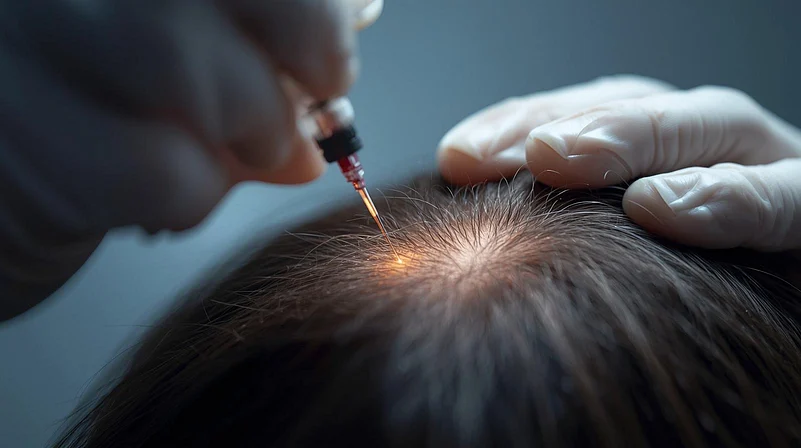
Most people try a hair treatment the same way they try a new shampoo — pick something that sounds good, use it for a few weeks, and hope for the best. That approach rarely works. With so many options available today, from oils and serums to supplements and clinical therapies, knowing how to actually evaluate whether something is worth your time (and money) matters more than ever.
Start by Understanding What Kind of Hair Loss You're Dealing With
Not all hair loss is the same, and this is where most people go wrong from the start. There are several distinct types — androgenetic alopecia (the genetic kind), telogen effluvium (stress or nutritional-related shedding), alopecia areata (autoimmune), and others. Each has a different cause, a different progression, and a different response to treatment.
A treatment designed for one type may do absolutely nothing for another. Before spending money on anything, it's worth getting a basic understanding of what's actually happening on your scalp. A dermatologist visit or even a detailed hair analysis can give you that clarity. Going in blind means you could be treating the wrong problem entirely.
Look at the Mechanism, Not Just the Marketing
Every hair product makes bold claims. The better question is: how does it actually work?
Some treatments work by blocking DHT (a hormone that shrinks hair follicles in genetic hair loss). Others improve scalp circulation, reduce inflammation, or correct nutritional deficiencies. Understanding the mechanism helps you match the treatment to your specific cause.
For example, if your hair fall is driven by iron deficiency or a lack of B12, a DHT-blocking serum isn't going to do much. Researching Vitamins for Hair Loss and their role in follicle function can help you figure out whether internal deficiencies might be contributing to your condition — something many people overlook when they focus only on topical treatments.
Check the Evidence Behind the Treatment
This doesn't mean demanding a clinical trial for every product, but there's a reasonable middle ground between "blind trust" and "full skepticism."
When evaluating a treatment, ask:
Has it been studied or tested in any documented way?
Are the active ingredients backed by dermatological research?
Are before/after claims verified or just testimonials?
Is there transparency about what's in the formula and why?
Treatments with clearly explained ingredients, at effective concentrations, are generally more trustworthy than those hiding behind vague proprietary blends. Look for published research on the core ingredients, not just brand-driven content.
Give It a Realistic Timeline — and Know What to Track
Hair grows slowly. Most treatments need at least three to six months before you can fairly assess whether they're working. This is one of the main reasons people give up early or keep switching products — they expect faster results than biology allows.
What should you track?
Rate of daily shedding (roughly 50–100 strands a day is normal)
New hair growth at the hairline or parting
Overall scalp health — less flaking, itching, or oiliness
Hair texture and thickness over time
Take photos in consistent lighting every month. It sounds tedious, but visual comparison over time is one of the most reliable ways to spot change — positive or negative.
Consider the Whole-Body Picture
Hair health doesn't live in isolation. Chronic stress, disrupted sleep, thyroid imbalances, poor gut health, and hormonal shifts all have measurable effects on hair growth cycles. If you treat only the scalp while ignoring systemic issues, you're working against yourself.
This is where integrated approaches tend to outperform single-solution products. Brands like Traya have built their model around this idea — addressing hair loss from multiple angles including internal health, scalp treatment, and lifestyle factors together. If you've been wondering does Traya really work for cases like yours, their own published outcomes and the structure of their protocol are worth reading through with a critical eye.
Final Thoughts
Evaluating a hair treatment isn't about finding the most expensive option or the most talked-about one. It's about matching the right solution to the right problem, understanding how long change genuinely takes, and paying attention to what your body is telling you beyond just the scalp. The more informed you are going in, the less likely you are to waste time cycling through things that were never suited to your situation in the first place.
Disclaimer: This is a sponsored article. All possible measures have been taken to ensure accuracy, reliability, timeliness and authenticity of the information; however Outlookindia.com does not take any liability for the same. Using of any information provided in the article is solely at the viewers’ discretion.