Green firecrackers are understood to emit around 30 per cent less particulate emissions than conventional crackers.
People may reasonably interpret ‘green crackers’ as environmentally friendly, but mistakenly assume that it means pollution-free.
With 60–70 per cent of the original particulate emissions still remaining, we risk returning almost to square one.
Column | Science And The Illusion Of Green Firecrackers
The word ‘green’ creates an impression of environmental friendliness, yet the reality appears considerably compromised

Summary
Across the world, loud bangs and bright lights are associated with community spirit, excitement, thrill and childhood traditions, fulfilled through the bursting of firecrackers. Indian weddings, New Year celebrations, and festivities are no exception, reflecting a blend of historical, cultural and psychological influences. Yet, there are contradictions. My paediatrician friends often tell me that when babies are born, they know only two fears: “loud sounds” and the “fear of falling”. So, when a cracker is burst, a car alarm goes off, birds become restless, dogs start barking and babies begin to cry. Scientifically, when you burn something, it produces emissions, and their quantity, severity and toxicity depend on what and how much is burned. These emissions contribute to air pollution, with serious implications for human health.

Generating Awareness About Toxic Air
Air pollution remains one of India’s biggest environmental challenges. This raises an obvious question: when we are concerned about our own health and well-being, while struggling to control emissions that disproportionately affect infants and the elderly, how should we approach firecrackers? Perhaps the softer, more constructive approach is to spread awareness grounded in scientific evidence, educate people about the harm and encourage informed choices. Almost every household may have a baby with sensitive ears, an elderly person with heart disease, or a family member suffering from bronchitis or asthma, already vulnerable to toxic air pollution. What about creating awareness and empathy which may help us celebrate responsibly, without compromising the health and well-being of those around us? However, there is a catch.
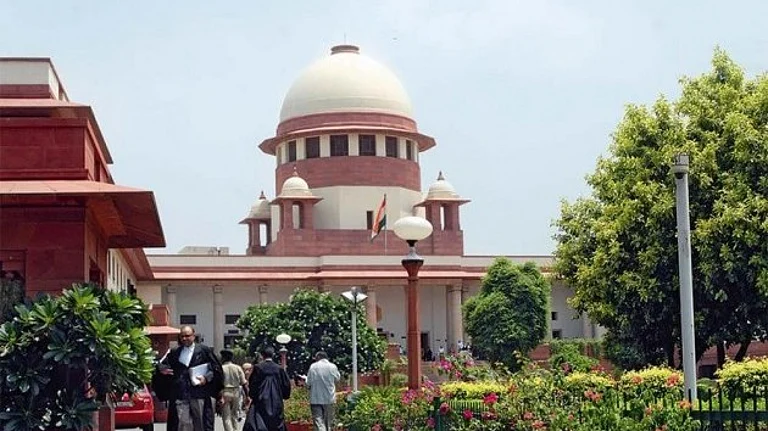
When the Supreme Court banned conventional firecrackers in Delhi, an environmental research establishment introduced an alternative in 2018, termed ‘green firecrackers’. These are understood to emit around 30 per cent less particulate emissions than conventional crackers. Put simply, this still leaves nearly 70 per cent of particulate emissions intact, a figure worth underlining. As an ordinary citizen, the word ‘green’ evokes pleasant images of pristine surroundings, lush gardens and a sense of environmental well-being. How fair, then, is it to call firecrackers ‘green’ and suggest that they can be made environmentally friendly while retaining such a substantial emission burden? Can they genuinely deliver the environmental benefits that the nomenclature implies?

Nomenclature To Overshadow The Science
The word ‘green’ creates an impression of environmental friendliness, yet the reality appears considerably compromised. When the label conveys an environmental promise that the actual product does not fully deliver, the stated regulatory objective risks contradicting its real-world outcome. The argument that ‘green firecrackers’ constitute a scientific and regulatory oxymoron, or are simply “hogwash”, remains a subject of considerable debate and criticism. And therein lies our failure: we risk sending society the wrong environmental message by allowing the nomenclature to overshadow the science.
Advertisement
Bursting firecrackers triggers two distinct issues: a rapid increase in air pollutant concentrations, particularly PM 2.5 and PM 10, and changes in their chemical composition potentially making the particles extremely toxic to human health. Traditional firecrackers release heavy metals, toxic gases and particulate matter, sharply deteriorating air quality while generating intense noise. Their formulations typically contain gunpowder—a mixture of potassium nitrate, sulphur and charcoal—along with metals such as magnesium, aluminium and zinc. Different colours are produced using compounds such as barium (green), copper (blue) and sodium (yellow). The explosive noise results from the rapid expansion of gases generated by chemical reactions within a confined casing, producing a sudden pressure surge and shockwave. Indian green firecrackers are designed to reduce emissions compared with conventional fireworks and avoid certain highly toxic substances, including barium nitrate, arsenic, mercury and cadmium. However, lower total particulate emissions do not necessarily mean proportionately lower health risks. An often-overlooked concern is their potential to generate substantial ultrafine particles. Ultimately, as long as green firecrackers rely on chemical combustion, they continue to release smoke, fine soot and chemical pollutants into the atmosphere. Reduced emissions should not be mistaken for pollution-free combustion.
Advertisement
Mistaken Perception
The most concerning issue is the public perception created by the word ‘green’. People may reasonably interpret it as environmentally friendly, but mistakenly assume that it means pollution-free—which it certainly does not. Worse, if this perception encourages people to burst 30–40 per cent more crackers as they are not banned, the reduction of emissions could be substantially negated. With 60–70 per cent of the original particulate emissions still remaining, we risk returning almost to square one. This could become another policy illusion, much like the failed ‘odd-even’ experiment, cloud seeding or smoke towers, where years were spent pursuing seemingly attractive interventions before confronting their limited real-world impact.
(The author is Chair Professor, National Institute of Advanced Studies, IISc-campus, Bangalore, and Founder Project Director, SAFAR)
(Views expressed are personal)
Published At: