MGNREGA has been replaced by the VB-G RAM G Act, effective from July 1, 2026
The new law increases guaranteed workdays to 125 but introduces a 60-day seasonal blackout and mandatory e-KYC
States and activists have questioned the new funding model, the digital verification system and whether the promised work guarantee can be delivered
Outlook Explains | What VB-G RAM G Changes For Rural Workers
India's biggest rural employment programme has been overhauled, introducing longer work guarantees but also tighter funding, stricter eligibility rules, and a major shift in financial responsibility to states

Summary
India's rural employment landscape has undergone its biggest transformation in two decades. Effective July 1, 2026, the Mahatma Gandhi National Rural Employment Guarantee Act (MGNREGA) has been repealed and replaced by the Viksit Bharat-Guarantee for Rozgar and Ajeevika Mission (Gramin) (VB-G RAM G) Act, 2025, ushering in a new framework for rural employment.
MGNREGA employed more than five crore rural households in the 2025–26 financial year. With a central allocation of ₹95,692.31 crore for 2026–27, the new programme fundamentally reshapes how rural employment is guaranteed, financed and implemented across the country.
Why MGNREGA Is Being Replaced
As per the Ministry of Rural Development, “the primary objective of the VB-G RAM G Act, 2025, is to align the rural development framework with the national vision of Viksit Bharat @2047.”
The transition from MGNREGA to VB-G RAM G represents a fundamental structural pivot. Under the old MGNREGA framework, the program was universal and legally required to provide work whenever a rural household demanded it, with central funds scaling to meet that demand. Under VB-G RAM G, the system is strictly capped within a fixed budget determined by the Union government.
Furthermore, Section 5(1) of the new Act gives the Centre the power to “notify specific rural areas” where the scheme will be implemented, rather than keeping it automatically universal across all rural districts.
100 Days Vs 125 Days: What's New?
The most visible change for rural households is the expansion of guaranteed employment. VB-G RAM G increases the maximum guaranteed workdays from 100 days to 125 days per year for families holding valid job cards.
However, the program introduces a new 60-day mandatory “blackout period” during peak agricultural sowing and harvesting seasons to facilitate the availability of labour. During these two months, the public works program will completely pause. The Union government introduced this pause in the scheme to prevent public works from competing with commercial agriculture, aiming to ensure that private farmers have adequate access to agricultural labour.
Several states, including Punjab, Karnataka, and Telangana, have formally objected to this blackout provision, arguing that blocking work during key parts of the year could leave vulnerable labourers without any income when localised crop failures occur.
Advertisement
Note that reversing its earlier stand rejecting the law that replaced MGNREGA, Punjab has notified that it will be implementing the Centre's VB-G RAM G scheme from July 1.
Further, activists strongly dispute the government's claim of an increased 125-day work guarantee. Ground calculations by rights groups indicate that the ₹95,692 crore budget, when mathematically divided across India's massive rural labour pool and combined with the hefty 40% funding burden forced onto cash-strapped states, is fundamentally inadequate. They allege that, in the best-case scenario, the current funding will dynamically restrict actual availability to a meagre 42 days of work per household annually.

The mandatory 60-day agricultural “blackout period” too has been heavily criticised as an anti-worker measure. Activists argue that turning off public works during peak farming seasons deliberately strips landless labourers and marginal farmers of their bargaining power, forcing them to accept lower wages and tougher conditions from wealthy, large landowners.
Advertisement
Will Wages Change Under The New System?
The Union government has officially notified an interim base wage rate of ₹300 per day for the rollout, ensuring that no notified wage under the programme is below ₹300 per day. According to a Ministry of Rural Development statement, “the national average notified wage has increased from ₹298.8 per day under MGNREGA to ₹327.4 per day under VB–G RAM G, representing an average increase of ₹28.6 per day.” Further, all payments under the new system will bypass local intermediaries and be routed directly into bank or post office accounts via compulsory Direct Benefit Transfer (DBT).
Wages are to be paid weekly or within fifteen days from the closure of the muster roll, failing which workers shall be entitled to delay compensation in accordance with the provisions of the Act.
While a national baseline has been established, multiple state governments are actively lobbying the Ministry of Rural Development for localised hikes to match regional market realities. For instance, Bihar has formally requested its daily rate be raised to ₹413, while Jammu and Kashmir has sought a baseline of ₹311. Jharkhand, Punjab, and Uttarakhand have independently submitted demands for competitive, market-linked wages, citing tough terrains and inflationary pressures.
Advertisement
While the new policy outlines an increase in wages, labor rights activists warn that this benefit is severely compromised by the transition from a demand-driven safety net to a centrally capped framework. Under the original MGNREGA model, rural employment was a justiciable legal right, requiring the Central government to dynamically scale and release funds to match actual work demand on the ground. In contrast, the new VB-G RAM G Act enforces a rigid, top-down budgetary ceiling; activists point out that once a district exhausts its fixed central allocation, state governments will be forced to either shoulder 100% of the financial burden themselves or legally restrict workers' access.
How Funding Rules Have Changed
The financial architecture of rural employment has been completely redrawn, shifting massive fiscal responsibility from the federal level down to individual states.
Under the existing funding model for MGNREGA, the Central Government bears almost the entire financial responsibility for the scheme. It funds 100 per cent of labour wages and 75 per cent of material and administrative costs, while state governments contribute only 25 per cent of material costs. In effect, states account for roughly 10 per cent of the programme's total expenditure, making it a predominantly centrally funded rural employment scheme.
Advertisement
The proposed VB-G RAM-G model marks a significant shift in this arrangement by introducing a fixed 60:40 cost-sharing formula. Under the new framework, the Centre will fund 60 per cent of the total programme expenditure, while states will be responsible for the remaining 40 per cent. The only exceptions are the Northeastern states, Himalayan states, and Union Territories with legislatures, where the existing 90:10 funding pattern will continue. For Union Territories without a legislature, the Centre will continue to bear 100 per cent of the financial cost.
Why Some States Fear Higher Financial Burdens
The requirement to shoulder 40% of the total budget has caused widespread anxiety across state capitals. Even BJP-led states like Madhya Pradesh and Bihar, alongside opposition-ruled states like Jharkhand, have openly questioned the sustainability of this model.
Compounding the financial strain are two new mechanisms introduced in the draft rules:
The Sixteenth Finance Commission Formula: The Centre will now use the Sixteenth Finance Commission's horizontal devolution metrics to cap the baseline “normative allocation” given to each state. Under this top-down calculation, states like Tamil Nadu, Andhra Pradesh, Rajasthan, and Maharashtra are projected to receive lower central funding pools than they did under MGNREGA. Conversely, shares for states like Uttar Pradesh, Bihar, and Gujarat are expected to rise.
Performance-Linked Retainers: Starting next fiscal year, the Centre will withhold a designated portion of each state's funding allocation. These funds will only be released if states meet strict central metrics, including clocking zero delays in wage payments, absolute compliance with social audits, and meeting high physical work completion rates. Furthermore, if a state experiences intense local economic distress and exceeds its capped “normative allocation”, the state must bear 100% of that excess expenditure alone.
By shifting fund allocation power to top-down mathematical formulas controlled by the Centre, the Act effectively marginalises Gram Panchayats (local village councils), rights groups say. Previously, village councils held autonomy over assessing local work demands and designing localised assets. Activists claim this extreme centralisation directly violates the constitutional spirit of rural self-governance.
What Rural Workers Need To Know
For the individual labourer on the ground, the immediate transition has been designed to prevent an abrupt stoppage of work through explicit Transitional Provisions:
Job Card Validity: Existing MGNREGS job cards will not become invalid on July 1, given their e-KYC has been completed. They remain fully legal for securing work under VB-G RAM-G.
Mandatory Verification: To remain eligible, workers must ensure their existing job cards undergo e-KYC verification and renewal through their local Gram Panchayat.
Card Upgrades: These verified legacy cards will remain active until state administrations systematically replace them with new, unified Gramin Rozgar Guarantee Cards over the coming months.
The e-KYC verification system institutionalises strict digital parameters, including mandatory facial recognition and biometric attendance software. Field workers have flagged catastrophic flaws in these systems, particularly in remote areas with poor internet connectivity. Activists have documented instances where women were repeatedly denied their daily wages simply because minor changes in appearance or software glitches caused them to fail facial authentication, occasionally causing entire worksites to disappear from electronic logs.
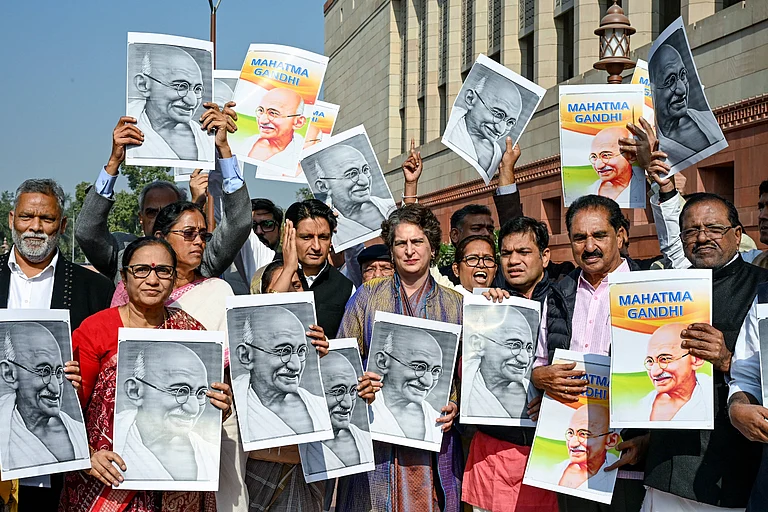
The rollout on July 1 has been met with fierce resistance, including coordinated nationwide protests led by rights groups like the NREGA Sangharsh Morcha (NSM) and the All India Agricultural Workers' Union (AIAWU). Their main objections centre on structural, financial, and digital vulnerabilities.

Published At: