The National Mineral Development Corporation is in the process of consulting villagers for a new mine in Bailadila, Bastar
The NMDC is planning to invest around Rs 2,000 crore in the new planned mine, which the locals are opposing
The mine is expected to generate a wealth of around Rs 60,000 crore in its lifetime of around 40 years
Endgame For Maoism: Why Tribals in Chhattisgarh Are Resisting Mining Again
With the Maoist movement ending in Chhattisgarh, the government is, once again, exploring mining options in Bailadila, Bastar. What can be done differently this time?

Summary
The current phase of the Maoist movement—which is about to end—started around 60 years ago in Naxalbari in West Bengal. If one wants to understand the reasons behind this movement, then one needs to also look at another thing that started around the same time—mining activities in Bailadila hills in Bastar, Chhattisgarh.
Although iron ore reserves were discovered in the Bailadila hills in Bastar long ago, their presence has had political implications since then. Though hard to prove, some claim that the Maharaja of Bastar had agreed to merge with the Nizams of Hyderabad, who were eyeing Bastar because of the presence of iron ore in Bailadila.
Though the movement in Naxalbari in Bengal, and thereafter in Bihar and Andhra Pradesh, started to fight landlords, the reasons were different in the forests of Central India, where there were no landlords in the tribal regions. Here, the main reason was the ownership of forests.
In any forested area, mining does not occupy more than 10 per cent of the geographical area, so mining cannot be the main reason behind the beginning of this protest movement in Chhattisgarh. However, in terms of the overall economy, mining plays a much bigger role and hence it is an important factor to take into consideration if one has to find solutions to the ongoing problem of the government-tribal tussle pertaining to mining.
If you look from the perspective of the tribals of Bastar, then forests play the most important role in their economic lives, with agriculture playing a second fiddle. But if you look at numbers, mining should have played a much bigger economic role, which it didn’t.

The mines, necessary for development, destroyed forests in Chhattisgarh and dumped a lot of dirt in the rivers IMAGO / Depositphotos
If we do a back-of-the-envelope calculation, it looks like the country has earned more than Rs 10 lakh crore from mining in the last 60 years here. But the people of Bastar got less than Rs 50,000 crore—five per cent of it. Some say the actual amount is less than 0.2 per cent.
Advertisement

Now, when places like Bastar are about to be free of Maoists, these figures become all the more important. It is said that out of this Rs 10 lakh crore, the governments got around Rs 7.5 lakh crore and the public sector company, National Mineral Development Corporation (NMDC), around Rs 2 lakh crore.
Displaced people got a pittance, and very few locals got jobs. The mines destroyed forests and dumped a lot of dirt in the rivers. Now, after the Maoists are gone, the state has started its efforts for more mining. But people do not want to give their land for mining.
People have seen what mining has given them in the last 60 years. On the other hand, India needs to mine for development purposes. So, can there be continued peace here after the return of peace? More back-of-the-envelope calculations about these new mines give some answers.
Advertisement
The NMDC, these days, is trying to consult villagers to open a new mine in Bailadila. They are bound to do these consultations as Bailadila falls under the Schedule V area of the Indian Constitution. But these laws don’t give veto rights to the villagers.
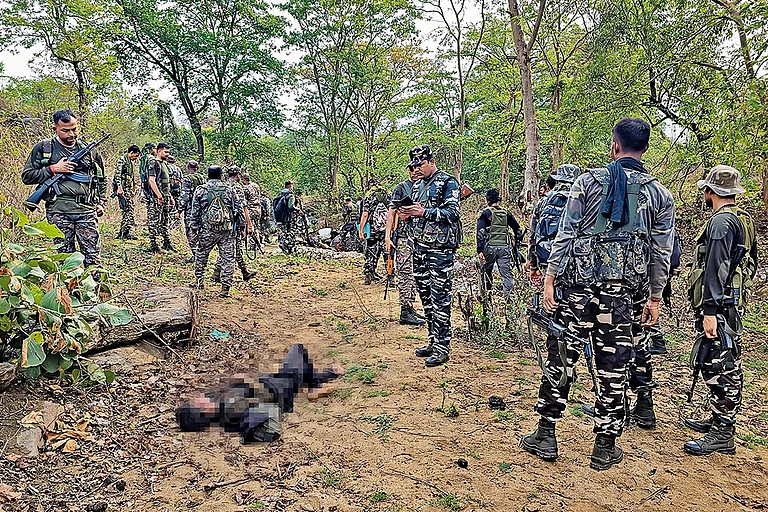
In the last 60 years, the state has spent around Rs 1.5 lakh crore for securing these mines, so around 15 per cent of the profit which grew in later years when Maoists became stronger. In the last decade, the State has spent around Rs 4,000 crore every year to keep Bastar safe.
But now, once the Maoists are gone, mining in Bastar needs to be saved from its own people! Can this not be changed? Can’t mining help the locals as well? There is a growing shift in mining ownership patterns in indigenous areas worldwide, which can change this.
Advertisement
Can the State, mining companies and people be equal partners of any mine and share the profit? Then local people will also have a vested interest in the running of the mine. Let’s again go back to the back-of-envelope accounting to understand this.
The NMDC is planning to invest around Rs 2,000 crore in the new planned mine, which the locals are opposing. The mine is expected to generate a wealth of around Rs 60,000 crore in its lifetime (around 40 years).
As per the current ongoing model, the state will keep Rs 35,000 crore as taxes, the company will earn Rs 20,000 crore, which is 10 per cent per annum return on investment, and people will get Rs 5,000 crore. Since 2015, the company has been giving 10 per cent of its royalty (old mines give 30 per cent) as the District Mineral Fund.

Advertisement
We often call DMF the District Magistrate Fund because instead of going to people, the bulk of money in the past 10 years has gone for the development of urban areas as per the whims and fancies of the District Magistrate. In the era of Direct Benefit Transfer (DBT), this should change.
Three South Bastar districts next to the Bailadila mines—Dantewada, Sukma and Bijapur—have a population of around 10 lakh. If we divide the income from the new mine in three equal parts, each family in these districts can get an annual income of around Rs 1.5 lakh per year.
This is almost doubling the income of an average tribal family in these three districts, and that is from just one new future mine in Bailadila. The tribals want to save their forests, but would they not want to agree to more mining activities in the region, especially when there are chances of their incomes doubling?
A couple of decades ago, when Prime Minister Rajiv Gandhi realised that out of Rs 100, only Rs 15 was reaching people, he pioneered the idea of strengthening Panchayati Raj Institutions by directly routing funds to them for rural development, aiming to bypass bureaucratic delays and empower local, especially grassroots, governance.
Is March 31, 2026—the deadline set by the Centre to eradicate Left-Wing Extremism from the country—a moment to realise that equal partnership and DBT can turn tribals from foes to friends of mining?
Shubhranshu Choudhary is a practitioner of democratic media. He has been a journalist with the BBC and is also a part of The New Peace Process in Chhattisgarh
(Views expressed are personal)
Published At: