US advances separate trade talks with China and India after Gulf ceasefire
US-China negotiations focus on tariffs, rare earths, and strategic stability
India-US trade deal targets $500 billion bilateral trade by 2030
Geopolitics and regional security continue shaping both US-Asia economic partnerships
Why Donald Trump Is Courting India and China at the Same Time
With the West Asia in ceasefire and global trade routes unsettled by two years of compounding tariff wars, Washington is simultaneously negotiating economic frameworks with its two most consequential Asian partners in Beijing and New Delhi

Summary
At a G7 press conference in France last week, Donald Trump thanked Chinese President Xi Jinping for remaining "totally neutral" during the US-Iran conflict, saying Xi had helped resolve it. Days earlier, Trump had travelled to Beijing to repair trade ties that both countries see as economically essential despite deep strategic mistrust.
The sequence illustrated how Washington's attention was shifting from the Gulf conflict to longer-term economic engagement in Asia. Notably, the US and Israel launched strikes on Iran on February 28. What followed disrupted global energy markets, strained supply chains across Asia, and by most readings, shifted perceptions of American military reach.
The war was "widely seen to have exposed the limits of American power," CNN reported. China, meanwhile, hosted a parade of foreign leaders, issued a four-point peace proposal through Xi, and watched its diplomatic standing rise without spending a dollar or drawing down a single military asset.
The US-Iran memorandum of understanding was signed June 17, opening a 60-day window for a broader peace agreement. With that, Washington turned east.
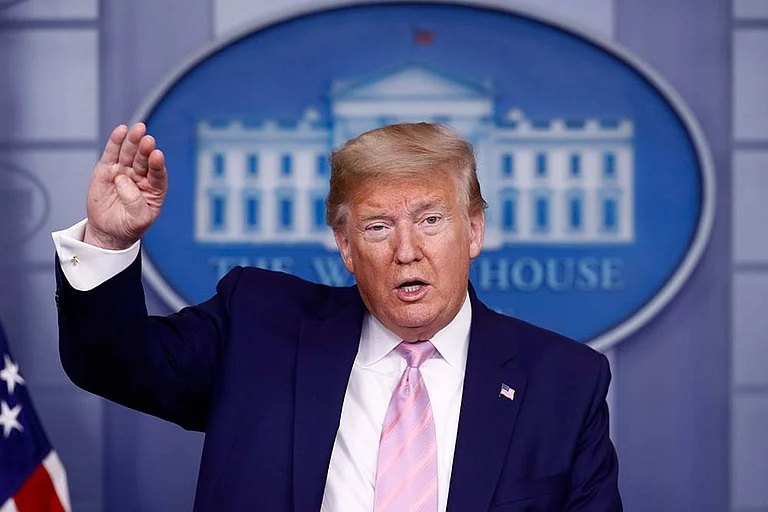
US and China: What the Summit Delivered
The Trump-Xi summit held in Beijing on May 14 and 15 was the first presidential visit to China since 2017. Both sides described it as a step toward building what they termed "a constructive relationship of strategic stability."
In practice, the agreed framework centres on managed trade. China's Ministry of Commerce said that the two sides agreed in principle to discuss, under a newly established trade council, a reciprocal tariff reduction framework on products worth $30 billion or more on each side.
Interestingly, China committed to purchasing 200 Boeing aircraft. On agricultural trade, both sides reached what Beijing described as "multiple consensuses" on two-way market access. On rare earths, China said it would review export licence applications that are compliant and for civilian use, per the same State Council statement.
Advertisement
China's commerce ministry spokesman He Yadong confirmed both sides had agreed to set up the council and to discuss tariff cooperation, including reciprocal reductions, per Asian News Network.
The World Economic Forum offered a more measured reading of the same events. The summit provided "limited clarity" on the future of the world's most consequential bilateral relationship, the WEF assessed in June.
The two sides hold fundamentally divergent views on what "reciprocity" means, it noted.
Washington has focused on trade deficits. Beijing views reciprocity in terms of overall balance relative to a country's level of development. Core structural issues around state-owned enterprises, industrial policy, and subsidies were left unaddressed.
USTR data revealed that the US goods trade with China totalled an estimated $575.8 billion in 2024, making it the United States' largest goods trading relationship. The bilateral goods trade deficit remains Washington's stated primary grievance and the stated basis for its tariff policy.
Advertisement
On Taiwan, a senior US diplomat told Reuters this week that arms sales to Taipei would not be contingent on progress in US-China trade negotiations. That statement landed whilst Chinese political commentator Hu Xijin, citing the Gulf war's impact on US munitions stockpiles and coalition-building capacity, wrote that the conflict had "significantly diminished" US deterrent power when it comes to Taiwan.
Business sentiment shows the same duality.
Notably, the US-China Business Council's 2026 Member Survey on China operations and geopolitical risk, and ongoing analysis from the Center for Strategic and International Studies on US-China trade and geopolitics, flag sustained uncertainty despite diplomatic progress at the summit level.
India and the US: A Different Negotiation
If the US-China relationship is a negotiation between rivals managing mutual dependency, the US-India relationship is a negotiation between partners still defining what partnership requires.
US Ambassador Jamieson Greer visited New Delhi from June 22 to 24, leading an official US delegation through multiple rounds of discussions with Commerce Minister Piyush Goyal. Indian government described the outcome as a landmark step in unlocking the $30 trillion US market for Indian exports across key sectors.
Advertisement
The talks covered enhanced market access, digital trade, supply chain resilience, and non-tariff barriers. Additionally, both sides are working towards finalising an interim deal ahead of the July 24 expiry of the 10% temporary tariff imposed by the US on its trading partners.
"We reviewed progress of the ongoing India-US trade discussions and explored avenues to further deepen our economic partnership," Goyal said. "I appreciate Ambassador Greer's leadership and the sustained efforts of both teams in advancing our discussions in a constructive and forward-looking manner."
The formal terms of reference for a bilateral trade agreement were established in April 2025, when Vice President JD Vance and Prime Minister Modi jointly announced them, as per a USTR fact sheet. The stated ambition is to more than double bilateral trade to $500 billion by 2030.
According to USTR, the US goods trade with India totalled an estimated $149.4 billion in 2025. Goods exports to India reached $45.6 billion, up 9.8%. Goods imports from India totalled $103.8 billion, up 18.9%. The US goods trade deficit with India was $58.2 billion in 2025, a 27.1% increase over the previous year. Total services trade reached an estimated $83.4 billion in 2024.
Advertisement
The Global Trade Research Initiative's 2026 critical assessment of the India-US bilateral trade agreement framework noted that structural asymmetries in market access, intellectual property, and digital trade rules remain unresolved. The interim deal, if concluded, would likely defer rather than resolve these deeper questions.
The Shadow That Follows Both Conversations
India's trade negotiation with the US does not sit in a geopolitical vacuum. Operation Sindoor, India's cross-border military operation into Pakistan launched in May 2025, reshaped South Asia's strategic landscape in ways that continue to reverberate. The ceasefire that followed involved US mediation.
Pakistan's subsequent diplomatic rise, elevated through its role in the US-Iran peace process and its joint five-point Gulf peace initiative with China, complicated New Delhi's effort to define the terms of its regional relationships.
China's alignment with Pakistan during and after Sindoor, its growing diplomatic weight in the Gulf, its managed détente with the US on trade, and its sustained posture on Taiwan together form the strategic environment in which India is negotiating its economic relationship with Washington.
The calculation is not simply about tariffs. It is about which relationships, and on what terms, best serve a country that has consistently declined to treat its choices as binary.
Meanwhile, Washington is conducting two Asian conversations resting on different premises. With Beijing, it is managing a rival that helped it out of a war it could not end alone. With New Delhi, it is courting a partner that has made clear it will not be managed. Both know it.
Published At: