Lewis Pugh, UN ocean patron, completed a three-day, 15-km swim through the Strait of Hormuz as a tanker was struck nearby.
He urged an end to fighting, reopening of the strait and cleanup of pollution.
Greenpeace has recorded over 500 oil spills since February 28, with researchers reporting a doubling of surface oil.
'Water Was On Fire': What British Swimmer Lewis Pugh Saw In Hormuz As Oil Spills Spread Across Gulf
British endurance swimmer Lewis Pugh describes the oil-stained waters, spreading pollution and environmental damage he encountered during his swim through the Strait of Hormuz

Summary
A 56-year-old man in a pair of Speedos put his face into the water off Oman and began to swim. Half an hour later, an oil tanker was struck a few kilometres away.
"The explosions rocked the sea around me," British Swimmer Lewis Pugh wrote afterwards. It is not how most people start a campaign for the environment.


Man In Speedos, A Sea Under Fire
Pugh, a British endurance swimmer and the UN Environment Programme's patron of the oceans, swam in parts of the strait close to Oman's coastline over three days. It added up to about 15 kilometres.
He is said to be the first person to complete a long-distance swim in the area since the war began. His style of campaigning, in nothing but Speedos, has been called "Speedo diplomacy".
His earlier work includes the 2018 "Long Swim", 330 miles along the length of the English Channel to raise awareness of marine pollution, especially plastic.
The days that followed were no calmer. He saw further attacks on commercial shipping and vessels engulfed in flames. In parts of his swim he could smell chemicals and smoke. His message was three short instructions: stop the fighting, open the Strait, clean up the pollution. He did not say who was to blame for any particular strike, and neither do the reports.
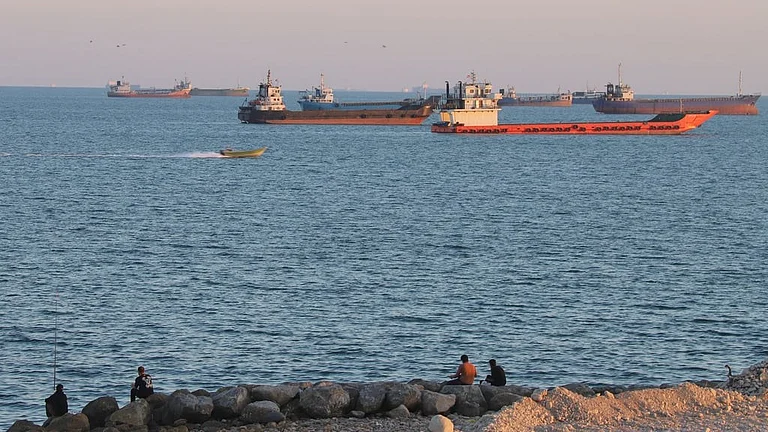
What The Water Remembers
The sea he swam in is shallow, nearly enclosed and slow to flush itself. With limited water exchange with the wider Indian Ocean, pollution adds to the pressure on the Gulf's marine ecosystems.
Since the war began on 28 February, Greenpeace has identified more than 500 instances of oil spills through satellite monitoring across the Gulf, the Strait of Hormuz and the Arabian Sea, and the attacks have continued into November.
Advertisement
Researchers comparing March 2026 with the same period last year found twice the surface oil expected without a major conflict.
Some of it has reached the shore. Oil slicks moving along Iran's southern coast have reached the Hara mangrove forests of Qeshm Island. Greenpeace has warned that pollution from a tanker said to be carrying about 800,000 barrels of crude threatened coral reefs, seagrass meadows, nesting turtles and seabirds.
Pugh's list of the strait's wildlife, dolphins, sea turtles and dugongs, matches the species conservationists say are at risk.
Recovery is slow. Mangroves and coral reefs can take decades to recover, particularly when oil persists in sediments, a marine scientist said, and pollution from the Gulf War is still there. There is a human cost, too: in most Gulf countries, 70 to 90 per cent of people depend on desalination for drinking water, and oil threatens the plants that supply it.
Advertisement
Wars are fought over water and then fought in it. The sea takes no side, only the oil.
Published At: