Jaishankar’s Ukraine and Poland visit comes as Russian attacks intensify and India’s direct exposure to the war grows
New Delhi is dealing with risks to Indian nationals and seafarers while maintaining its strategic relationship with Moscow
The visit allows India to deepen engagement with Kyiv and Warsaw without abandoning its emphasis on dialogue and diplomacy
India’s Russia Ties, Ukraine Stakes: Why Jaishankar Is Travelling To Kyiv?
EAM S. Jaishankar’s Thursday–Saturday, September 3–5 visit to Ukraine and Poland comes as Russian attacks intensify, India’s citizens and seafarers face direct exposure to the war and New Delhi continues to engage Moscow while deepening ties with Kyiv and Europe.

Summary
External Affairs Minister S Jaishankar will travel to Ukraine and Poland from Thursday to Saturday, September 3–5, meeting Ukrainian Foreign Minister Andrii Sybiha and Polish Foreign Minister and Deputy Prime Minister Radosław Sikorski. The Ministry of External Affairs says discussions will cover bilateral relations, regional developments and issues of mutual interest.
The timing is significant. Ukraine says Russia’s attacks have intensified, while the UN has recorded a sharp civilian toll from missile and drone attacks. India’s direct exposure to the conflict is also becoming harder to ignore, with Indian nationals killed in connection with the war and New Delhi raising concerns over risks to Indian seafarers and maritime trade.
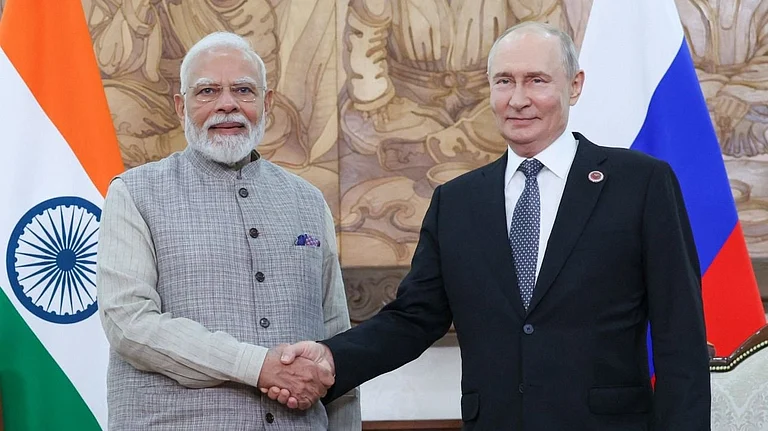
Just two days before Jaishankar’s trip, Prime Minister Narendra Modi met Russian President Vladimir Putin in Bishkek on Monday. The two sides discussed the impact of the Black Sea conflict on maritime trade and the safety and security of Indian seafarers, while Modi reiterated India’s emphasis on dialogue and diplomacy.
Jaishankar’s visit therefore comes at a point when the Ukraine war is becoming more directly relevant to Indian interests, even as New Delhi’s strategic relationship with Moscow remains intact.
Why Is The Ukraine War More Directly Relevant To India?
The human cost of the war for India has become harder to separate from the larger geopolitical picture.
Foreign Secretary Vikram Misri said on Monday, that 227 Indian nationals had been recruited into the Russian military. Of those, 139 had been discharged and 51 had died. India has continued to engage Moscow for the release and repatriation of those still serving.
Separately, the Embassy of India in Kyiv expressed condolences over the death of an Indian national in an attack, underscoring the direct risks the war poses to Indian citizens.
The wider maritime dimension has also become an Indian concern. At the Monday, August 31 Modi-Putin meeting, the two sides discussed the impact of the Black Sea conflict on maritime trade and the safety and security of Indian seafarers.
Advertisement
Together, these developments show why the war matters to New Delhi beyond its relations with Moscow and Kyiv. Indian nationals have died in the conflict, some remain caught up in its military dimensions, and Indian seafarers face risks from fighting that is disrupting maritime activity in the Black Sea.
What Is Happening On The Battlefield?
Jaishankar will arrive in Kyiv amid continued Russian missile and drone attacks.
The UN Human Rights Monitoring Mission in Ukraine recorded 437 civilians killed and 2,610 injured in July 2026, making it the deadliest month for civilians since May 2022. Long-range weapons accounted for 38% of civilian casualties in the month.
The attacks have continued into September. In a September 1 address, Ukrainian President Volodymyr Zelenskyy said Russia had changed its tactics and was attacking Ukrainian cities and infrastructure on a larger scale, including energy infrastructure.
Advertisement
For Kyiv, this has made air defence a central requirement.
At the Ukraine-NB8 summit, Zelenskyy said ballistic missiles remained the main threat and described air-defence missiles as Ukraine’s “first priority” under constant Russian attacks. The summit also addressed energy security and attacks affecting Ukrainian ports.
That provides important context for Jaishankar’s visit. Ukraine’s immediate security concerns extend beyond the battlefield to the protection of cities, energy infrastructure and maritime routes.
What Could Kyiv Want From Jaishankar?
The MEA has not published a detailed negotiating agenda for Jaishankar’s meetings in Kyiv. Any assumption that India will announce a specific new commitment on weapons or military assistance would therefore go beyond the official record.
But recent Ukrainian-Indian engagement points to several likely areas of discussion.
On Wednesday, Sybiha and Jaishankar discussed the continuing conflict and its wider consequences. Ukraine’s recent diplomatic engagement has placed particular emphasis on the Black Sea, maritime security, freedom of navigation and the protection of Ukrainian ports and food exports.
Advertisement
These issues have a direct relevance for India. Damage to ports, disruption of maritime routes and risks to commercial shipping can affect international trade as well as the safety of Indian seafarers.
Energy security is also featuring prominently in Ukraine’s recent discussions with partners, including at the Sunday, Ukraine-NB8 summit, amid continued Russian attacks on energy infrastructure.
Diplomacy is also likely to form part of the conversation. India has continued to advocate dialogue and diplomacy as the route to resolving conflicts, while Ukraine has sought sustained international engagement on the war.
Jaishankar’s visit therefore gives India an opportunity to discuss peace efforts, maritime security and bilateral relations with Kyiv without implying alignment with every Ukrainian position on the war.

Where Does India Stand With Russia?
Greater engagement with Kyiv is taking place alongside a relationship with Moscow that remains strategically important.
Advertisement
Modi’s Monday, meeting with Putin covered political, economic, defence, energy, space and other sectors. The two leaders also discussed the consequences of the Black Sea conflict for maritime trade and Indian seafarers, while Modi reiterated that dialogue and diplomacy remain the way forward.
Jaishankar has himself been reinforcing the wider relationship. At the 27th session of the India-Russia Inter-Governmental Commission, he reviewed cooperation across trade, economic relations, science and technology, connectivity and other sectors.
This makes the timing of the Ukraine visit particularly significant.
The same war that is pushing India towards greater engagement with Kyiv is also creating issues that New Delhi must manage with Moscow — including Indian nationals serving in the Russian military, maritime risks in the Black Sea and the wider consequences for trade and connectivity.
India’s Ukraine engagement is therefore being pursued alongside, rather than instead of, its strategic relationship with Moscow.
Why Does Poland Matter?
Poland gives Jaishankar a different European perspective on the war.
India and Poland upgraded their relationship to a strategic partnership in 2024, with both sides seeking to expand cooperation across political, economic, security and technological areas.
The Ukraine war is central to Poland’s security outlook.
Polish Foreign Minister Radosław Sikorski has been active in the Coalition of the Willing, the group of countries working to sustain support for Ukraine. At a recent meeting, Poland highlighted continued Ukrainian air-defence capabilities and energy security among the key issues facing Kyiv.
For India, Warsaw therefore provides a channel into a European security discussion that extends beyond the immediate India-Ukraine relationship.
Kyiv is directly fighting the war. Warsaw approaches it from Europe’s eastern flank, where the conflict is viewed as a central security concern. Jaishankar’s meetings in both capitals allow India to engage those two perspectives while maintaining its own position.
So What Is Jaishankar Trying To Balance?
The significance of the Thursday–Saturday, September 3–5 visit lies less in any single announcement than in the diplomatic space India is trying to preserve.
Kyiv wants continued international engagement as Russian attacks intensify. Warsaw remains deeply invested in Ukraine’s security and in the wider European response. Moscow, meanwhile, remains a major Indian partner across political, economic, defence, energy, space and other sectors.
The visit should therefore not be read simply as a tilt towards Kyiv. It reflects India’s attempt to deepen its engagement with Ukraine and Europe while maintaining its strategic relationship with Russia.
But that balancing act is becoming harder as the war itself begins to affect Indian citizens, seafarers and maritime interests.
For New Delhi, the Ukraine war is no longer only a question of foreign policy. It is increasingly a question of citizen safety, maritime security and the wider interests India has at stake in and around the conflict.
Published At:
Tags