Due to the prolonged delay in holding urban local body elections in Jharkhand, funds due from the Centre have remained pending.
The BJP has decided to support women candidates in five municipal corporations, while the Congress has placed its faith in women candidates in three.
Elections will be held across 48 urban local bodies, comprising nine municipal corporations, 20 municipal councils, and 19 nagar panchayats.
Urban Polls Return To Jharkhand After 34 Months—OBC Quota And Women At The Centre
For the first time, urban local body polls in Jharkhand are being conducted with OBC reservation.

Summary
After nearly 34 months, Jharkhand is set to hold urban local body elections. With the formal announcement made on January 27, 2026, the Model Code of Conduct has come into force across the state. These elections are significant in several respects, most notably because, for the first time, urban local body polls in Jharkhand are being conducted with OBC reservation.
According to the State Election Commission, elections will be held in a total of 48 urban local bodies, comprising nine municipal corporations, 20 municipal councils, and 19 nagar panchayats. Polling will take place from 7 a.m. to 5 p.m. Voting for 1,087 wards across the state will be held on February 23, and counting of votes is scheduled for February 27.
A total of 4,333,574 voters will exercise their franchise in these elections. This includes 2,207,203 men, 2,126,227 women, and 144 voters from the third gender. For polling, 4,304 polling stations have been set up across the state—of these, 2,129 are classified as normal, 2,445 as sensitive, and 896 as highly sensitive.
Women at the Centre of Ranchi’s Electoral Contest
The reservation of 50 per cent of seats for women has made these civic elections particularly interesting, with women participating in large numbers. Notably, in the state capital, Ranchi, the number of women voters has surpassed that of men by 1.18 per cent. According to the latest data, Ranchi district has a total of 2,665,416 voters, including 1,348,436 women, 1,316,907 men, and 730 third-gender voters. This translates into 1,024 women voters for every 1,000 male voters.
In the elections across Ranchi’s 53 wards, 1,027,723 voters will cast their ballot. Among them are two women candidates—one supported by the BJP and the other by the Congress—who have filed nominations for the post of mayor.
Rama Khalkho, president of the Jharkhand Congress Women’s Wing, is the Congress-supported candidate. Speaking to Outlook about the growing consolidation of women in urban elections, she said, “The increase in women’s representation is a matter of great happiness. Women have become politically far more mature. In this election, women are contesting not only reserved seats but also general seats in large numbers. There is a special sense of enthusiasm among women this time. In fact, women were equally enthusiastic in the Lok Sabha and Assembly elections as well. Even though they do not get tickets in proportion to their population or enthusiasm, they still play a decisive role.”
Advertisement
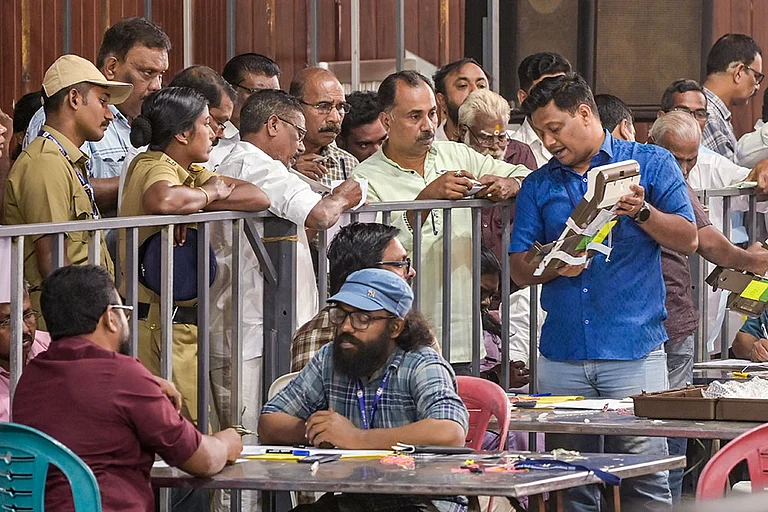
Continuity of Women’s Leadership in Ranchi
Rama Khalkho has previously served as the mayor of Ranchi. However, for the last two terms, the post has been held by BJP leader Asha Lakra. Since the 2008 municipal corporation elections, women have continuously occupied the mayoral position in Ranchi, and this time too, the contest is being seen as one between women candidates.
The BJP has extended its support to Roshni Khalkho, associated with the party’s Jharkhand ST Morcha, as its mayoral candidate. Speaking to Outlook about her candidature and the decision to once again back a woman for the mayor’s post, Roshni Khalkho said, “The BJP has shown trust in me, and I am grateful for that. Women who once hesitated even to step beyond their doorstep are today confidently crossing those boundaries, contributing to the development of society and the nation. We can draw inspiration from President Droupadi Murmu and her journey.”
Advertisement
Although the Urban Local Body Elections 2026 are being conducted on a non-party basis, political parties have openly stepped in to support candidates. Meetings are being held daily at party offices, both big and small, and candidates are being given open political backing through what is being described as ‘letterhead support’. The State Election Commission has clarified that while political parties are not permitted to officially campaign or use election symbols, there is no complete ban on extending support, making the non-partisan nature of these elections appear blurred in practice.
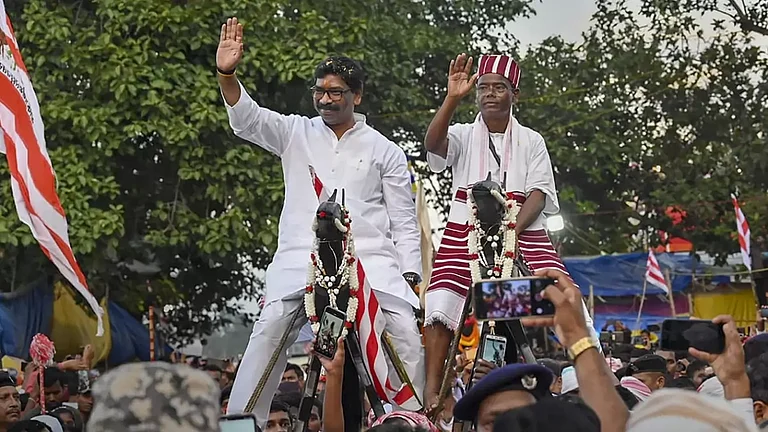
Nomination Trends and Women’s Rising Presence
The nomination process began on January 29 and will continue until February 4. By January 3, nomination papers had already been filed in large numbers, with women forming the majority of candidates. According to data available up to January 3, a total of 3,992 nomination papers were filed for councillor posts, of which 2,058 were by women. Similarly, out of 399 nominations filed for mayor and chairperson posts, 169 were by women.
Advertisement
In the Ranchi Municipal Corporation, out of 909 booths, 275 have been classified as normal, 507 as sensitive, and 128 as highly sensitive. The expenditure limit for candidates has also been fixed, with mayoral candidates allowed to spend up to Rs 25 lakh. The Election Department has stated that elections across all wards will be conducted under uniform voter lists and rules to ensure fairness and transparency.
As nominations progressed, the electoral atmosphere heated up rapidly. Every day, a higher number of women continued to file nomination papers. On January 2, for instance, 104 nomination papers were filed for councillor posts in the Ranchi Municipal Corporation, of which 65 were by women. On January 3, out of 197 nominations filed for councillor posts, 118 were by women.
Basanti Lakra, a two-time councillor from Ranchi’s Ward No. 3, is aiming for a hat-trick and has once again filed her nomination from the same ward. Commenting on the enthusiasm among women in civic elections, she said, “It is a good thing that women are participating in greater numbers this time. However, one reason for this is also the increase in the number of seats reserved for women. That said, the enthusiasm among women is clearly visible.” She believes that women are often better able to understand local issues and connect more closely with people at the grassroots level.
Advertisement
Reservation Patterns and the Limits of Power Transfer
In the Urban Local Body Elections 2026, post-wise reservation has been implemented across Jharkhand’s 48 urban bodies (9 municipal corporations, 20 municipal councils, and 19 nagar panchayats). Mayoral elections are being held in the municipal corporations of Ranchi, Dhanbad, Adityapur (Jamshedpur), Mango (Jamshedpur), Chas (Bokaro), Giridih, Hazaribagh, Deoghar, and Medininagar (Daltonganj). The reservation status for mayoral posts is as follows: Ranchi—Scheduled Tribe; Dhanbad—Unreserved; Palamu—Unreserved (Women); Chas—Unreserved; Hazaribagh—Extremely Backward Class-1; Giridih—Scheduled Caste; Deoghar—Unreserved; Adityapur—Scheduled Tribe; Mango—Unreserved (Women).
At the municipal council and nagar panchayat levels, chairperson posts have been reserved for SC, ST, OBC, and unreserved categories on a rotational basis, while 50 per cent horizontal reservation for women has been implemented across all categories.
At the ward level, such as in the Ranchi Municipal Corporation, out of a total of 53 wards, 27 have been reserved for women, 11 for Scheduled Tribes, 6 for Scheduled Castes, 16 for OBCs, and the remaining wards are unreserved.
Activist Aloka Kujur, commenting on women’s reservation and increasing participation in civic elections, said, “This is necessary, and it is heartening to see. But I would also like to say that limiting women’s reservation only to local body elections is a form of political deception. Why is similar representation not ensured for women in the Lok Sabha and state assemblies? Even the long-promised 33 per cent reservation in legislatures has not been implemented by any party. In my view, women must be ensured representation at every level, whether in constitutional positions or in social organisations.”
The political picture around mayoral posts has become increasingly clear. The BJP has decided to support women candidates in five municipal corporations, while the Congress has placed its faith in women candidates in three municipal corporations. In Ranchi, the BJP has extended support to Roshni Khalkho, while the Congress has declared Rama Khalkho as its candidate. This has effectively set the stage for a direct contest between two women candidates for the Ranchi mayoral seat, bringing the issue of women’s leadership to the centre of the election discourse.
The role of the Jharkhand Mukti Morcha (JMM) is being seen as decisive in these elections. Several leaders associated with the party have purchased nomination forms for the mayoral post, but the final decision is still pending at the leadership level. After five JMM leaders bought nomination papers, speculation has intensified over whether the contest will be bipolar, triangular, or even multi-cornered. Party sources suggest that the picture could change at the last moment, depending on withdrawals and strategic support.
This time, changes in ward-level reservation have displaced the political ground under several candidates. Yet despite this, real control over power continues to remain with the same families or groups that were influential earlier. While reservation rotation may, on paper, bring forward new faces and social categories, the actual transfer of power at the grassroots remains limited. In many places, husbands and wives, fathers and sons, or other members of the same family are contesting from different wards, suggesting that reservation has altered the face of politics, but not its character.
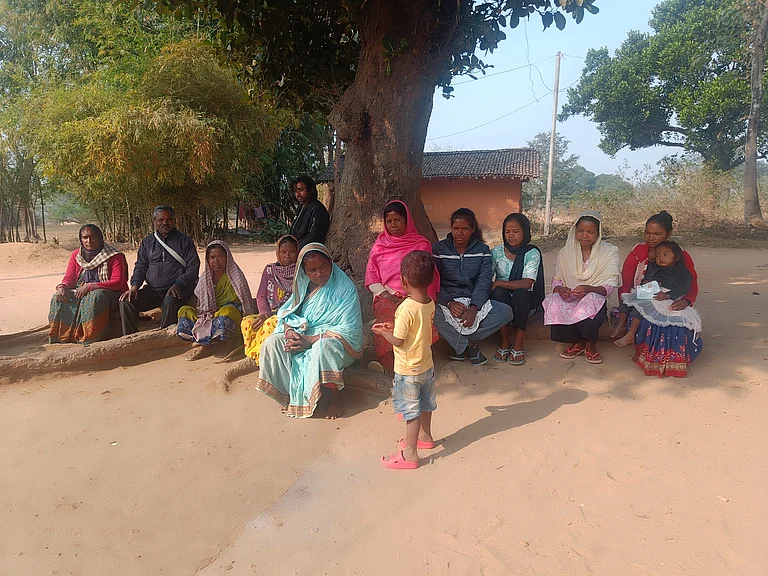
Finance Commission Stakes and Delayed Elections
The 16th Finance Commission has recommended grants worth Rs 7,91,493 crore for rural and urban local bodies for the period from 2026–27 to 2030–31. With the objective of strengthening local bodies, the Commission has also proposed special incentives to promote urbanisation. Under this, a total urbanisation incentive of Rs 10,000 crore has been earmarked for the entire period to encourage the conversion of rural areas into urban ones, with a one-time per capita eligibility amount of Rs 2,000 based on the 2011 Census.
It is noteworthy that due to the prolonged delay in holding urban local body elections in Jharkhand, funds due from the Centre have remained pending. Based on the recommendations of the 15th Finance Commission, Jharkhand has not received funds for three financial years—an amount exceeding Rs 2,100 crore.
During a visit to Ranchi on May 30 last year, the chairperson of the 16th Finance Commission, Arvind Panagariya, had stated that if the state government conducts urban local body elections by March 2026, the pending amount for three years would be released; otherwise, the funds would lapse.
Published At: