The Supreme Court has formed a five-member committee to review the Centre's definition of the Aravalli range.
The panel will examine whether current criteria exclude ecologically important hills from protection.
The review stems from concerns that the existing definition could expose large parts of the Aravalli ecosystem to mining and development.
Supreme Court Sets Up Expert Committee on Aravalli
The committee will be headed by Kanchan Devi, Director General of the Indian Council of Forestry Research and Education (ICFRE)

Summary
The Supreme Court has constituted a five-member high powered committee (HPC) to review the Centre's report on the definition and delineation of the Aravalli hill range.
The committee will be headed by Kanchan Devi, Director General of the Indian Council of Forestry Research and Education (ICFRE). The HPC has been directed to submit a detailed report of its findings by August 31, 2026.
The committee's other members include Dr Subhash Ashutosh, former Director General of the Forest Survey of India; Dr Rajendra Kumar Sharma, former Director of the Geological Survey of India; Brij Mohan Singh Rathore, former Joint Secretary in the Environment Ministry; and Prof Ashok K Bhatnagar, former Head of the Department of Botany at Delhi University.
The court also appointed Professor Jagdish Krishnaswamy of the Indian Institute for Human Settlements, Bengaluru, and Prof Laxmikant Sharma of the Central University of Haryana as special invitees who may be associated with the committee's work by the chairperson as required.
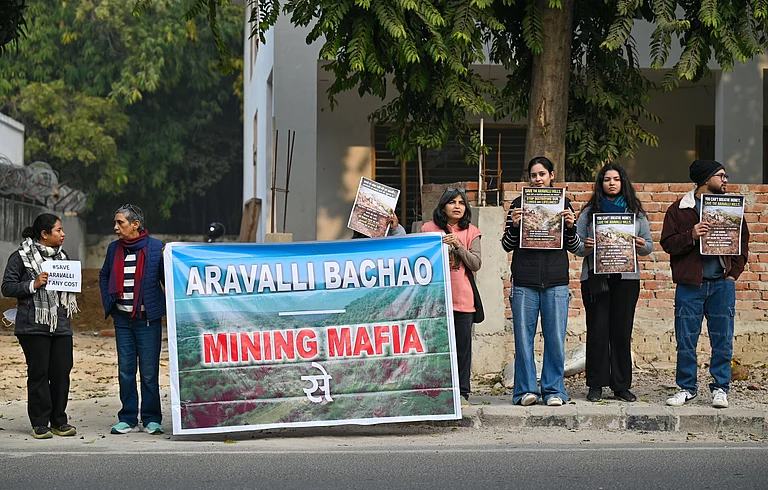
Defining the Aravallis
The HPC has been delegated several important tasks as part of its agenda including looking at what the court says are "critical ambiguities" in the Centre’s findings.
Most importantly, it will examine whether limiting the definition of the Aravalli range to areas located within 500 meters between two or more hills substantially narrows the extent of protected territory and could facilitate continued mining and other environmentally disruptive activities.
The HPC will also look into the ecological validity of the above 100-meter elevation criterion for the hills which was accepted by the Supreme Court last year.
The court also asked the committee to examine the claims asserting that only 1,048 of Rajasthan's 12,081 hills satisfy the 100-metre elevation criterion and whether this assessment is scientifically and factually accurate and whether it would leave a large number of lower-elevation hill formations without environmental protection.
Advertisement
The HPC will also evaluate any significant gaps in the existing regulatory mechanisms in place to protect the range.
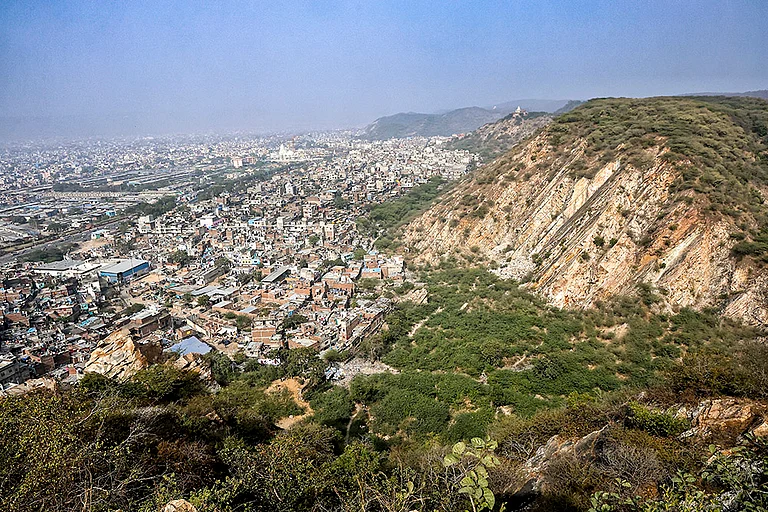
What is the Aravalli Controversy?
The controversy surrounding the Aravalli Hills stems from a Supreme Court ruling that defined the ancient mountain range as only landforms rising 100 meters or more above the local ground level.
This definition threatened a very significant —estimated at around 90%— part of the Aravalli ecosystem and left it vulnerable to mining and real estate development.
The intent was to resolve long-standing ambiguities that had complicated the enforcement of mining restrictions across states.
But the Aravallis, unlike the Himalayas, are extremely old geological formations that have been eroded over millennia and thus their ecological value cannot be assessed solely on the basis of elevation.
The smaller formations, which would not be part of the Aravalli’s as per the Supreme Court ruling, act as windbreaks blocking dust transport from the Thar Desert. They also act as micro-catchment areas that enable groundwater recharge in many water scarce regions.
Advertisement
Published At: