The Supreme Court sought responses from the Centre and Chhattisgarh government on a petition challenging the state’s anti-conversion law.
The Isai Adivasi Mahasabha has challenged provisions defining “allurement”.
The law prescribes prison terms of up to 10 years in specified cases involving minors, women and members of SC, ST or OBC communities, and life imprisonment for mass conversions.
Supreme Court Seeks Centre, Chhattisgarh’s Response On Anti-Conversion Law
A bench comprising Chief Justice of India Surya Kant and Justices Joymalya Bagchi and V Mahona issued notices to the two governments on a plea filed by the Isai Adivasi Mahasabha

Summary
The Supreme Court on Monday sought responses from the Union and Chhattisgarh governments on a petition challenging the constitutional validity of the state’s anti-conversion law, directing that the matter be heard alongside pending challenges to similar legislation in Uttar Pradesh and Rajasthan, Hindustan Times reported.
A bench comprising Chief Justice of India Surya Kant and Justices Joymalya Bagchi and V Mahona issued notices to the two governments on a plea filed by the Isai Adivasi Mahasabha, an organisation representing tribal Christians. The Chhattisgarh Assembly passed the law in March to prevent religious conversions through force, inducement, fraud or misrepresentation. It provides for life imprisonment in cases of mass conversion.
Anti-conversion laws enacted by several states have faced challenges from civil rights groups, which argue that the legislation infringes on individual rights and can be used to curb interfaith marriages.
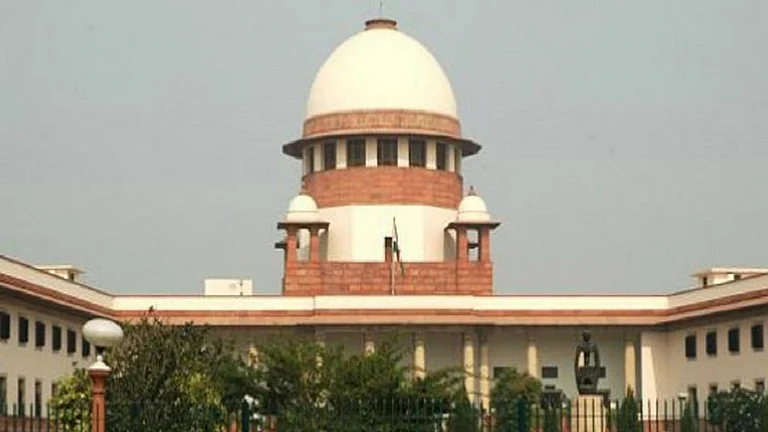
Supreme Court Considers Whether To Hear Challenge Alongside Other Cases
The bench noted that a similar challenge to the Chhattisgarh law is pending before the state’s high court and initially suggested that the petitioner pursue the matter there. It said it could request the high court to hear the challenge expeditiously, the report said.
Senior advocate Colin Gonsalves, appearing for the petitioner, argued that similar laws in other states were already under challenge before the Supreme Court and that the high court proceedings could become redundant once the apex court decided those cases.
The bench told Gonsalves that it could not compel petitioners who had approached the high court to move their cases to the Supreme Court.
According to the report, Gonsalves said he was in touch with the petitioners in the high court proceedings and that they believed the matter should have been brought before the Supreme Court. He agreed to consult them and consider filing a transfer petition to bring those cases before the apex court.

Petition Questions Broad Definition Of ‘Allurement’, Conversion Disclosure Rules
The plea argues that the original scope of the Chhattisgarh law was limited to prohibiting conversions through force, fraud or allurement, without restricting voluntary religious conversion, the report stated. Citing Article 25 of the Constitution, it describes the choice of religious belief as an intimate expression of personal autonomy and a fundamental right.
Advertisement
The petitioner has challenged Section 2(l)(a), which includes a promise of a “better lifestyle” within the definition of “allurement”. It has also questioned a provision treating the “glorifying one religion against another” as a prohibited inducement.
“These formulations are wide enough to capture ordinary religious preaching, exposition of doctrine, and humanitarian or charitable work that this court has repeatedly held to be constitutionally protected,” the petition said.
The plea also objects to the law’s exemption for “reversion” to an ancestral religion or faith, arguing that the expression “ancestral religion” has not been defined.
The law also requires a fresh declaration within 30 days after conversion, followed by a compulsory personal appearance within 21 days. Failure to comply means no conversion certificate will be issued and the conversion will be treated as “illegal and void”.
The legislation prescribes a minimum prison term of seven years, which can extend to 10 years if the person converted is a minor, a woman, or belongs to the Other Backward Class, Scheduled Caste or Scheduled Tribe category. It also provides for life imprisonment in cases of mass conversion.
Advertisement
Published At: