High Court dismisses habeas corpus plea challenging detention of an alleged Bangladeshi national.
Court says Aadhaar, PAN, voter ID and bank passbooks are not conclusive proof of citizenship.
Bench finds petitioner failed to discharge the burden of proof under the Immigration and Foreigners Act, 2025.
PAN, Aadhaar, Voter ID, Bank Passbooks Not Proof Of Citizenship: Calcutta HC
The Calcutta High Court has held that documents such as Aadhaar, PAN, voter identity cards and bank passbooks do not, by themselves, constitute conclusive proof of Indian citizenship while dismissing a habeas corpus petition challenging the detention of a man alleged to be a Bangladeshi national

Summary
The Calcutta High Court reignited the age-old debate of what actually establishes citizenship under Indian law after its ruling that documents such as Aadhaar, PAN card, voter ID, passport, bank passbooks and even ancestral land records are not conclusive proof of Indian citizenship.
While hearing a habeas corpus petition filed by the uncle of a man alleged to be a Bangladeshi national, who had been detained since June 18, 2026, the High Court made the remarks. The petitioner argued that the nephew was an Indian by birth, and presented Aadhaar, voter identity card, bank records and ancestral land documents to support the claim.
Why Did The Court Reject The Petition?
The High Court ruled that both the petitioner and the detainee failed to discharge the burden of proof required under the Immigration and Foreigners Act, 2025.
"Name of the father of the detainee varies from document to document. ... Citizenship of the detainee by descent is not established," the court observed, pointing at the inconsistencies in documents of the detained man’s parentage and lineage.
The court then asked the petitioner and detainee to identify the place of burial of the latter’s parents to claim the relationship through DNA testing. But the two denied.
What Did The Court Say About Identity Documents?
The Immigration and Foreigners Act, 2025 does not prescribe any list of documents that automatically prove Indian citizenship. Instead, Section 16 of the Act places the burden of proof on the individual whenever a question arises over whether a person is a foreigner. In other words, if citizenship is challenged, it is for the individual concerned to establish that they are an Indian citizen.
The law also recognises that there cannot be one universal citizenship document because Indian citizenship can be acquired in different ways under the Citizenship Act, 1955.
Why Did The Bench Find The Evidence Insufficient?
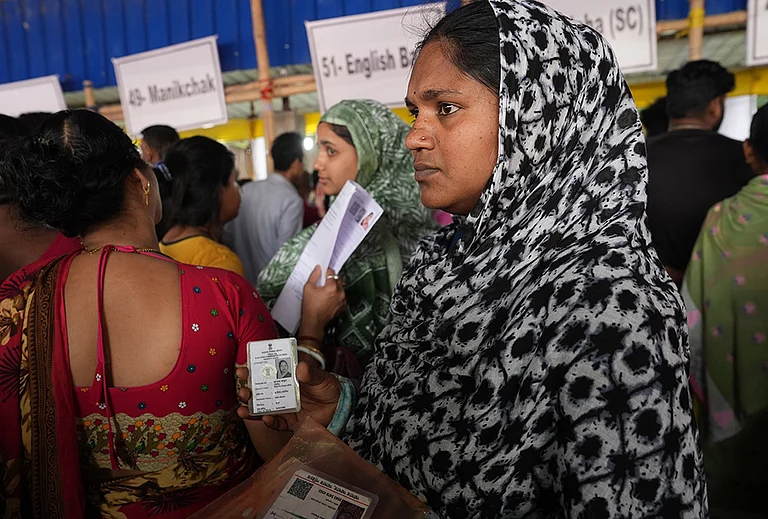
The Centre and courts have said that Voter ID only shows enrolment in the electoral roll, aadhar is not by itself a proof of citizenship, PAN cards and bank passbooks don’t establish citizenship.
Advertisement
Similarly, passport is a “travel document” and not a “citizenship document”, a senior official of the Ministry of External Affairs (MEA) said on June 24.
Although the Constitution laid down the initial framework for citizenship when it came into force on January 26, 1950, disputes over migration, identity and documentation have continued to shape legal and political debates.
When the Constituent Assembly debated citizenship in August 1949, India was still recovering from the upheaval caused by Partition. Millions had crossed the newly drawn borders between India and Pakistan, making it impossible to rely on ordinary legal principles to determine citizenship.
As chairman of the Drafting Committee, Ambedkar argued that citizenship provisions in the Constitution should address only the immediate situation created by Partition. Instead of creating permanent rules, the Constitution established temporary provisions under Articles 5 to 11 while empowering Parliament to enact detailed citizenship laws later.
Published At: