The Supreme Court reiterated that deletion from the electoral rolls under the Special Intensive Revision (SIR) does not automatically result in loss of Indian citizenship, stressing that only the Central government can determine citizenship under the Citizenship Act.
The court expressed concern over reports that people with pending SIR appeals were being denied welfare benefits, including PDS rations, Annapurna Yojana benefits and caste certificates, while noting that over 34 lakh appeals remain pending.
The petition seeks faster, more transparent appellate procedures, recognition of passports as evidence of citizenship, publication of SIR-related data and SOPs, and the matter will now be heard alongside challenges to the West Bengal SIR exercise.
Can Deletion From Voter List Cost You Citizenship? Supreme Court Clears Air
The Supreme Court has reiterated that deletion from electoral rolls does not result in loss of Indian citizenship, while raising concerns over pending appeals and denial of welfare benefits.

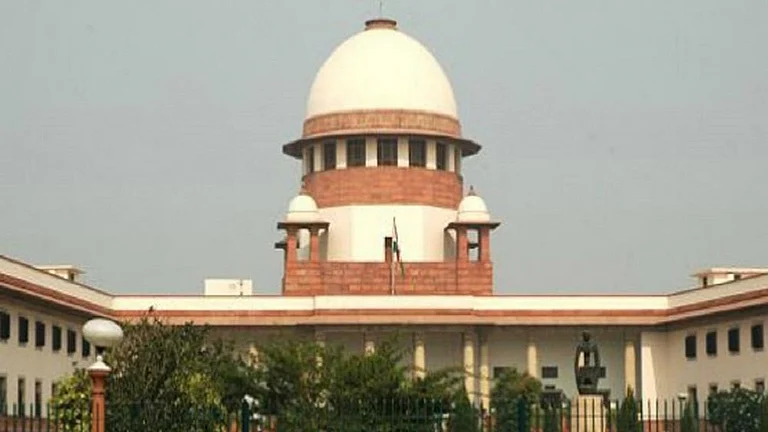
The Supreme Court on Friday reiterated that removal from the electoral rolls following the Special Intensive Revision exercise does not automatically result in the loss of citizenship, while expressing concern that welfare benefits were being denied to lakhs of people whose appeals against deletion remained pending, Live Law reported.
A bench comprising Chief Justice Surya Kant, Justice Joymalya Bagchi and Justice V Mohana was hearing a petition filed by Prasenjit Bose seeking measures to streamline the appellate process for persons excluded under the SIR exercise. The court emphasised its earlier ruling in the Bihar SIR judgment, which had made clear that the Election Commission of India was not a constitutional authority with the power to determine citizenship, and that deletion from the electoral roll could not, by itself, deprive a person of citizenship status.
Justice Bagchi was explicit on the point. "Our judgment is clear — ECI is not a constitutional authority with regard to status under Articles 9, 10, 11 and 12. ECI has control over rolls. It can decide not to include someone. However, that does not result in loss of status of citizenship per se," he said, adding that once a person is removed from the electoral roll on grounds of doubtful citizenship, the ECI has a corresponding duty to refer the matter to the Central government for determination under the Citizenship Act.

Senior Advocate Gopal Sankaranarayanan, appearing for the petitioner, told the bench that 34 lakh appeals remained pending before 19 Appellate Tribunals, two of whose judges had resigned. Of the approximately 38,000 appeals decided so far, at least 70% had been allowed in favour of the appellants — a statistic that he said underscored the scale of injustice being experienced by those still awaiting hearings.
More troublingly, he submitted that the West Bengal government had issued notifications denying benefits under the Public Distribution System, schemes such as the Annapurna Yojana and even caste certificates to persons deleted from the electoral rolls — even while their appeals remained pending. The court acknowledged that this dimension of the problem had not been anticipated when earlier orders were framed. "I don't think either they disclosed or we apprehended at all that all these other welfare schemes which are available to people who reside here would also be withdrawn," Sankaranarayanan said.
The petitioner also argued that holding a valid passport should serve as clear evidence of citizenship for those whose names had been deleted. He called for mechanisms to ensure greater accountability and transparency in the tribunal process, including video conferencing facilities for appellants, advance notice of hearings, a time-bound schedule for disposal of appeals and simplified guidance materials in Bengali, Hindi and English.
The petition additionally seeks the disclosure of constituency-wise data on applications for inclusion and deletion, the publication of the Standard Operating Procedure framed by a three-member judicial committee in April 2026 and regular bulletins on the progress of appeals before the tribunals. The bench re-listed the matter alongside petitions challenging the West Bengal SIR.