Sourabh Chandrakar's detention in Oman has boosted India's extradition efforts
The Mahadev app probe evolved into a massive money laundering investigation
Agencies allege betting proceeds flowed through shell firms and hawala networks
Investigators hope extradition will expose the syndicate's global financial operations
Outlook Explains | How The Mahadev Betting App Became One Of India's Biggest Financial Crime Investigations
The detention of alleged Mahadev betting network kingpin Sourabh Chandrakar in Oman has brought India's sprawling investigation into the illegal betting syndicate to a critical stage. As investigators pursue his extradition, the case has evolved into one of the country's largest financial crime probes

Summary
Nearly three years after India's financial crime agencies launched their investigation into the Mahadev Online Book betting network, authorities believe they may finally be closer to bringing one of its alleged masterminds back to face trial.
Sourabh Chandrakar, identified by the Enforcement Directorate (ED) as one of the principal promoters of the Mahadev betting syndicate, has been detained in Oman following a request from Indian authorities. His detention marks a significant breakthrough in a case that has steadily expanded from an investigation into illegal online betting into one of India's largest money laundering probes.
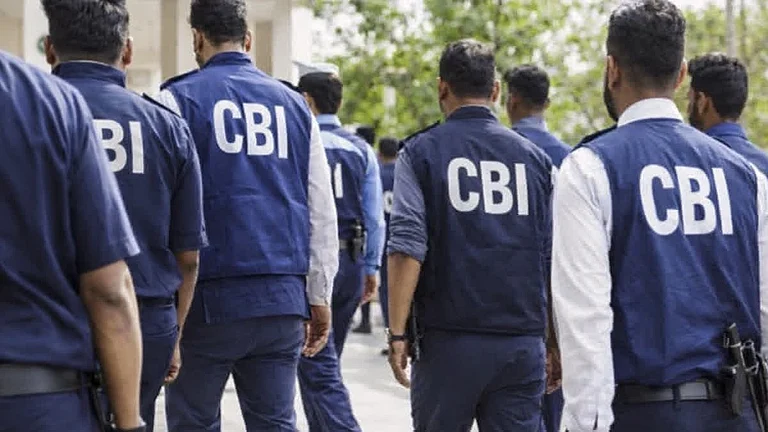
According to the CBI, the syndicate allegedly ran illegal betting panels nationwide, laundered proceeds through mule accounts, transferred funds overseas, and paid protection money to public servants.
“Red Corner Notices have already been issued against four main accused persons who have gone abroad. Action to get them declared as Fugitive Economic Offenders has also been initiated. Further investigation is continuing to unearth the full spread of this syndicate as well as its political and bureaucratic patronage and to bring all other accused persons involved to justice. More chargesheets will be filed in future,” the CBI said in a statement.

The Oman Breakthrough
India's efforts to secure Chandrakar's return have been underway for more than a year. During the Ministry of External Affairs' weekly media briefing on January 3 last year, official spokesperson Randhir Jaiswal confirmed that New Delhi had formally sought his extradition from the United Arab Emirates and was pursuing the matter through diplomatic channels. Those efforts, however, did not result in his return.
His subsequent detention in Oman has altered the legal landscape.
Unlike the UAE, Oman has a bilateral extradition treaty with India, providing a formal legal framework for the surrender of fugitives accused or convicted of extraditable offences. While extradition is subject to judicial scrutiny under Omani law and is not automatic, the treaty gives Indian authorities a clearer legal pathway to seek Chandrakar's return than they previously had.
If extradited, Chandrakar is expected to be questioned not only about the operation of the Mahadev betting network but also about its alleged overseas financial architecture, including the movement of illicit proceeds, overseas investments and the individuals suspected of managing the syndicate from outside India.
That makes his detention one of the most significant developments in the investigation since the ED first began probing the Mahadev network under the Prevention of Money Laundering Act (PMLA). While investigators have attached thousands of crores worth of assets and filed multiple prosecution complaints over the past three years, questioning one of the alleged masterminds has remained one of the investigation's biggest challenges.
For Indian agencies, the Oman breakthrough could prove pivotal. It offers an opportunity to move beyond tracing financial transactions and begin examining, through direct interrogation, how investigators allege an illegal betting platform evolved into one of the country's most extensive transnational financial crime investigations.
From Betting Platform To International Financial Crime Probe
The Mahadev investigation did not begin as one of India's largest money laundering cases. It started with a series of police complaints alleging that online betting applications were operating illegally, deceiving users and violating gambling laws.
According to the CBI, the case originated with FIRs registered by police in Chhattisgarh and several other states. As complaints multiplied, the ED) launched a parallel investigation under the PMLA to examine whether proceeds generated through the betting platforms were being laundered through domestic and overseas financial networks.
What investigators uncovered, according to successive ED investigations, was far more than a single betting application.
The agency alleges that Mahadev Online Book functioned as the flagship brand within an international betting syndicate comprising multiple platforms operating under different domain names, payment channels and business entities. Among the platforms identified during the investigation are Tiger Exchange, Gold365 and Laser247, which investigators say formed part of an interconnected ecosystem rather than standalone betting websites.
As the investigation widened, agencies also began examining the role of financial intermediaries, shell companies, public officials and private entities allegedly involved in facilitating the movement and concealment of illicit proceeds.
The probe has since expanded well beyond allegations of illegal gambling. It now encompasses suspected money laundering, hawala transactions, shell companies, overseas investments and fugitive economic offences, with enforcement agencies attaching assets worth thousands of crores across India and abroad.
How The Mahadev Network Operated
According to the ED, the Mahadev syndicate operated through what investigators describe as a franchise-based "panel" model that allowed betting operations to expand rapidly while remaining under the control of the network's alleged promoters.
Rather than managing every betting operation directly, the organisers allegedly created hundreds of independent betting panels or branches, each run by associates across different parts of India. These operators handled customer acquisition, betting activity and collections within their assigned territories while remaining connected to the central network.
Investigators allege that the overall operation continued to be directed from Dubai by Chandrakar and his close associate Ravi Uppal, enabling the syndicate to oversee a vast betting ecosystem while remaining outside India's jurisdiction.
The financial model, investigators say, was similarly centralised. The promoters allegedly retained around 70-75% of the profits generated through the various betting panels, while the remaining revenue was distributed among local operators responsible for day-to-day betting activities.
According to the ED, this decentralised franchise structure made the network particularly resilient. Even when individual betting panels or operators were shut down, the wider ecosystem continued functioning through multiple domains, franchisees and financial intermediaries spread across different jurisdictions.
This operational model, investigators say, helped transform Mahadev from a betting platform into an international network that proved increasingly difficult for enforcement agencies to dismantle.
Following The Money
The investigation gathered pace after enforcement agencies shifted their focus from the betting platforms themselves to the movement of money generated through them.
According to the ED, proceeds from the alleged illegal betting operations were channelled through a sophisticated financial network designed to disguise their origin before being invested in India and overseas.
Investigators allege that the syndicate relied on thousands of mule or dummy bank accounts—many opened using the Know Your Customer (KYC) documents of unsuspecting individuals—to collect betting proceeds and fragment transactions before they entered the formal financial system.
The funds were then allegedly layered through hawala networks, cryptocurrency transactions and shell companies, making it increasingly difficult to establish a direct link between the betting proceeds and their ultimate beneficiaries. According to the ED, a significant portion of the money was eventually transferred overseas and invested in high-value assets, particularly in the United Arab Emirates.
The scale of the alleged laundering operation is reflected in the assets identified during the investigation. In March this year, the ED attached 18 immovable properties in Dubai and two properties in New Delhi with a combined estimated value of around Rs 1,700 crore. According to the agency, the overseas assets included luxury villas in Dubai Hills Estate, apartments in Business Bay and SLS Hotel & Residences, as well as properties in the Burj Khalifa. Investigators allege that the assets belonged to Chandrakar and entities controlled by him and his associates and were acquired using proceeds generated through the Mahadev betting network.
The investigation has since widened beyond the alleged promoters.
On Friday, the ED provisionally attached movable and immovable properties worth Rs 940.77 crore belonging to businessman Vikas Garg, his family members and companies allegedly controlled by him. The attached assets include residential properties, land parcels, equity shares and other securities.
According to the agency, proceeds generated through the Mahadev Online Book and Skyexchange betting operations were routed through a multi-layered network of accommodation entries, shell companies and layered financial transactions before being channelled into entities linked to Garg. Those funds were subsequently used to acquire shares, securities and other assets, the ED alleged.
The agency says it has now attached, seized or frozen properties worth approximately Rs 3,800 crore as the probe continues to expand, with investigators identifying new assets, financial linkages and alleged beneficiaries across multiple jurisdictions.
Why Dubai Became A Roadblock
While investigators were able to trace substantial financial assets to Dubai, bringing the alleged masterminds of the operation back to India proved far more difficult.
According to the ED, Chandrakar and his close associate Ravi Uppal allegedly managed significant parts of the betting syndicate from Dubai while the franchise network continued operating across India. Their presence outside India's jurisdiction meant investigators had to rely on diplomatic engagement, mutual legal assistance requests and international cooperation rather than direct law enforcement action.
For much of the investigation, Dubai served as both the alleged operational hub of the betting network and a key destination for its proceeds. Investigators traced luxury real estate, shell entities and financial transactions to the emirate, but securing the return of accused persons depended on lengthy cross-border legal processes.
Against this backdrop, Chandrakar's reported detention in Oman has assumed particular significance. Unlike earlier efforts centred on the UAE, Indian authorities can now pursue his return under an existing bilateral extradition treaty, potentially accelerating a process that had remained stalled for months.
How Extradition From Oman Works
India and Oman are bound by a bilateral extradition treaty that provides a legal framework for either country to seek the surrender of individuals accused or convicted of extraditable offences.
Extradition, however, is not automatic.
Once a fugitive is detained, the requesting country must submit supporting evidence, court records and other legal documents to establish that the alleged offences satisfy the treaty's requirements. Authorities in the requested country then examine whether the application complies with both domestic law and the treaty before deciding whether the individual should be surrendered.
If Chandrakar is extradited, Indian investigators are expected to question him about the alleged operation of the Mahadev betting syndicate, its overseas financial network and the movement of proceeds generated through the betting platforms. Investigators also hope his testimony could help identify additional beneficiaries and unravel the international structure of what they describe as one of India's largest financial crime investigations.
Published At: