Incidents of attacks by militants on security forces have completely stopped in Kashmir in the aftermath of the 2025 Pahalgam attack that left 26 people dead
India and Pakistan have engaged in several rounds of track 2 talks after an improvement in the security scenario here
Security has, however, been beefed up to foil any incidents of militancy in Kashmir
One Year After Pahalgam: No Lowering Of Guard Despite Improved Security Scenario
A year after the attack in Pahalgam left 26 people dead, India and Pakistan have engaged in several back-channel talks amid an improved security situation in Kashmir

Summary
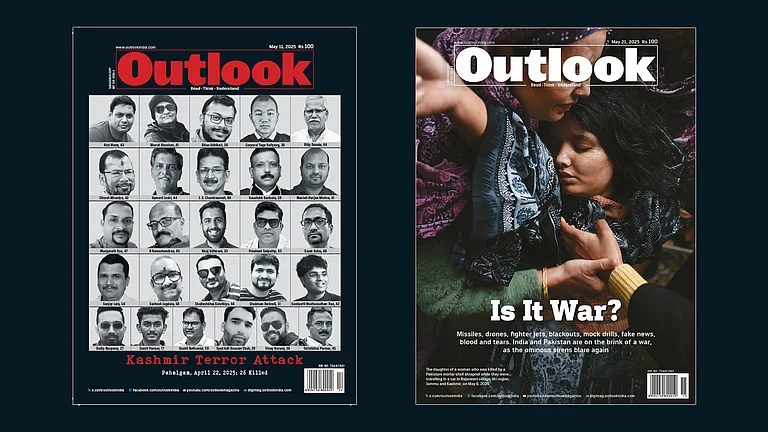
A year has gone by since the deadly terror attack in Pahalgam claimed the lives of 26 civilians, setting off a four-day escalation between nuclear-armed neighbours India and Pakistan before a ceasefire was reached on May 11.
Beyond the military confrontation, both nations launched a parallel diplomatic offensive, taking their complaints to international bodies and accusing each other for instigating the crisis. Modi went on record stating that the attackers will be chased down “to the ends of the earth,” whereas Pakistan sought proof to back India’s allegations regarding its involvement in the Pahalgam attack.
The attack, which nearly pushed the two countries to the brink of full-scale war, saw a downgrading of diplomatic ties, the suspension of the Indus Waters Treaty, and a halt in trade.
Since last year’s war-like confrontation — when India and Pakistan exchanged heavy artillery fire and launched drone and missile strikes — militant attacks on security forces have largely ceased. Instead, recent incidents across Jammu and Kashmir have centred on cordon and search operations targeting militants.
In the backdrop of the improved security scenario, India and Pakistan have carried out several rounds of track 2 talks. According to sources who were part of these talks, these engagements saw diplomats and politicians from India and Pakistan converge at Colombo in Sri Lanka, while a total of seven rounds of discussions have been held between the two sides, which also had participants from Jammu and Kashmir.
“The diplomatic staff has been downgraded to the level of the 1971 war; there is no engagement at the official level, but the track 2 discussions are going on, and our effort is to resume trade and ensure that the working relations between the two countries are again established,” says a source, who was part of the recent track 2 negotiations.
On the day the Pahalgam attack took place, New Delhi, however, issued a sharp reaction describing the incident as an “act of terror” and blamed The Resistance Front (TRF) for the incident, which, however, denied its involvement.
Advertisement
Before the Pahalgam attack, the last time India launched surgical strikes on militant camps in Pakistan was in 2019, after an explosives-laden car driven by a Kashmiri suicide bomber rammed into a CRPF convoy, killing 40 paramilitary personnel.
February 2019 marked the point at which New Delhi appeared to set a new threshold, no longer tolerating even relatively smaller attacks on civilians or security forces without considering action across the Line of Control.
Writer and journalist Zafar Chaudhary, who has taken part in several Track II engagements, says relations between India and Pakistan remain at their lowest point in modern political history. “There used to be a mechanism of regular official engagement between the two sides,” he said. “That no longer happens now.”
In the past, Narendra Modi’s government engaged with Pakistan, while New Delhi also held talks with the Hurriyat Conference leadership on resolving the Kashmir issue. However, after the Pahalgam attack, the security climate hardened, with separatist leader Mirwaiz Umar Farooq removing the title of Hurriyat chairman from his X profile. He later said this was done because his account risked being suspended.
Advertisement
One separatist leader in Kashmir said the Hurriyat has been unable to function since its constituent parties were banned. “All the parties that formed the Hurriyat have been banned, so how do we engage with the people?” he said.
Despite the Pahalgam attack, Kashmir has seen a sharp decline in violence since militancy erupted in 1989. Last year, security agencies said only 14 local militants remained active in the region, a fraction of the thousands of young men who took up arms in support of the “freedom struggle” in 1989.
Over the past year, security forces have demolished the homes of suspected militants, damaging nearby residential buildings, detained hundreds of people, and tightened monitoring of social media for anti-India activity.
Congress leader, G.N Monga, while describing the Pahalgam attack as a security failure, says that policies like the demolition of the houses leave people alienated. “The government doesn’t talk about its security failures of how militants managed to reach the Baisaran meadow and kill people,” he says.
Advertisement
While militant attacks in Kashmir have stopped since the Pahalgam attack, incidents of stone-pelting and anti-India protests had already faded months after the revocation of Article 370 Revocation.
With the removal of special status, which also ended legal barriers to non-locals buying property in the region, some militant groups emerged that specifically targeted outsiders. Such attacks had previously been rare, despite migrant workers forming a vital part of the local economy, from barbers and traders to farm labourers.
The shift came amid fears among political groups that permanent settlement by outsiders could alter the demographic balance of Kashmir. In the region, calls to halt demographic change are often viewed as reflecting a “soft separatist” line.

Pakistan has long advocated for Kashmir’s accession on the basis that Jammu and Kashmir was a Muslim-majority state and should have joined it. New Delhi has, however, argued that the secular ethos rather than the Muslim majority status was the basis for the accession of Kashmir with the rest of the country.
Advertisement
BJP general secretary organisation, Ashok Koul, however, says that due to the tough measures by the security forces, not only has stone pelting ceased, but the separatist activities have also stopped in Kashmir. “It is due to the firm stand that has been taken by India against Pakistan that there is peace now in Kashmir. Shops remain open till late in the night in Lal Chowk, and the incidents of stone pelting have declined too,” he says.
But the security forces have not lowered their guard, and despite Kashmir being a Union Territory, there is no change in the nomenclature of the Line of Control (LoC), which some mainstream leaders in Kashmir earlier argued should be converted into a border to settle the “dispute forever.”
Ahead of the Pahalgam attack anniversary, earlier this month, the Army said that the Chief of Defence Staff (CDS), General Anil Chauhan, reviewed the security along the LoC in North Kashmir and commended the “formation’s exemplary operational preparedness, doctrinal coherence and resolute professionalism”.
“The character of warfare is undergoing a profound transformation, necessitating a shift from Domain-Centric Approach to Multi-Domain Operations (MDO), underpinned by a robust and integrated architecture. He (General Chauhan) underscored the centrality of jointness, stressing that seamless integration across land, air, maritime, cyber, space, and cognitive domains is indispensable for achieving decisive outcomes,” said the Army in a statement.
Published At: