Abuse is systematic, sexualised, and often involves threats and manipulated images, not isolated incidents.
It narrows participation by pushing women towards self-censorship and withdrawal from public platforms.
Over time, repetition and silence normalise harm, turning misogyny from exception into method.
Meme As Method: Sexualisation, Erosion Of Constitutional Discourse In Digital Politics
Women in public life face disproportionate, patterned online abuse that is sexualised, threatening, and increasingly normalised as technology-facilitated gender-based violence, with clear effects on democratic participation

Summary
Not everything circulated in the name of politics deserves to be called speech. The sexualised meme targeting Mamata Banerjee is one such case. It is easy—too easy—to dismiss it as crude partisanship, an excess of election rhetoric. But that instinct is part of the problem. It isolates what is, in fact, systemic. This is not excess, but a pattern—a mode of politics that replaces disagreement with degradation.
To grasp the force of this moment, begin with the image—not as an aberration, but as a technique. The meme does not engage with policy, governance, or ideology. It does not persuade. It relocates. A woman holding constitutional office is shifted into another register—the body. Once that shift occurs, the terms of engagement change. Authority is stripped of institutional grounding and recoded as spectacle. She is no longer a political actor to be contested, but an object to be circulated.
Feminist jurisprudence has long argued that the regulation of women in public life operates not only through law, but through language—how women are described, imagined, and disciplined. What we see here extends that logic into digital form. The meme condenses a history of gendered contempt into a single, portable image. It needs no explanation, no authorship, no accountability. It spreads because it says what need not be said openly.
Indian constitutional law is not blind to this distinction. In Shreya Singhal v. Union of India, the Supreme Court drew a careful line between protected dissent and punishable speech. It rejected vague criminalisation, but did not create an unqualified right to say anything. Obscenity, defamation, and speech that offends standards of decency remain within the scope of Article 19(2). The framework exists; the problem is its selective use.

Courts have, at times, recognised the harm. In Ram Pramesh Gupta v. State of Uttar Pradesh, circulating obscene edited images was treated not as trivial misconduct but as a deliberate act to humiliate a woman. In Nasimuddin Mallick v. State of West Bengal, the online spread of intimate images was recognised as a serious violation of dignity. Where the target is a woman in public life, courts have been even less equivocal.
Advertisement
In Sasikala Pushpa v. Facebook India, a woman MP argued that morphed, sexualised images of her, even if assumed private and consensuallacked public interest and were circulated only for “sensational and salacious” ends, amounting to a gross breach of privacy and per se defamation. The Delhi High Court, however, held that the images were neither obscene nor sufficiently pleaded as defamatory, and that a politician’s private meetings—even with a rival—could, in the circumstances, carry legitimate public interest outweighing her privacy claim.
Again, in Sanjay Zacharias v. Stephen George, the accused allegedly fabricated and circulated posts with sexual insinuations about politician Jose K. Mani, including a doctored image with a scam-accused woman and explicit Malayalam captions. The complaint described the material as “obscene and sexually explicit”. Proceedings invoked offences under the IT Act and IPC obscenity and defamation provisions, signalling that sexually explicit political memes do not enjoy core free speech protection.
These decisions locate harm not in subjective offence, but in the violation of dignity.
Advertisement
Yet the language of this recognition remains tied to older formulations. The continued reliance on “modesty” as a legal category reveals a deeper hesitation. In Malabika Bhattacharjee v. State of West Bengal, the court distinguished between ordinary insult and conduct that shocks a woman’s “sense of decency”. This is doctrinally useful, but conceptually narrow. It frames harm in moral terms, what shocks or offends, rather than constitutional ones.
A feminist legal reading would insist on a shift in vocabulary. The injury here is not to modesty. It is to dignity, to equality, and to the conditions that make political participation possible. To speak in the language of modesty is to tether the harm to the woman’s perceived virtue. To speak in the language of dignity is to recognise her as a constitutional subject. The difference is not incidental, but structural.

Advertisement
Meme culture often seeks refuge in humour and satire, but Indian constitutional law has never treated these as blanket immunities. Post-Shreya Singhal v. Union of India jurisprudence—whether in Subramanian Swamy v. Union of India upholding criminal defamation, or Aveek Sarkar v. State of West Bengal refining obscenity—makes clear that the law judges content by its effect, not its form. A meme is not immune because it is humorous, nor is responsibility diluted by virality. Where content harms reputation, sexualises the body, or becomes prurient, it is assessed within established legal categories. In that sense, such memes sit uneasily within constitutional protection: they may carry political speech, but once they become vehicles of targeted, gendered humiliation, they move beyond the protected core into legally cognisable harm.
Here, the meme does more than sexualise. It draws on a deeper archive of prejudice. The imagery not only reduces the woman to a body; it marks that body through communal insinuation. The suggestion is familiar: that she is aligned with, or compromised by, a Muslim presence—here, the Bengali Muslim recast in political discourse as the Bangladeshi Muslim. The representation is crude, but its logic is precise. It draws on entrenched tropes that cast Muslim identity as excessive, intrusive, and suspect, and render any associated woman morally and politically deviant.
Advertisement
This is where misogyny and Islamophobia converge, not as parallel harms, but as mutually reinforcing ones.
This episode cannot be read in isolation from the politics surrounding the Special Intensive Revision (SIR) and the sustained construction of the “Bangladeshi immigrant voter” as a figure of fear. The meme draws its force from this backdrop. It borrows from a narrative in which electoral integrity is portrayed as threatened by an “outsider” population—almost always coded as Muslim—and casts the woman leader as the enabler. The insinuation is clear: that she facilitates demographic infiltration, that her politics is compromised, that her body becomes the site through which this imagined crossing of borders is staged.
An administrative exercise in voter verification thus bleeds into a cultural script of suspicion and excess, where legality and sexuality collapse into one another. What begins as bureaucratic discourse on citizenship is recast as moral panic about contamination and control. The meme sits squarely within this continuum, translating exclusion into visual shorthand and collapsing questions of franchise, belonging, and constitutional rights into a spectacle of gendered and communal anxiety.
The woman is disciplined through sexualisation; the community is stigmatised through association. The body becomes the site through which communal anxiety is expressed, producing a composite figure: a woman both sexually improper and politically untrustworthy. This is not incidental, but part of a wider political vocabulary where gender and religion are fused to generate suspicion.
To read the meme only as misogyny misses this convergence. To read it only as communal vilification misses its gendered form. It is the intersection that gives the image its force.
The question is no longer whether the meme is offensive. The question is what allows it to circulate with such ease, and what it does to the conditions of public life.
The empirical record is clear. Across jurisdictions, women—particularly in public roles—face disproportionately high levels of online abuse. It is not random. It is patterned. It is sexualised. And often involves threats of violence and the circulation of manipulated images. These are not isolated incidents; they constitute what is now recognised as technology-facilitated gender-based violence.
The effects are cumulative. Women withdraw from public platforms, self-censor, and recalibrate their speech. Participation becomes conditional; the cost of visibility rises.
This dimension is often obscured in free speech debates. It is said that democracy must tolerate offensive speech. But this assumes symmetry—that all speakers are equally placed and that harms are evenly distributed. That assumption does not hold.
When expression consistently targets women in ways men rarely face, it alters the field of participation. It does not merely offend; it excludes, narrowing the space of democratic engagement.
The law offers partial responses. It criminalises obscenity, recognises injury to dignity, and provides mechanisms for takedown and accountability. But these operate after the fact, addressing instances rather than conditions.
Those conditions are political. They are sustained through repetition—the more such content circulates, the less it shocks—and through silence, where the absence of condemnation becomes endorsement. Over time, what was once aberrant becomes routine. Misogyny ceases to be an exception; it becomes a method.
This is where the meme acquires its significance.
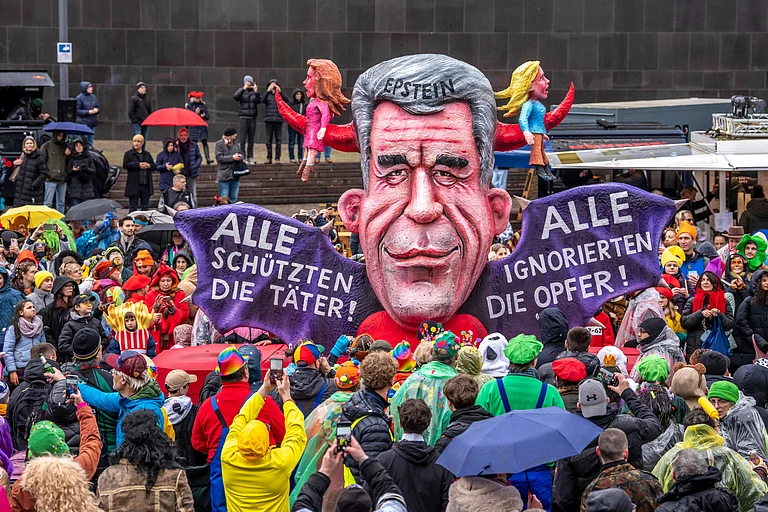
It is not merely an image. It is a signal. It tells us what can be said, about whom, and without consequence. It sets the tone for what follows. It shapes the grammar of political engagement.
Once established, this pattern does not remain limited to a single leader or moment. It travels across contexts, attaching itself to other women, other debates and other centres of power. It becomes embedded in everyday political practice.
What we are witnessing is not a simple decline in civility, but a remaking of political language—one in which women in authority are reduced to their bodies, subjected to communal suspicion and targeted through humiliation.
The issue, then, is not whether one agrees with Mamata Banerjee. It is whether such methods are to be accepted as normal in public life.If the answer is yes, then the consequences are not limited to one election or one state. They extend to the structure of participation itself—who enters, who remains, and who leaves.
That, in the end, is not a matter of taste or rhetoric. It is a constitutional question.
Published At:
Tags