The question confronting Ladakh today is this: can the people of a strategically sensitive border region continue to be governed without meaningful democratic representation, while their repeated demands for constitutional protection, political accountability and institutional empowerment remain unresolved?
The arbitrary administrative decisions taken by officials appointed from outside the region, often without adequate consultation with the local stakeholders, have reinforced the perception that the will and aspirations of the people are being disregarded.
Democracy in Ladakh must be more than the periodic exercise of voting. It must be the right to be heard, the right to participate, the right to govern and the right to live with dignity, security and constitutional protection.
Ladakh Cannot Be Governed By Broken Promises
The fundamental principle that Ladakh should be governed through institutions accountable to Ladakh’s people, with the authority to make decisions concerning their own affairs, appears increasingly compromised

Since 2019, Ladakh’s political journey has evolved from regional divergence to a united struggle for democratic empowerment, constitutional safeguards and the right to govern its own affairs.
The question confronting Ladakh today is not simply whether it will receive constitutional safeguards, a legislature or greater administrative autonomy. It is a much deeper question: can the people of a strategically sensitive border region continue to be governed without meaningful democratic representation, while their repeated demands for constitutional protection, political accountability and institutional empowerment remain unresolved?
Since August 2019, Ladakh’s political journey has been marked by promises, changing political perceptions, dialogue, protests and a growing trust deficit between the people and the Union government. What initially appeared to be a divided political response between the Leh and Kargil regions has gradually evolved into a collective movement for democratic rights, constitutional safeguards and political dignity. Yet, despite years of engagement, negotiations and public mobilisation, the fundamental question of who governs Ladakh, and with what authority, remains largely unresolved.

2019: Two Regions, Two Political Perceptions
When Article 370 and Article 35A were abrogated in August 2019, and Ladakh was separated from the erstwhile state of Jammu and Kashmir to become a Union Territory (UT), the political landscape of Ladakh was marked by sharply contrasting sentiments between Leh and Kargil.
In Leh, a section of the population welcomed the decision, viewing the creation of a separate UT as an opportunity to secure a distinct regional identity and recognition of their long-standing political aspirations. For many, the separation from Jammu and Kashmir was perceived as an opportunity to chart a new political and administrative course.
In contrast, Kargil witnessed widespread resentment and opposition. The people of Kargil largely viewed the division of Jammu and Kashmir on geographical, linguistic and religious lines as deeply problematic. They opposed the bifurcation of the erstwhile state and expressed concern that the abrogation of Article 370 had removed an important constitutional safeguard that had, in their perception, protected their political, cultural, land-related and other rights.
Thus, in the immediate aftermath of August 2019, Ladakh was politically divided, with two regions interpreting the constitutional changes through different historical experiences, political aspirations and perceptions of identity.
However, the subsequent political and administrative developments gradually began to alter this landscape.
The Emergence Of A Common Political Ground
Over time, a growing section of the population across Leh and Kargil began to realise that the UT arrangement, in its existing form, did not necessarily guarantee the constitutional safeguards, political rights, institutional protections or assurances of identity that had initially been anticipated.
The absence of an elected legislature, the concentration of administrative authority within the bureaucracy, concerns regarding land and employment protections, and the limited powers of existing institutions gradually became central issues in the political discourse of Ladakh.
This growing realisation paved the way for a broader political convergence between Leh and Kargil. The Leh Apex Body (LAB) and the Kargil Democratic Alliance (KDA) emerged as central platforms to articulate the collective concerns and aspirations of the people. Both organisations increasingly recognised that the challenges facing Ladakh could not be addressed through isolated regional approaches, but required a united political response.
The formation and consolidation of this unity represented one of the most significant political developments in Ladakh after 2019. It demonstrated that despite historical, geographical, cultural and political differences, both regions could come together around common aspirations for democratic rights, constitutional protection and political empowerment.
In response to the growing political mobilisation, the Government of India constituted a High-Powered Committee, initiating a formal process of dialogue between representatives of Ladakh and the Union government.
The LAB and the KDA subsequently formulated a four-point agenda, which became the central framework of their demands:
· Full Statehood for Ladakh, to ensure greater democratic representation and political autonomy.
· Constitutional safeguards under the Sixth Schedule, to protect Ladakh’s land, cultural identity, traditions and rights.
· A Public Service Commission and safeguards relating to employment and reservation, to ensure fair representation and protection of the interests of Ladakh’s people in public employment.
· Separate Parliamentary constituencies for Leh and Kargil, to ensure independent and effective political representation of both regions in Parliament.
This common agenda marked a significant shift in Ladakh’s political discourse. The movement was no longer defined primarily by the divergent reactions of Leh and Kargil to the events of 2019, but increasingly by a shared demand for constitutional protection, democratic representation and the right to participate meaningfully in governance.

Dialogue Without Delivery
The initiation of the dialogue process with the Government of India raised hopes that Ladakh’s concerns would be addressed through a constructive and meaningful engagement. However, the course of these negotiations gradually began to raise serious questions about the sincerity and commitment of the Union government towards resolving the concerns of the people.
Time and again, it appeared that the dialogue process gained momentum only when protests, public mobilisation or political pressure intensified. Whenever the people of Ladakh took to the streets, the leadership of the LAB and the KDA would subsequently be invited for discussions by the Union Ministry of Home Affairs.
Yet, when protests were suspended and the situation returned to relative normalcy, the dialogue often lost momentum, with little tangible progress on the core demands.
This recurring pattern gradually deepened frustration among the people and the leadership of Ladakh. The dialogue process, instead of becoming a credible mechanism for resolving the political and constitutional concerns of the region, increasingly came to be perceived as reactive, lacking urgency and substantive commitment.
Dialogue cannot become an instrument for managing protests rather than resolving grievances. Nor can repeated assurances substitute for concrete decisions, institutional reforms and constitutional commitments.
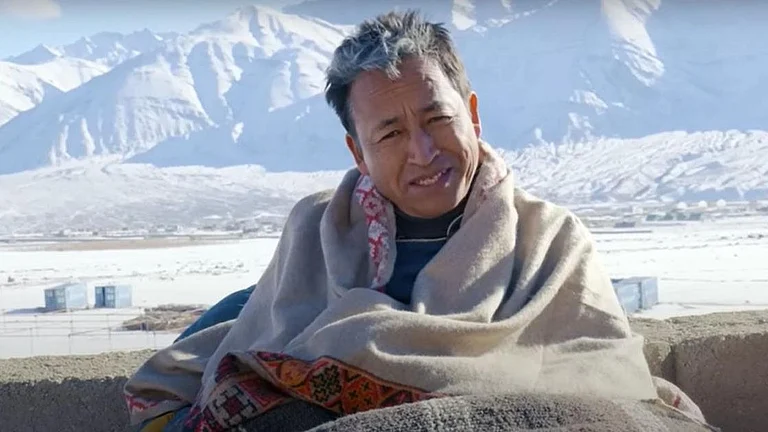
The prolonged absence of meaningful progress eventually led to renewed mobilisation. Prominent climate activist Sonam Wangchuk undertook protests, even amid severe winter conditions, while the LAB and the KDA organised demonstrations and protests in Jammu and New Delhi to press for the fulfilment of Ladakh’s demands.
These developments reflected the growing frustration with the pace of negotiations and the perceived reluctance of the Union government to translate assurances into concrete institutional and constitutional arrangements.
The Parliamentary elections also marked a significant political shift in Ladakh, as the Bharatiya Janata Party faced a decisive electoral setback. The electoral verdict was widely interpreted by sections of the political leadership and civil society as a reaffirmation of the people’s commitment to the ongoing movement for democratic rights, constitutional safeguards and political empowerment.
The outcome demonstrated that the political aspirations of Ladakh could not be reduced to electoral promises or administrative arrangements. The people were increasingly seeking a substantive resolution of their concerns, including meaningful democratic representation, constitutional protection and greater control over the governance of their region.
The electoral outcome, alongside protests and political mobilisation, further reinforced the position of the LAB and the KDA as central platforms of the movement.
It also underscored an important political reality: electoral participation and the demand for democratic empowerment are not contradictory. The people of Ladakh have repeatedly used both electoral and non-electoral means to express their aspirations, and their demands for constitutional protection and meaningful representation remain central to the political discourse.
A Tragedy That Deepened The Crisis
On September 24, Ladakh witnessed a tragic and deeply consequential episode of violence that profoundly affected its political and social landscape. Four young people lost their lives, nearly 80 people were injured and around 80 individuals were detained. Wangchuk was jailed under the National Security Act.
The incident left a profound impact on the people of Ladakh, further aggravating the sense of alienation, mistrust and political uncertainty.
Among those who lost their lives was also a retired Army personnel who had played a significant role during the Kargil War. The loss of lives, injuries, arrests and the subsequent developments have reinforced the demand for accountability, justice for the victims, compensation and the resolution of cases related to the incident.
Even as we approach the end of 2026, concerns remain over justice, accountability and the resolution of the cases arising from that incident.
For many in Ladakh, the events of September 24 were not merely an isolated episode of violence, but a reflection of the deepening political crisis and the growing disconnect between the administration and the people.
The restoration of trust requires more than statements of concern. It requires transparent accountability, a credible process of justice, genuine engagement with the affected families and a willingness to address the underlying political grievances that have contributed to the prevailing discontent.
The Theft Of Democratic Representation
At a time when debates across the country are being raised over electoral integrity and allegations of vote theft, I would argue that in Ladakh, the issue is not merely about electoral manipulation; rather, since 2019, democratic representation itself has progressively been undermined.
The people of Ladakh have been deprived of meaningful democratic representation and the right to govern their own affairs has increasingly been taken away from them.
The absence of an elected legislative assembly, the concentration of authority within the Lieutenant Governor’s administration and the limited institutional avenues available to the people to influence policy decisions have collectively contributed to a growing sense of democratic disempowerment.
The arbitrary administrative decisions taken by officials appointed from outside the region, often without adequate consultation with the local stakeholders, have reinforced the perception that the will and aspirations of the people are being disregarded.
The bureaucracy has increasingly become the principal instrument through which decisions are imposed upon Ladakh, creating a serious trust deficit between the administration and the people.
Democracy is not merely the conduct of elections at periodic intervals. It is the institutional guarantee that people have a voice in determining policies, laws, priorities and the future of their region. When elected institutions are absent or inadequately empowered, and when decision-making is concentrated within an administrative structure that is not directly accountable to the people, democratic representation becomes severely constrained.
The central concern in Ladakh is precisely this: the people are being asked to participate in electoral and administrative processes without being provided with meaningful authority to govern their own affairs.
Ladakh’s Unity Must Not Be Undermined
There is also a growing perception among sections of the political leadership and civil society that the administrative and political machinery is being utilised to weaken the ongoing movement, create divisions among the people and undermine the unity that has emerged between Leh and Kargil.
The unity between Leh and Kargil remains one of the most significant political developments in Ladakh since 2019. It has demonstrated that despite historical, geographical, cultural and political differences, both regions can come together around common aspirations for democratic rights, constitutional safeguards and political empowerment.
Any attempt, whether deliberate or through political and administrative decisions, to weaken this unity risks undermining the broader movement and creating further mistrust.
Such an approach, particularly in a strategically sensitive and border region like Ladakh, is not only counterproductive to India’s national interests, but also risks weakening the confidence of the people in the country’s democratic institutions.
Ladakhis have historically regarded themselves as an integral part of India’s national security framework and have contributed significantly to the defence of the nation. The people of Ladakh are, in many ways, the natural defenders of the country’s frontiers.
Their commitment to the nation must not be taken for granted. It must be strengthened through democratic inclusion, political respect, institutional empowerment and constitutional guarantees.
Any political approach that alienates them, undermines their democratic aspirations or creates a sense of exclusion is deeply concerning, both from the perspective of national security and democratic governance.
The strengthening of Ladakh’s democratic institutions and the restoration of public confidence should, therefore, be viewed as an integral part of strengthening India’s strategic interests in the region.
From Statehood And Sixth Schedule To An Empowered Legislature
During the dialogue process, the representatives of Ladakh were repeatedly urged by the Government of India to demonstrate flexibility in their demands.
When we initially sought statehood and Sixth Schedule protections, we were often asked to reconsider our position and explore alternative arrangements. In response, the leadership of Ladakh demonstrated flexibility and “agreed to discuss” the possibility of a democratically elected UT-level legislature or governing body, provided it was vested with meaningful powers and adequate constitutional protection.
During these discussions, assurances were conveyed that the proposed elected UT-level body would be more empowered than the existing governance structure in Jammu and Kashmir.
The discussions also revolved around the need for an appropriate constitutional framework, including provisions analogous to Article 239A, which provides for a legislature for Puducherry, and Article 239AA, which governs the constitutional structure of Delhi.
The argument was that Ladakh too should have a legally-defined constitutional framework that clearly establishes the powers, responsibilities and institutional relationship between the elected body, the administration and the Lieutenant Governor, while addressing the region’s constitutional safeguards and governance concerns.
The proposal for an elected legislature was not simply a compromise in the demands of the movement. It was an attempt to find a viable constitutional and democratic framework through which the people of Ladakh could exercise meaningful political authority, while ensuring protection of land, identity, employment, resources and institutional autonomy.
However, the framework and proposals being discussed have increasingly raised concerns about whether the promised empowerment would actually materialise. The proposed structure, as perceived by many in Ladakh, risks being substantially weaker than the assurances conveyed during negotiations, with insufficient clarity on legislative, financial and executive powers.
The fundamental concern remains that any elected body must possess genuine authority to legislate, govern and make decisions on matters affecting the people of Ladakh, rather than merely function as an intermediary between the administration and the public.
The central question is no longer merely whether Ladakh will have an elected body, but whether that body will possess the powers necessary to make democracy meaningful.
Elections Amid Winter: Limitations Of Newly-created Councils
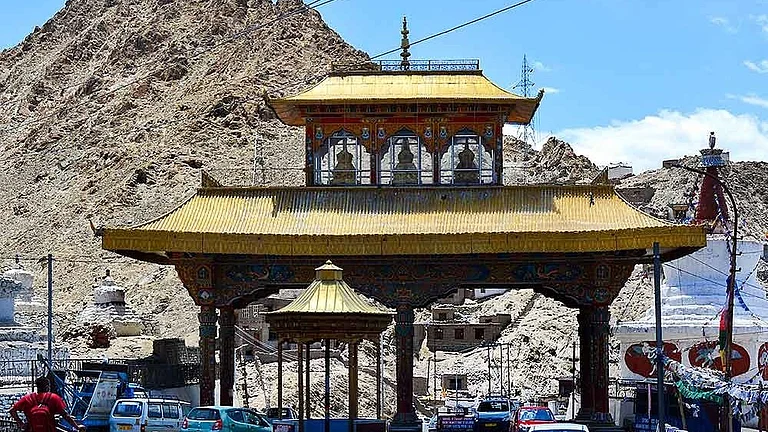
Instead of resolving these constitutional and political concerns, Ladakh is now witnessing the announcement and conduct of multiple elections in an extremely challenging winter season.
Municipal elections, panchayat elections and elections to the Ladakh Autonomous Hill Development Councils across the newly established districts of Ladakh are being undertaken or scheduled amid severe climatic conditions, when temperatures plunge well below zero.
This timing is particularly concerning because nearly 20–25 per cent of Ladakh’s population is believed to leave the region during the winter months, making participation and voter accessibility a serious challenge.
The concerns surrounding these elections are not limited to weather conditions alone. Questions have also been raised in several areas regarding the electoral process, constituency arrangements, delimitation and the broader political context in which these elections are being conducted.
In parts of Shakar-Chiktan, for instance, a boycott has emerged as a reflection of the growing dissatisfaction and concerns among sections of the population.
Conducting elections without adequately addressing these concerns risks further undermining public confidence in democratic institutions.
The creation of additional hill councils in the newly established districts is also unlikely, by itself, to resolve the fundamental governance concerns of Ladakh.
The issue is not merely the creation of additional administrative or elected structures; it is the question of whether these institutions will possess the powers necessary to govern effectively.
The existing concerns include the absence of adequate financial authority, limitations concerning land-related powers and the continued concentration of final decision-making authority within the Lieutenant Governor’s administration and the bureaucracy.
In the absence of genuine financial, legislative and administrative powers, these councils risk functioning primarily as intermediaries between the administration and the people, rather than as effective institutions of local self-governance.
The creation of new councils without adequate powers may therefore expand the administrative framework without necessarily strengthening democratic governance.
The fundamental principle that Ladakh should be governed through institutions accountable to Ladakh’s people, with the authority to make decisions concerning their own affairs, appears increasingly compromised.
The demand for democratic empowerment in Ladakh is not simply a demand for the creation of institutions or the holding of elections. It is a demand for the restoration of meaningful political authority, constitutional protection, democratic accountability and the right of the people to govern their own region through empowered institutions.
The people of Ladakh want the rest of the country to understand the seriousness of the political and constitutional situation unfolding in this sensitive border region. They do not want Ladakh to become a theatre of political confrontation, mistrust, division or instability.
Rather, they seek a democratic resolution that respects their aspirations, protects their identity, ensures constitutional safeguards and restores confidence between the government and the people.
For a region as strategically significant, geographically challenging and politically sensitive as Ladakh, the erosion of democratic trust is a matter of profound concern.

A sustained trust deficit between the administration and the people can have far-reaching consequences. The Government of India must, therefore, recognise that genuine dialogue, democratic empowerment, constitutional guarantees and respect for public sentiment are not merely political concessions; they are essential to strengthen India’s democratic foundations and maintaining the confidence of the people of Ladakh in the country’s democratic system.
The future of Ladakh cannot be secured merely through administrative restructuring, the creation of new districts or the conduct of elections. It must be secured through a political and constitutional framework that gives the people a genuine voice in governance, protects their rights and allows them to participate meaningfully in shaping their own future.
Democracy in Ladakh must be more than the periodic exercise of voting. It must be the right to be heard, the right to participate, the right to govern and the right to live with dignity, security and constitutional protection.
(The author is co-chairman, Kargil Democratic Alliance)
(Views expressed are personal)
Tags