Police rescued 12 alleged bonded labourers from a factory in Uttar Pradesh's Muzaffarnagar
The case has renewed scrutiny of debt bondage despite decades of legal prohibition
The incident comes as forced labour concerns increasingly influence India's global trade relations
In Muzaffarnagar, A Factory Raid Rekindles Questions About Bonded Labour In India
The rescue of 12 alleged bonded labourers from a Uttar Pradesh factory has renewed attention on India's persistent debt bondage problem as labour standards become an increasingly important issue in global trade
Summary
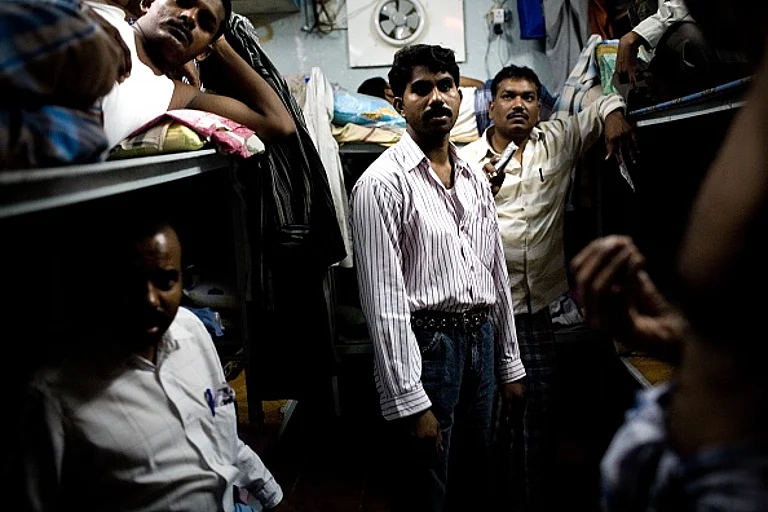
When police raided a small disposable paper plate manufacturing factory in Uttar Pradesh's Muzaffarnagar district this week, they found 12 men allegedly trapped inside. Investigators said the workers had been lured with promises of jobs but instead spent months, and in some cases more than a year, confined at the factory, where they were allegedly beaten, underfed and forced to work without wages.
The rescue has reignited debate over bonded labour in India. The practice was outlawed five decades ago but continues to surface in parts of the country's informal economy. The case also comes as forced labour has become an increasingly important issue in international trade.
Recently, the United States has proposed additional tariffs on India and dozens of other economies over the enforcement of laws against goods produced through forced labour.
In Muzaffarnagar, police acted after receiving a tip-off that workers were being held captive inside the factory. Officers first sent a decoy to verify the allegations. They then raided the premises on Monday with officials from the labour department and district administration.
The workers rescued were from Uttar Pradesh, Haryana, Bihar and Uttarakhand. One worker was from Nepal. Police said some had allegedly remained confined inside the factory for as long as 18 months.
Senior police official Sanjay Kumar Verma described the conditions as marked by "tremendous atrocity". He told the BBC that the injuries found on several workers were "shocking".

How The Alleged Operation Worked
Investigators alleged the accused targeted vulnerable jobseekers at railway stations and other public places. They allegedly offered employment along with food and accommodation. Once inside the factory, police said, the workers' mobile phones were confiscated. They were then locked inside the premises and forced to work continuously.
According to police, the labourers were allegedly fed only one dry roti a day. Pit bull terriers were allegedly used to guard the premises and prevent escape. Workers who demanded wages or attempted to leave were allegedly beaten with sticks.
Advertisement
India's unemployment rate rose to 5.5% in May 2026 from 5.2% in April, driven by higher rural unemployment, according to the latest Periodic Labour Force Survey (PLFS). Rural unemployment increased to 5.1% from 4.6%, while urban unemployment eased marginally to 6.4% from 6.6%.
Notably, bonded labourers are often among India's lowest-paid workers, with many receiving little or no wages despite working long hours. Those who are paid typically earn far below statutory minimum wages, particularly in informal sectors such as brick kilns, agriculture, construction and small manufacturing units.
Their economic vulnerability stands in sharp contrast to India's rapid economic expansion. By nominal gross domestic product (GDP) growth, India is among the fastest-growing major economies, its per capita income remains relatively low at about ₹2.4 lakh (around $2,800) in 2025-26, showing the uneven distribution of growth and the continued dependence of millions on low-paid informal employment.
The rescued men described similar experiences.
Advertisement
One worker from Uttarakhand told the BBC they had been treated "like prisoners". He alleged their Aadhaar cards had been burnt and their phones seized. He also said they were repeatedly assaulted while surviving on minimal food.
Another worker said he had accepted a job offer after being approached at a railway station in Delhi. Responsible for supporting his family, he said he remained confined at the factory for four months without any contact with them.
A worker from Nepal alleged he had spent nearly two years at the factory without speaking to his relatives. He said the workers survived on coarse bread served with salt and red chilli powder.
Several workers displayed injury marks on their backs and other parts of their bodies. They alleged the injuries resulted from repeated beatings.
Investigation Widens
Police have registered a case under the Bonded Labour System (Abolition) Act, child labour laws and other criminal provisions. A special investigation team has also been formed. Investigators are examining allegations that some labourers may have died while working at the factory.
Advertisement
Those allegations gained further significance on Thursday. Police disclosed that one bonded labourer allegedly died following torture and that his body was packed into a bag and dumped. According to news agency PTI, Senior Superintendent of Police Sanjay Kumar said the allegation emerged during the ongoing investigation.
The rescued workers have since received medical treatment and psychiatric counselling. Police said eight have already been reunited with their families. Efforts are continuing to contact relatives of the remaining workers and arrange their rehabilitation.
Congress leader Rahul Gandhi on Thursday described the alleged bonded labour racket uncovered in Uttar Pradesh's Muzaffarnagar as "utterly shocking" and an "assault on human dignity", while demanding justice for the victims and the harshest punishment for those responsible.
In a post on X, Rahul Gandhi said the rescued workers were forced to work without wages and subjected to brutal abuse. "In addition to forcing them to work without wages, the workers were bitten by dogs, stabbed with spears, whipped, and fed animal fodder. This is an assault on human dignity—victims must receive justice along with rehabilitation, and the perpetrators the harshest possible punishment," he wrote.
Advertisement

What Is Bonded Labour?
The Muzaffarnagar case has again highlighted the gap between India's legal framework and the realities faced by some of its most vulnerable workers.
Bonded labour, also known as debt bondage, occurs when a loan or advance becomes a means of coercion. Workers become trapped in employment because the debt cannot realistically be repaid. Rather than functioning as a financial obligation, the debt becomes a mechanism of control.
The practice has been illegal since Parliament enacted the Bonded Labour System (Abolition) Act in 1976. India's Constitution also prohibits forced labour and human trafficking under Article 23. The Supreme Court has repeatedly held that the right to life with dignity under Article 21 also protects people from labour extracted through economic coercion.
In the landmark Bandhua Mukti Morcha vs Union of India & Others (1983), the court ruled that labour compelled by economic dependence amounts to forced labour.
A Persistent Challenge
Yet enforcement has remained inconsistent.
The 2011 Census identified more than 180,000 bonded labourers across India. Government figures show approximately 297,000 bonded labourers were rescued and rehabilitated between 1978 and 2025. That remains only a fraction of the estimated 18.4 million bonded labourers the Union government has pledged to free by 2030.
Prosecutions and convictions under the Bonded Labour System (Abolition) Act have remained relatively low across many states. The figures reflect the difficulty of identifying victims and prosecuting offences that are often concealed within informal labour arrangements.
Unlike the stereotypical image of workers physically chained to workplaces, bonded labour today frequently survives in less visible forms. Labour relationships are often presented as financial assistance or traditional obligations. Dependence on employers, social hierarchies and informal employment can make coercion difficult to detect and prove.
In an article published by Outlook India, Dr. Lakshmidhar Mishra, a former Union Labour Secretary and Special Rapporteur with the National Human Rights Commission, wrote that bonded labour is "service under conditions of unfreedom, rooted in debt or advance that traps the poor, landless, and assetless in exploitative relationships."
He argued that while India has one of the world's most progressive legal frameworks against bonded labour, implementation has faltered because of official denial, weak enforcement and bureaucratic failures, allowing both traditional and newer forms of bondage to persist.

Growing International Trade Implications
The renewed attention on bonded labour also comes as labour standards are becoming an increasingly important component of international trade.
The Office of the United States Trade Representative has proposed imposing an additional 12.5% tariff on imports from India and 53 other economies. It argues they have failed to prohibit and effectively enforce restrictions on goods produced through forced labour.
The proposal follows investigations into 60 economies. The USTR examined whether governments had taken sufficient measures to prevent imports linked to forced labour.
Announcing the proposal, U.S. Trade Representative Jamieson Greer said countries that fail to address forced labour create unfair competition for American workers. He said the United States would no longer tolerate that disparity.
India has rejected those allegations and urged Washington to discontinue the investigations. New Delhi has argued that such issues should instead be addressed through ongoing bilateral trade negotiations.
The timing is significant as India and the United States continue negotiations on a broader trade agreement. Commerce and Industry Minister Piyush Goyal has said most elements of the proposed pact have already been settled. Discussions are now focused on resolving the remaining issues.
For India, the rescue in Muzaffarnagar serves as another reminder that despite constitutional guarantees, dedicated legislation and decades of rescue and rehabilitation programmes, bonded labour remains embedded in parts of the informal economy. At the same time, the issue is no longer only a domestic human rights concern. It is increasingly influencing global trade relations and supply chain governance.
Published At: