From NEET to JPSC, student and job aspirant protests over examination transparency, recruitment and unemployment are increasingly becoming political issues.
Prashant Kishor’s Bankipur victory has raised questions over whether youth discontent can translate into electoral challenges for established parties.
As protests grow in Jharkhand, the political salience of jobs and recruitment could increase ahead of India’s upcoming elections.
From Bankipur To Ranchi: How Student Protests Are Becoming India's Biggest Political Force
The recent results in the by-election in Bankipur has sent signals that India's student movements may no longer be confined as pressure groups but may also start spilling over to the electoral arena

Summary
For years, student protests in India have been largely confined as pressure campaigns around individual examinations or university issues. That may be changing. From the nationwide anger over NEET and recruitment exams to the ongoing agitation by job aspirants in Jharkhand, questions of examination transparency, government recruitment and unemployment are increasingly spilling into electoral politics.
The recent Bankipur bypoll in Bihar has added another dimension: a youth-driven political mood can potentially hurt an established party in an urban constituency. In Jharkhand, meanwhile, the protests have put the ruling alliance, including the Congress, in a difficult political position.
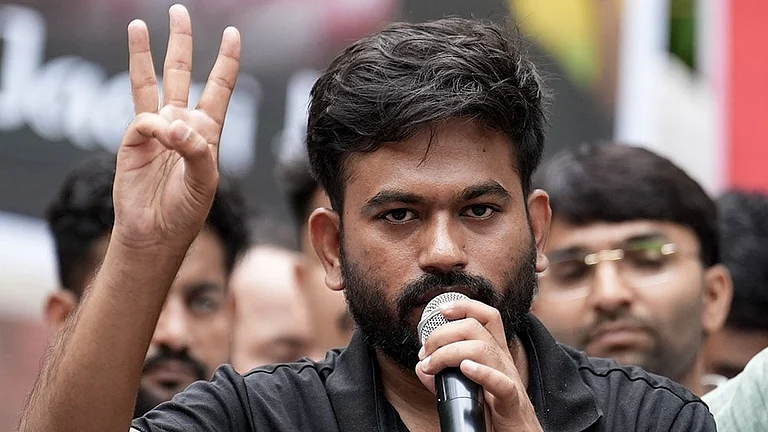
Why are students protesting in Jharkhand?
One of the immediate triggers is the controversy surrounding recruitment examinations conducted by the Jharkhand Public Service Commission (JPSC) and Jharkhand Staff Selection Commission (JSSC).
Students and government-job aspirants have alleged irregularities in the 14th JPSC Combined Civil Services preliminary examination, including concerns over the publication of results and the transparency of the process. The controversy intensified after JPSC chairperson and former Jharkhand chief secretary L Khiangte resigned amid the political storm. Protesters have demanded an independent investigation, including a CBI probe, and action over alleged irregularities.
By August 4, the Jharkhand CID had arrested 14 people in connection with the investigation into alleged JPSC examination irregularities.
Why is Congress caught in a political bind?
The protests present a particularly awkward problem for the Congress because it is simultaneously part of the government and vulnerable to the opposition's attack over the recruitment controversy.
The JMM-led government is responsible for the state's administrative machinery, while Congress is an important constituent of the ruling alliance. That makes it difficult for the party to simply position itself as an outsider supporting the protesters.
At the same time, the BJP has attempted to turn the issue into an attack on the government. The Congress is therefore caught between defending an alliance government and responding to an issue that directly affects one of its most important potential constituencies: young voters seeking employment.
Advertisement
The Congress’ overt support to the CJP movement has also invited charges of hypocrisy from their political rivals.
At a press conference, BJP Lok Sabha MP Sambit Patra called out the grand old party’s alleged double standards.
"The Congress party has a double standard... Thousands of students are protesting through social media every day in Jharkhand, yet the Congress party doesn't seem to be saying a single word in support of the protesting students in Jharkhand," he said.
How did Bankipur change youth politics?
The Bankipur bypoll in Bihar has offered a striking example of how youth and employment concerns can intersect with electoral politics.
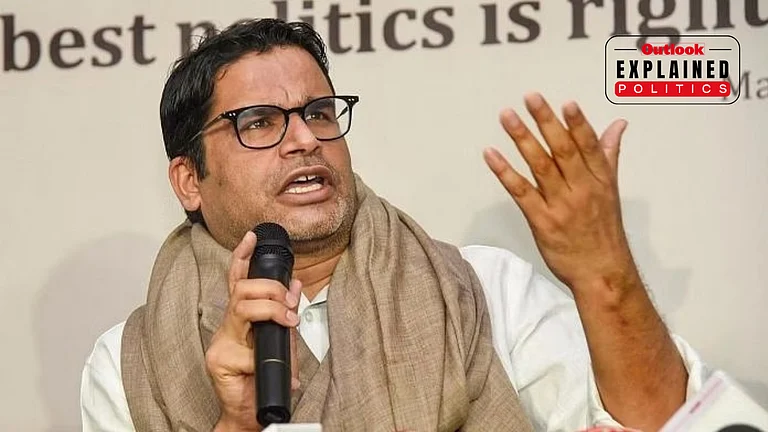
Jan Suraaj founder Prashant Kishor chose to contest Bankipur, a long-standing BJP stronghold, rather than a safer constituency. He explicitly presented the choice as an attempt to encourage voters to move beyond conventional caste and religious calculations.
His victory in the July 2026 bypoll came after a wave of Gen-Z-led protests over examination failures and youth unemployment. The result does not prove that student protests alone determined the election. But it demonstrated that an established political stronghold can become vulnerable when a new political narrative connects with younger, educated and urban voters.
Advertisement
Speaking to reporters after his victory, Kishor himself stated that the Gen Z movement may have contributed to the electoral outcome but no concrete conclusions can be drawn from the results.
"Gen Z movements may have influenced the election result, but there is no concrete data to show that young people voted in large numbers. Unfortunately, that is the reality," Kishor said.
Will jobs become the defining issue before the next elections?
It is too early to say that jobs will supplant caste, welfare, identity, inflation or other established electoral issues which get more attention. But jobs have one major political advantage, they cut across many social categories.
A government-job aspirant may belong to any caste, religion or region, yet face the same concerns about an examination being delayed, a recruitment process being cancelled or a result being questioned.
Advertisement
The emergence of the Cockroach Janta Party after the nationwide student protests is another indication of this changing political landscape. Lead Economist at Oxford Economics, Alexandra Hermann Prasad, was quoted by The Indian Express as saying that the protests “expose a deeper jobs problem.”
From Bankipur to Ranchi, the message is increasingly clear, for a generation that has spent years preparing for examinations and competing for a limited number of jobs, the credibility of the recruitment system itself is becoming a political issue.
Published At: