26/11 was an assault on the Idea of India, exposing a new form of transnational terrorism.
The attacks exposed security failures but also highlighted extraordinary courage and sacrifice.
India has since shifted from strategic restraint towards a more assertive national security doctrine.
Column | 26/11 And The Making Of India's New National Security Doctrine
Ashwani Kumar writes that 26/11 remains a reminder not only of the vulnerability of open societies but also of their resilience
Summary
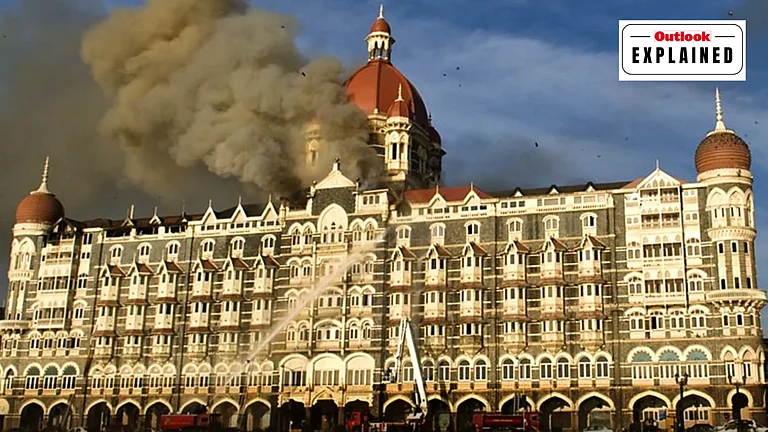
26/11 remains permanently etched in my personal archive of memories. It was a dull, damp and chilly November morning in London. I was a Visiting Fellow at the London School of Economics, working with Mary Kaldor and her team on the Global Civil Society Yearbook. Staying at the popular London YMCA, I woke up to chilling television images of Mumbai under siege. The Taj Mahal Palace Hotel, the Leopold Café and other iconic spaces of my beloved city were under attack.
Having witnessed the horrors of 9/11 on television in the USA as a doctoral scholar in Oklahoma, I had already seen the brutality of terrorism. Nor had I forgotten the July 11, 2006, attacks on Mumbai’s suburban trains, when innocent commuters travelling to work were brutally killed.
However, this was different. Fear suddenly entered my body, almost like a paralytic attack, a jolt of disbelief, helplessness and dread. Mumbai was not merely a city on the television screen; it was my city, the Maximum City, and I felt my emotional world being violated. I was watching my nation being wounded in the most horrific way.
For centuries, India had endured invasions and incursions by foreign forces, but 26/11 was an assault not merely on Mumbai; it was an assault on the very Idea of India.
The Emergence Of ‘New Violence’
In the days that followed, fear acquired a life of its own, spreading far beyond Mumbai, while the familiar academic vocabularies of terror seemed suddenly inadequate to explain what we had witnessed.
At an LSE memorial meeting, and later in an essay published in OpenDemocracy, I sought to capture this emerging phenomenon of global terror through the idea of ‘new violence’.
Young, clean-shaven ‘community warriors’, dressed in cargo pants and T-shirts, brought forth a savagery that fused the ordinariness of modern life with a frenzied intensity of hatred. It was a violence that unsettled our most established assumptions about terror, warfare and the state, and even the strategic wisdom of Sun Tzu’s The Art of War and Clausewitz’s On War seemed woefully inadequate.
Advertisement
In other words, 26/11 was neither conventional violence between nation-states nor violence waged in the name of national liberation, the struggle of those whom Frantz Fanon called the wretched of the earth. It was transnational terrorism, carried out by Pakistan-based terrorists with direct links to the Pakistani state’s intelligence establishment.
This ‘new violence’ was epochal, messianic, carnivalesque and profoundly anti-political. Unlike revolutionary violence rooted in the lives and struggles of peasants and working classes, it does not soil its feet in muddy rice fields or dirty factories.
Its essence lies in the sanitisation, deterritorialisation and depoliticisation of violence, a meticulously choreographed, picture-perfect spectacle of brutality. Its perpetrators inhabit sealed worlds of radicalisation, severed from the public spaces in which democratic life, political argument and contestation unfold.
More importantly, 26/11 also demonstrated how the unresolved wounds of Partition can be mobilised, manipulated and violently resurrected by militarised ruling elites in the neighbouring country.
Advertisement
Courage, Sacrifice And Institutional Failures
26/11 was not simply a Mumbai tragedy or an Indian national trauma; it was a global terror event. Yet India’s immediate response was also marked by extraordinary courage and sacrifice.
Mumbai Police officers were among the first to confront the attackers. The deaths of senior officers such as ATS chief Hemant Karkare, Ashok Kamte and Vijay Salaskar, and the courage of Assistant Sub-Inspector Tukaram Omble, who helped capture Ajmal Kasab, the sole surviving terrorist apprehended alive, remain embedded in our collective memory.
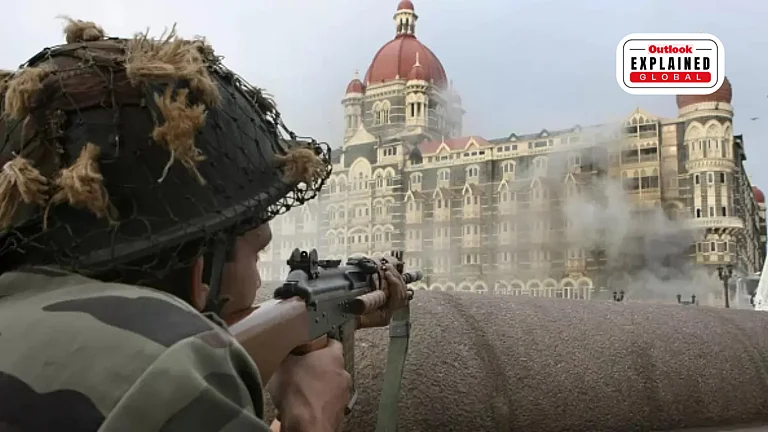
The NSG commandos, airlifted to Mumbai, displayed exemplary valour in the operations to rescue hostages and secure the sites of the attacks. However, 26/11 also exposed serious institutional and logistical shortcomings in India’s security apparatus, intelligence coordination and political preparedness to respond to such attacks.
From Strategic Restraint To Calibrated Deterrence
26/11 thus became a turning point in India's counter-terrorism thinking. The 2016 surgical strikes marked a departure from strategic restraint, signalling that cross-border terror infrastructure could invite direct retaliation.
Advertisement
The 2019 Balakot air strikes further expanded this repertoire. Operation Sindoor in May 2025 represented a paradigmatic shift, combining kinetic action, precision capabilities, intelligence, technology, military coordination and strategic signalling.
India increasingly sought not merely to absorb or contain terror, but to disrupt its infrastructure and alter the strategic calculations of its sponsors. This evolution reflects the emergence of calibrated deterrence and new paradigms of warfare in an increasingly complex strategic environment shaped by nuclear-armed neighbours.
This trajectory also reflects the gradual transformation of the Indian state from a relatively ‘soft national security state’, characterised by strategic restraint, reactive responses and a preference for diplomatic management of security challenges, towards a more assertive and vigilant national security state.
Confronted with persistent cross-border terrorism and the use of non-state actors as instruments of proxy warfare, India has demonstrated an increasing willingness to employ military, intelligence, technological and diplomatic instruments to protect national sovereignty. This shift is consistent with the neo-realist critique of India's traditional liberal Nehruvian doctrine of national security.
Advertisement
Indeed, 26/11 remains a reminder of the vulnerability of open societies, but also of their resilience. Terror sought to rupture Mumbai’s social, civic and emotional fabric and, through Mumbai, the very Idea of India.
Since then, India has sought to confront the ‘new violence’ of terror through strategic preparedness, societal resolve and a renewed awakening of civilisational consciousness, without surrendering the democratic, pluralistic and humane values that make India worth defending.
(The views expressed are personal.)
Published At: