Unlike the Vietnam era, today’s students face debt, precarity and institutional discipline that make protest feel personally and professionally risky.
Universities, through suspensions, arrests and funding pressures, have made dissent increasingly costly, turning compliance into the safer choice.
While anti-war sentiment remains, digital-age activism is fragmented and morally complex, making sustained mass mobilisation far harder than in 1970.
The Price of Dissent: Why US Students Aren’t Protesting The Iran War
War, once the defining moral crisis of American youth, no longer commands the same fire

Summary
In May 1970, the Kent State University campus was thick with tear gas and gunfire. The Vietnam war had come home, and students were its most visible resisters. The anti-war movement wasn’t a fringe cause; it was a national convulsion. Compare that to today. When the United States and Israel launched strikes on Iran on February 28, 2026, assassinating Iran’s Supreme Leader Ali Khamenei and igniting a regional war, the campuses largely stayed quiet. At New York University, around 20 students and faculty gathered in Washington Square Park. At Arizona State, a dozen anti-war protesters were met by a similarly sized counter-protest, including Iranian diaspora students who supported the intervention. At San Diego State, roughly 100 people demonstrated. These are not the numbers of a generation in revolt. They are the numbers of a generation that has learnt, structurally and intimately, that revolt is something it cannot afford.
The question isn’t whether students care. They do. The question is why war, once the defining moral crisis of American youth, no longer commands the same fire. The answer isn’t apathy. It is the successful production of a subject who cannot afford to dissent.
Michel Foucault described a form of power he called governmentality: power that works not by saying “you cannot” but by shaping subjects who say, “I should not” and experience it as a free choice. Modern institutions, universities, debt markets and credentialist employers don’t repress dissent primarily through force. They produce a particular kind of person: one who calculates risk, manages their future as an asset, and experiences collective action as a threat to personal capital.
The numbers make this concrete. Total student loan debt in the US stands at $1.8 trillion as of late 2025. The class of 2024 graduated owing an average of nearly $30,000. That debt doesn’t just weigh on graduates financially; it restructures their relationship to risk itself. A disciplinary record, an arrest, a two-year suspension aren’t just inconveniences. These are threats to the return on an investment that already feels precarious. The modern student has been made into an entrepreneur of the self. Their degree is human capital. Their record is a brand. Their activism is a liability on a balance sheet they didn’t choose to keep.
Advertisement
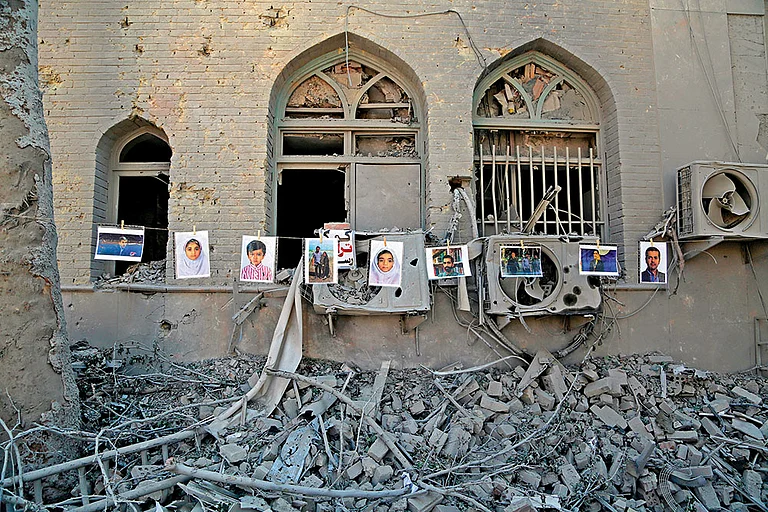
The university has become a key instrument of this transformation. Over four decades, American universities have ceased to be primarily civic institutions and turned into corporate entities with billion-dollar endowments, donor networks, research contracts and legal teams. The crackdown on the 2024 Gaza encampments illustrated this with unusual clarity. Columbia University’s administration called in the New York City Police Department for the first time since the 1968 Vietnam war protests, resulting in the arrest of 109 students in a single night. By mid-2025, nearly 80 Columbia students had been expelled or suspended for up to three years. The Trump administration compounded the pressure by threatening to cut federal funding and directing Immigration and Customs Enforcement (ICE) to target international student protesters.
It would be wrong to conclude that anti-war sentiment has simply evaporated. It has transformed. Today’s campus radicalism is diffuse.
Advertisement
Those arrests didn’t just punish the students involved. They taught a lesson to every student watching. Repression doesn’t only penalise; it instructs. And what it instructs, semester after semester, is that the safest investment of a $30,000 debt is compliance. This is governmentality working exactly as designed: not a boot on the neck but a ledger in the mind.
Foucault’s framework explains how docility is produced. Sociologist Guy Standing’s concept of the “precariat” explains what that docility looks like at the level of class. The precariat—the growing class of educated young people defined not merely by low income but by chronic instability, absent occupational identity, and a relationship with institutions defined by conditionality rather than rights—doesn’t organise politically around collective identity. It fragments into individualised anxiety.
In 1970, the Vietnam draft collapsed the distinction between the student class and everyone else. A lottery number was a great equaliser. The war wasn’t an abstraction; it was a letter in the mail. Today’s wars are fought by professional soldiers, drone operators, private contractors and special operations units. Seven US service members have been killed in the US-Israel-Iran war, with around 140 wounded, a toll that, for most campuses, registers as a news ticker rather than a personal terror. The precariat student feels economically conscripted already: hostage to debt and credentialism rather than selective service, but this conscription produces docility rather than revolt, because the enemy is diffuse and the exit (a good job, loan repayment, stability) feels personal and achievable in a way that ending a war does not.
Advertisement
When the state no longer threatens to take your body, your body no longer rises in revolt. And when the market has already claimed your future as collateral, the calculus of resistance shifts decisively toward survival.
The digital age offers what looks like a compensation for these structural forces. Students today are more globally aware than any previous generation. They know more about Iranian civilian casualties, about the legal questions surrounding the strikes, about the history of US intervention in West Asia, than their 1970 counterparts knew about the Mekong delta. Awareness has never been higher. Mobilisation has never been lower.
Sociologist Zeynep Tufekci, in her 2017 book, Twitter and Tear Gas: The Power and Fragility of Networked Protest, writes about digitally-organised protest movements. She identifies the precise mechanism: movements built through social media achieve visible scale rapidly, but skip the organisational learning that traditional coalitions acquired through slower, harder coalition-building. The 2024 Gaza encampments spread to over 180 universities worldwide within weeks, a remarkable achievement of digital contagion. But they also collapsed quickly for the same reason. Scale without structure is legible as a moment, not a movement. What looks like momentum is often just visibility.
Advertisement
The result is a strange paradox: students are saturated with information about global suffering and nearly incapable of sustaining the organisational infrastructure to act on it. Outrage is abundant. Durable coalition is scarce.
Students are saturated with information about global suffering and nearly incapable of sustaining the organisational infrastructure to act on it.
The US-Israel-Iran war has introduced a complication that Vietnam never had, and the anti-war movement has no clean answer to it. Unlike Vietnam, where the moral binary was relatively legible, the US-Israel-Iran war presents a genuine ethical knot. At Arizona State, Iranian diaspora students didn’t show up to oppose the war. They showed up to support it. At Iowa State, the Iranian Students and Scholars Association held a demonstration of gratitude for the US intervention, arguing that it offered the Iranian people their best chance at liberation from a regime that had, by some counts, killed tens of thousands of its own protesters in January 2026 alone.
This fracture is not a distraction from the analysis. It is central to it. One of the conditions necessary for mass protest is moral clarity, a shared sense that the cause is unambiguous. That condition does not exist here. The anti-war position is coherent and defensible, but it is not obviously correct to everyone who cares about Iranian lives. Many Iranians experience this war not as American imperialism but as belated rescue. A movement that cannot account for the voices of the people it claims to speak for will always be vulnerable to the charge of performance over solidarity.
It would be wrong to conclude that anti-war sentiment has simply evaporated. It has transformed. Today’s campus radicalism is diffuse: abolitionist politics, climate justice, anti-surveillance activism, solidarity with global liberation struggles. These movements carry the moral energy that once concentrated in a single anti-war demand. The spirit is present. The form has fractured. But fracture has costs. The Vietnam-era movement succeeded in part because it was legible: to its participants, to the media, to the state. A single, visible, nationally coordinated campaign for a defined objective is politically powerful in ways that a constellation of intersecting causes, however vital individually, cannot replicate. The anti-war movement once told a story simple enough to put on a placard. Today’s activism tells many stories at once, and loses the megaphone in the process.
Yet, hope, if it is to be more than sentiment, has to be grounded in material conditions. Campuses can rise again, history proves that, but nostalgia alone won’t do the work. If the argument here is structural, shaped by governmentality, precarity, institutional discipline and digital fragmentation, then revival demands more than moral clarity. It requires the circumstances that make collective action feel rational again.
Seen through the lens of the precariat, the student movement did not simply fade. It was strategically contained; by debt, by administrative discipline, by a university system that learnt, in the decades after Vietnam, how to make rebellion feel prohibitively expensive before it even begins. The fire never died; it was smothered under layers of risk and scarcity. What will reignite it is not more information: students already live in an informational deluge, but the moment when the price of silence finally outweighs the cost of speaking.
The quietest campuses in American history have erupted before. The question is no longer whether they can. It is what, in this era of managed precarity, will strike the match.
(Views expressed are personal)
Souzeina Mushtaq is a professor of journalism and gender studies
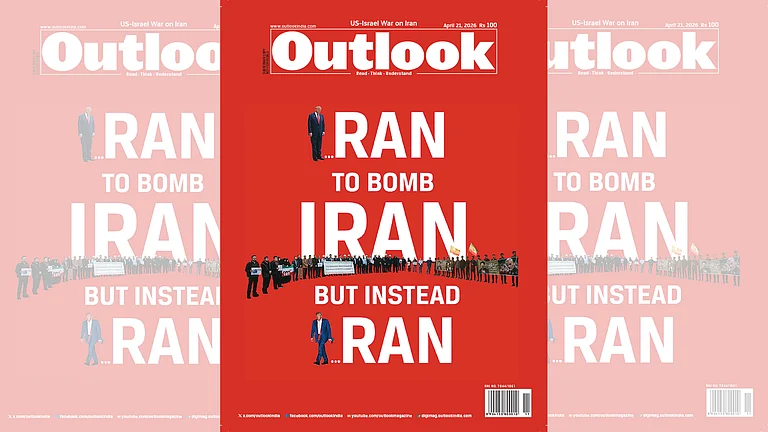
This article appeared in Outlook’s April 21 issue, 'I ran to bomb Iran, but instead I ran' which looked at the US-Israel war on Iran and what it means for families living through it and what is at stake in the states going to elections in the first phase.
Published At: