Iranian women emphasise that liberation must come from grassroots movements within the country.
International coverage often frames Iranian women through a Western feminist lens, focusing on symbolic issues like dress while ignoring deeper struggles.
From early feminist educators to contemporary activists, Iranian women have a rich history of organising for equality and justice.
'Media Frames Iranian Women Through Western Feminism'
Iranian women reject foreign-imposed ‘liberation,’ insisting true change must come from within, while media often misrepresents their struggle.

Summary
In the wake of recent military strikes, many Iranian women have made clear that true liberation cannot be imposed from the outside, especially through violence. They believe that the freedom and future of their homeland must be won through popular struggle alongside progressive forces within the country, not by foreign armies violating Iran’s sovereignty. For decades, women in Iran have built movements rooted in grassroots resistance, education, and collective struggle, forging paths toward equality on their own terms. Many see external military intervention, especially when it results in civilian deaths, as a violent appropriation of their fight rather than a step toward emancipation.
They argue that those who fail to protect women in their own societies cannot legitimately claim to liberate others, and that liberation imposed by bombs only deepens harm rather than advancing rights. This perspective comes from a long history of Iranian women organising against injustice internally, from early feminist intellectuals establishing girls’ schools to contemporary activists leading campaigns against discriminatory laws and state repression.
Iranian-American human rights lawyer Aida Ashouri, in an interview with Outlook, highlights how international coverage often reduces Iranian women’s struggles to symbols like dress, ignoring deeper issues such as legal rights, labour conditions, and reproductive autonomy. “Orientalist narratives erase their agency, portraying them as passive rather than active agents of change,” she says. Excerpts from her interview:
What was your immediate reaction to Khamenei’s killing in the strikes?
This was an illegal assassination of a head of state and the result of the impunity of both the United States and Israel targeting leaders for years, coming to fruition in another sovereign state.
You’ve spoken about women’s rights in Iran for years. In your view, does this moment advance, complicate, or set back that struggle?
This moment sets back women’s rights in Iran by decades. No bombs bring liberation. We’ve seen that in many countries. This was a unilateral act of aggression without the consent of the Iranian people, a violation—missiles fired from US bases. Iranian activists have been fighting for years to create a better Iran and this act disempowers them, removes their agency to act and speak for themselves, and will increase repression as the government scrambles to protect its sovereignty.
Advertisement
Reports of civilian casualties, including a girls’ school, have emerged. How do such incidents shape your understanding of what this intervention means for ordinary women and families?
The genocide in Gaza has shaped the Israel and U.S. military invasion of Iran. In Gaza, hospitals, schools, and places of worship were bombed to devastate civilian life. The same strategy appears to be playing out here. Bombing a girls’ school, as well as a school housing children of IRGC members, dehumanises the lives of children and families in Iran. It also sets the stage for misinformation campaigns that shift blame onto those being bombed and conditions people to accept mass casualties, numbing them to the deaths of the most vulnerable children.
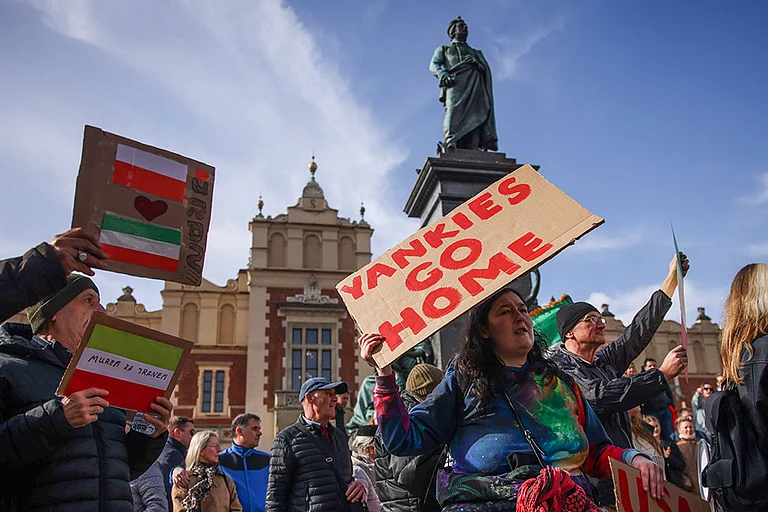
Is it possible to oppose repression inside Iran while also opposing foreign military action? How do you navigate that position?
There are no two sides to opposing war and imperialism. People oppose the U.S. government and are protesting it, even at great personal risk like being jailed, detained, or deported. That does not mean they want to be bombed by another country under the guise of salvation.
Advertisement
Have you observed differences within the Iranian diaspora in how people are responding to the strikes? What concerns you most about these divisions?
Divisions will always exist in any society. The issue is not their existence, but how media focuses on particular groups to manufacture consent for war, manipulating opinion through propaganda to build acceptance for invasion. War profiteers and governments rely on these voices to legitimise their actions. Hopefully, some will realise they are being used by far more powerful actors who do not truly care about them.
As someone outside Iran, how should diaspora voices speak about this moment responsibly?
Those of us in the United States have a duty to oppose imperialism, military invasion, and acts of aggression. Our responsibility is to shape American policy, alleviate punitive sanctions that harm ordinary Iranians, and help normalise relations to allow for a truly free Iran.
What do you think international media often misses when covering Iranian women and their role in political change?
The biggest gap is in perspective and language. There is significant Orientalism in coverage, where Iranian women are portrayed as lacking agency or power, which is not the reality. They are framed as submissive to support a narrative of helplessness. Coverage also relies on a Western feminist lens that focuses on superficial markers like dress, rather than material issues such as laws, labor conditions, or reproductive rights. This reductive approach diminishes the depth and autonomy of Iranian women.
Advertisement
Looking ahead, what kind of change do you hope to see in Iran, and what would a sustainable path toward women’s rights look like?
I hope to see Iran free from imperialism, sanctions, political interference, and external pressure and moving toward normalised diplomatic relations. I also hope for stronger alliances among women’s rights organisations in the Global South to advance rights collectively. Finally, I hope for more nuance and respect for autonomy in media coverage of Iranian women. The first step toward empowerment is the language we use to describe ourselves.
Published At: