German Chancellor Friedrich Merz has cancelled his planned trip to the UN General Assembly and will remain in Berlin, with the government saying his presence is required there.
The decision follows the CDU’s major setback in Saxony-Anhalt, where the AfD secured 43.8% of the vote while the CDU received 17.2% in the September 6 election.
Merz now faces two further state elections on September 20 in Berlin and Mecklenburg-Western Pomerania, adding to pressure on his government and party leadership.
German Chancellor Merz Cancels UN Trip As Pressure Mounts Ahead Of Key State Polls
Merz was scheduled to address the General Assembly next Wednesday, but a German government official said on Wednesday that he would remain in Berlin because “his presence is required” there

Summary
German Chancellor Friedrich Merz has cancelled his planned trip to New York for next week’s United Nations General Assembly as he faces mounting political pressure at home following a setback for his centre-right party in a key state election.
Merz was scheduled to address the General Assembly next Wednesday, but a German government official said on Wednesday that he would remain in Berlin because “his presence is required” there. The trip had not yet been officially announced, and the official did not provide further details about why the chancellor needed to stay in Germany.
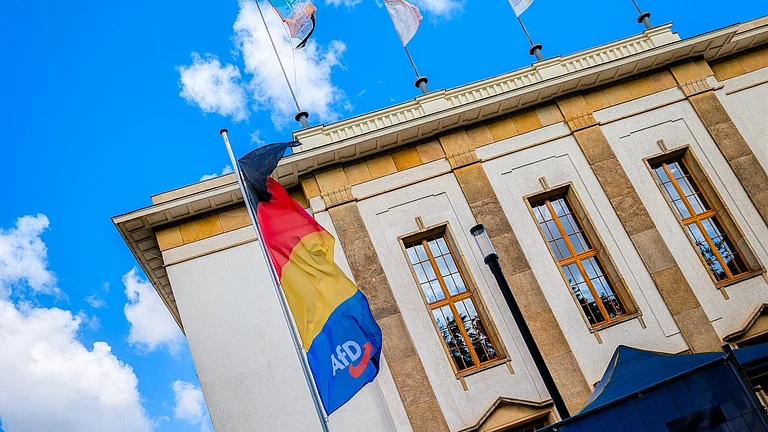
Merz Under Pressure After AfD Election Gains
The decision comes days after Merz’s Christian Democratic Union (CDU) suffered a sharp defeat to the far-right Alternative for Germany (AfD) in the September 6 election in Saxony-Anhalt.
The result has added to pressure on Merz, who became chancellor 16 months ago and is attempting to push through reforms aimed at reviving Germany’s sluggish economy.
The AfD’s strong performance has also fuelled speculation about Merz’s political standing, with the party expected to make further gains in two regional elections due on Sunday.
One vote will be held in Mecklenburg-Western Pomerania, another largely rural eastern state, while the other will take place in Berlin.
The AfD has no realistic path to power in Berlin but is expected to make significant gains. In Mecklenburg-Western Pomerania, however, the party faces a stronger challenge from the incumbent centre-left governor than it did from Merz’s CDU in Saxony-Anhalt.
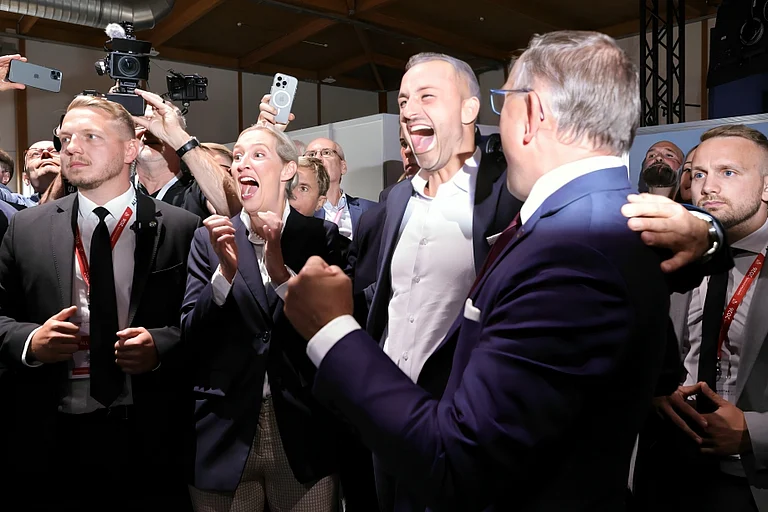
CDU Faces Tough Test In Berlin, Mecklenburg-Western Pomerania
The elections pose a significant test for Merz’s CDU.
In Berlin, the party risks losing the mayor’s office, which it has held since 2023. In Mecklenburg-Western Pomerania, an especially poor result could see the CDU fall below the 5 per cent threshold required to win seats in the state legislature.
Advertisement
Such an outcome would be particularly significant because the CDU has historically been a major force in German politics, while its support in Mecklenburg-Western Pomerania has already been relatively weak.
Merz’s decision to remain in Berlin for the UN General Assembly week therefore comes at a politically sensitive moment, with two closely watched state elections looming and the AfD continuing to make gains in parts of eastern Germany.
(With Agency Inputs)
Published At: