Balen Shah, a rapper-turned-Kathmandu mayor, has emerged as a prime ministerial frontrunner in Nepal’s ongoing elections.
His rise is fuelled by Gen-Z support and anger against traditional political parties.
However, his political journey has also been marked by controversies, provocative remarks, and criticism of his policies.
From Rapper to PM Frontrunner: Who Is Balen Shah?
Riding a Gen-Z wave in Nepal’s polls, the Kathmandu mayor’s rise is also marked by sharp rhetoric and recurring controversies.

Summary
“How to become a country?” asked Balendra Shah in his popular song Balidan (sacrifice) in 2019, and six years later, he may now find himself confronting that question not as a rapper, but as the man expected to lead it.
Riding high in the ongoing Nepal Elections, all eyes are on Balendra ‘Balen’ Shah, who is likely to become Prime Minister as his party, Rastriya Swatantra Party (RSP), is leading the polls.
Shah gained prominence in the 2025 Gen-Z protest in Nepal as a youth leader, just three years after he was elected as the Mayor of Kathmandu.
With videos of swarms of supporters chanting "Balen" and blaring his songs on speakers, the rapper-turned-politician candidate of the RSP is standing strong.
Who is Balendra Shah?
Balendra Shah was born in Kathmandu in 1990 to a Newar Buddhist family of Maithil Madhesi origin. He earned a name for himself in Nepal’s hip-hop community with lyrics that addressed the country's corruption, poverty, and underdevelopment.
His songs appear to have resonated with a disillusioned generation, particularly "Balidan" (Sacrifice), which has over seven million views on YouTube.
Through lyrics such as, "All those who protect the country are fools. All leaders are thieves, looting the country and eating it up," Balendra used music to express his political views.
After earning an MTech in Structural Engineering from Visvesvaraya Technological University in Karnataka, Shah leveraged his education during the 2022 mayoral campaign, positioning himself as capable and independent by distancing himself from party hierarchies.
From Rapping to Politics
The pair of sunglasses has become synonymous with the identity of Shah.
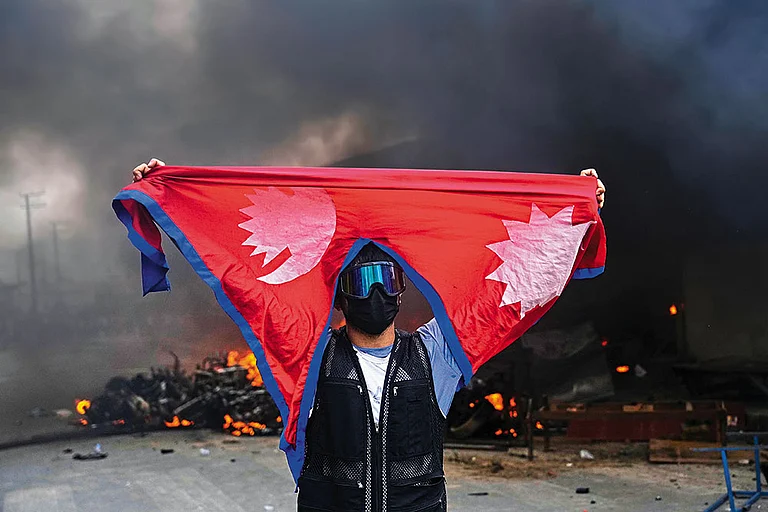
During his campaign, he stood out by wearing a black blazer, pants, square sunglasses, and a Nepalese flag draped over his shoulders.
His popularity increased following accusations of disrespect for the flag, indicating that young people seek leaders who challenge norms while maintaining integrity.
In 2022, Balen refused to join Nepal's ruling political parties and ran as an independent candidate for Mayor of Kathmandu. He secured a victory with more than 61,000 votes.
Advertisement
Despite being a newcomer in his early 30s, he beat established political families in a landslide, signalling a generational shift in Nepalese politics.
Balen’s unconventional political entry has won him support among diverse Nepalese groups and earned significant media coverage.
"There’s a diss culture in hip-hop," Shah has said in a New York Times article. "I used to diss politicians. Now, I am one."
He has also received international media coverage, including a profile in The New York Times titled, "From Rap Star to Engineer to Young Mayor Demolishing Swaths of Kathmandu."
He earned a spot in Time magazine's "Top 100 Personalities of 2023."
The Gen Z Protests
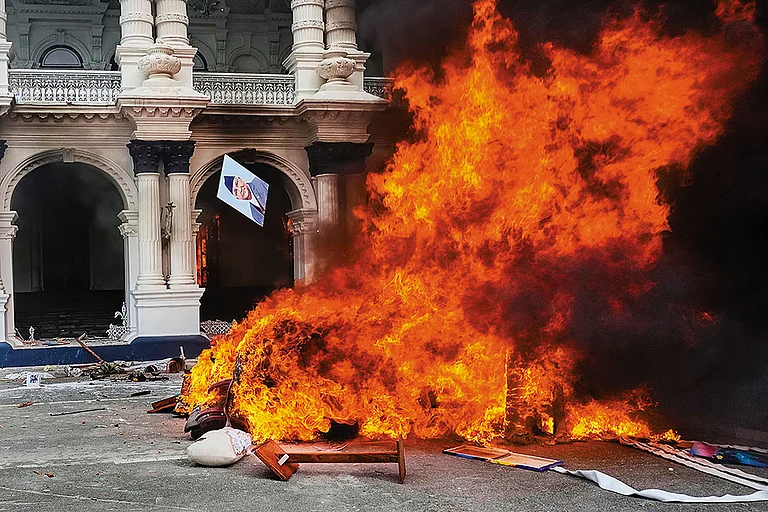
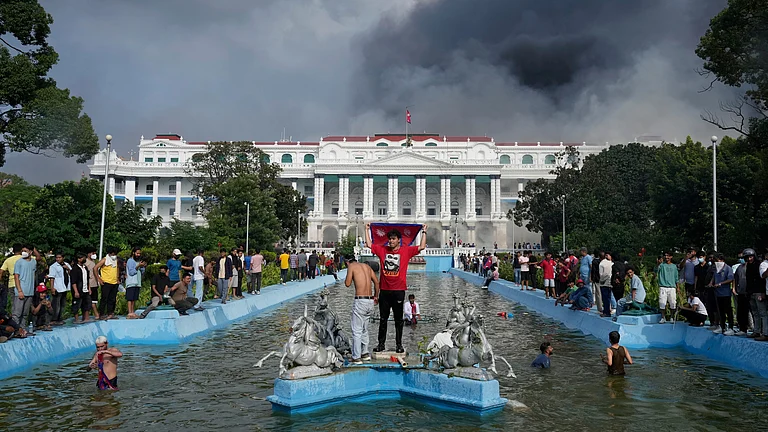
Balen expressed support for the Gen Z-led protests sparked by the social media ban and the ongoing unrest.
He wrote on Facebook about valuing young protesters' opinions, but was unable to join due to the rally's age cap.
Advertisement
On Tuesday of that protest week, he stated in a Facebook post that demonstrators should avoid further property and human casualties, emphasising this message after the prime minister resigned.
"Please remain calm. The loss of national resources is our collective loss," Balen Shah wrote. "It is now necessary for all of us to show restraint. From here onwards, it is your generation that must lead the country."
He could not physically attend the protests in Nepal because the youth organisers had set an age limit for participation—the organisers only allowed people under 28-years-old.
In another Facebook post, he wrote, "The rally is a spontaneous Gen Z movement, for whom I may seem old. I want to understand their aspirations and objectives. Political parties, leaders, activists, lawmakers, and campaigners should not co-opt this rally for their interests." He added that he gave the youth his “full support.”
Controversy’s Leader
While Balen’s entry into politics was a welcome change for the youth, some remain cautious of the leaders poltical beliefs.
Advertisement
In a column for The Kathmandu Post, Mitra Pariyar, a prominent Dalit rights activist from Nepal, has pointed out that Balen seems to be ‘blind to the issues of class and caste’ and warns of his “rather right-wing character”.
During his tenure as Mayor, Shah harshly treated street vendors in Kathmandu and authorised police against street vendors in a heavy-handed manner, as he worked to keep roads clear in the capital and crack down on unlicensed businesses. Pariyar likens this treatment to that of ‘wild animals’, claiming that as mayor, Balen had not made any provisions for managing these people surviving in the street economy.
In 2022, soon after being elected as mayor, Shah embarked on a widespread demolition drive in the city of Kathmandu, employing bulldozers to destroy buildings and structures that he said were infringing on public land and chasing away homeless people, sukumbasis, without providing relocation.
Advertisement
Balen publicly incited violence when he threatened to burn down Singha Durbar, the administrative centre of the federal government, in a social media post in 2023.
A clip from a 2022 interview with Balen has been resurfacing on the internet, wherein he comments that there is a lot he would like to learn from Hitler, such as his strategic planning and ability to propagate a single ideology among the masses.
Relationship with India
Balen has been no stranger to controversies regarding his opinions, particularly those around India.
In 2023, he drew criticism after calling for a ban on Indian films in Nepal, alleging that a Bollywood movie had suggested that Sita, one of the major goddesses in Hinduism, was “India’s daughter.” According to Hindu texts, however, she was born in present day Nepal region or in north Bihar close to the border.
In an interview for Dainik Bhaskar, he said, “In Bollywood films, Pakistan is always shown as a place of guns and bombs. Because of this, citizens of Sri Lanka and Nepal are afraid to visit Pakistan, thinking only terrorists live there. This should be opposed.”
Controversy continued to follow him when, later that year, he placed a map of “Greater Nepal” in his office. The map showed Nepal's borders extending beyond present day borders to also include territories that were once under Nepali rule before the 1816 treaty of Sugaulli.
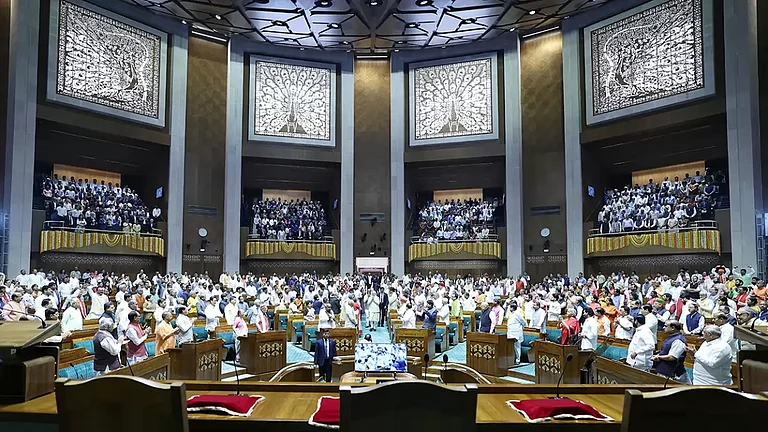
The move was reportedly a symbolic response to an ‘Akanda Bharat' mural which was displayed in the Parliamentary building in India, which also claimed many parts of Nepal as part of India.
On the issue, he said, “I never said anything for which I should apologise. India called its parliamentary map a cultural one, so we put up a historical map of Greater Nepal. No one should object.”
More recently, in 2025, Balen used profanities against various countries and political parties on his Facebook page. He wrote, “F**k India”, in a social media post, which was later deleted.
Pawan Thapa, a political activist contesting from the Gatisheel Loktantrik Party, claims that while Balen’s political ideology is not very defined, as he avoids speaking with the press. Thapa claims that Balen is influenced by Hindutva ideology and wants to establish Nepal as a Hindu Rashtra.
He adds that many of the new leaders who are contesting have been carried away by the wave of change in Nepal and are actually unaware of the constitution. “The people have fought and snatched democracy back for the country. It shouldn’t be that Nepal now ends up with an incapable leader or worse, back under an authoritarian leader,” says Thapa.
However, Balen Shah’s rise reflects a deep generational shift in Nepal’s politics, fuelled by frustration with traditional parties and a demand for change. Whether he becomes a transformative leader or another controversial figure in Nepal’s turbulent politics will be known soon.
Published At: