Trump expects “wonderful things” from his meetings with Xi Jinping and Vladimir Putin at the APEC summit in Shenzhen.
Putin says the planned trilateral meeting between the US, China and Russia could bring “big potential benefit”.
Xi calls for open trade, regional cooperation and greater investment in people as global security and economic tensions shape the summit.
Trump's ‘Wonderful Things’, Putin's ‘Big Potential Benefit’ Ahead Of Xi Meeting In Shenzhen
Trump, Xi and Putin are gathering in Shenzhen as trade tensions, the Ukraine and Iran wars, and nuclear arms control shape the agenda at the APEC summit.

Summary
US President Donald Trump has said he expects “a lot of wonderful things” from his meetings with Chinese President Xi Jinping and Russian President Vladimir Putin in Shenzhen, as the three leaders gather on the sidelines of the Asia-Pacific Economic Cooperation (APEC) summit. Chinese President Xi, meanwhile, has called for deeper regional cooperation, open trade and greater investment in people at the 33rd APEC Economic Leaders' Meeting on November 19.
Speaking at the APEC CEO Summit on November 18, Putin said: “I therefore expect big potential benefit from the upcoming trilateral meeting between the leaders of Russia, China and the United States, which is scheduled to take place on the sidelines of the APEC summit.”
During his meeting with Xi Jinping on November 18, Putin described the Russia-China relationship as stable, saying: “Russia-China political partnership works stably and positively. In a complex geopolitical situation we are keeping constructive approaches in forming more just and multipolar world order.”
“We look forward to our meeting. We’ve had a great relationship for many years. We have known each other for a long time. I think a lot of wonderful things can come out of this, or at least start. But I think they’ll come out of this. We’ll have a second meeting later on, which you probably know. But we’ll have this right now, and it’s going to be great,” Trump said.
The meetings come amid competition between Washington and Beijing for economic and diplomatic influence across the Asia-Pacific. Nuclear arms control, the wars in Ukraine and Iran, trade and artificial intelligence are among the issues surrounding the leaders' discussions.
Trump Highlights Centuries-Old US Ties With Southeast Asia
“The United States is a Pacific nation in a true sense, and we have been engaged in trade and commerce and diplomacy across Southeast Asia for hundreds of years,” Trump said at the November 17 dinner.
Advertisement
He said the US was committed to the “success, sovereignty, and prosperity” of its partners in the region, adding: “We're with you always.”
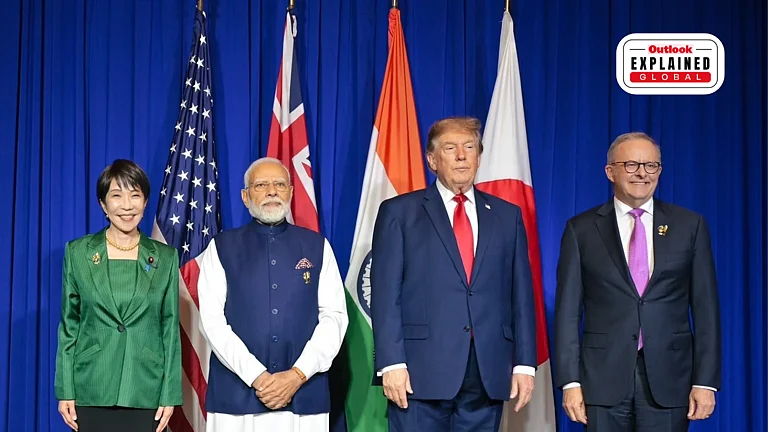

Trump also claimed that his administration had made “major trade deals” with Malaysia, Cambodia and Indonesia, as well as Japan and South Korea. He also said he had signed a new deal with Thai Prime Minister Anutin Charnvirakul. However, the document signed in Manila was a joint statement confirming the substantial conclusion of negotiations on a reciprocal trade agreement. The White House said both governments would begin the necessary internal processes to prepare the agreement for signature and entry into force. Trump also referred to agreements covering energy, critical minerals and technology.
“Southeast Asia's one of the busiest commercial crossroads on the planet,” Trump said, citing the Strait of Malacca as a major shipping route. Trump also said his administration had approved a liquefied natural gas pipeline project in Alaska, which he said would facilitate energy exports to partners across the Pacific.
Advertisement
On defence, Trump said Washington valued its security partnerships with countries in the region. He said the US had announced a defence cooperation partnership with Indonesia to expand joint special forces training and work on defence modernisation. He also said Washington had significantly increased defence cooperation with the Philippines.
The remarks also came during his visit to Manila for the Association of Southeast Asian Nations (ASEAN) summit, before his onward travel to China for the APEC gathering.
Xi Sets Out Four Pillars For Asia-Pacific Cooperation
In his address to APEC leaders on November 19, Xi called for the region to build an Asia-Pacific community based on “solidarity and mutual assistance, openness and integration, enterprise and innovation, as well as inclusive development”.
He outlined four key pillars for regional cooperation: economy and trade, connectivity, innovation and development. Xi called for greater economic integration and urged member economies to resist barriers that could disrupt trade and investment.
Advertisement
“We should champion free and open trade and investment, remove impediments to the flow of factors, ensure the smooth circulation of economic lifeblood, and open up more space for economic growth in the Asia-Pacific,” he said.
“We should develop a cooperation pattern that is open and integrated, rather than exclusive or fragmented,” he said.
On technology and connectivity, Xi called for stronger digital infrastructure, improved data governance and cooperation to enable cross-border data flows. “We should strengthen digital infrastructure development, improve data governance and collaboration in the region, and achieve efficient, convenient and secure cross-border data flow,” he said.
The Chinese president also emphasised green and low-carbon development, calling for cooperation on energy and food security and more sustainable use of natural resources. He urged economies to coordinate the development of resources, the environment and population.
Addressing APEC leaders on November 19, Putin said Russia's partnership with APEC economies was a strategic priority. “We are an integral part of the region and make a significant contribution to its economic prosperity,” he said.
Advertisement
China Pledges $20 Million And New Shenzhen Research Centre
Xi announced that China would provide US$20 million to support APEC’s practical cooperation. He also said Beijing would establish a Center for Asia-Pacific Community Studies in Shenzhen to conduct policy research, facilitate exchanges and provide intellectual support for regional cooperation.
According to the official English transcript of Xi's address, published on the website of the Chinese Embassy in South Africa, China would also set up cooperation institutions in areas including digital technology, cross-border data flows, clean energy and the development of small and medium-sized enterprises.
Xi linked regional economic cooperation to social development, arguing that growth should improve livelihoods and expand opportunities. “We should support livelihood improvements and invest in the people,” he said.
He called for measures to facilitate employment and vocational skills development, support women’s economic empowerment and encourage exchanges among young people. He also referred to healthy ageing programmes as part of a wider approach to inclusive development.
Trump, Xi And Putin Set To Meet Amid Global Security Tensions
The Associated Press reported on November 19 that Trump was due to meet Xi and Putin in Shenzhen later on Thursday, with nuclear arms control and the wars in Ukraine and Iran among the issues expected to be discussed.
The meeting comes after the expiry of the New START treaty on February 5, 2026, the last remaining agreement limiting the strategic nuclear arsenals of the United States and Russia. Trump has expressed interest in a new agreement that would also include China, although Beijing has shown little appetite for making nuclear arms limits a central part of the discussions.
Reuters reported on November 19 that the meeting would bring together the leaders of the world’s three largest nuclear powers, although analysts did not expect it to produce major agreements. The meeting also takes place against the backdrop of closer ties between Beijing and Moscow and continuing trade and technology tensions between Washington and Beijing.
Published At: