After the polling UDF claims it is on course to secure more than 100 seats.
LDF claims the vote is for continuity
One of the most complex elections in recent history, say some political observers
Assembly Elections 2026: UDF Exuberant, LDF Cautiously Confident After Polling
High polling percentages have alternately favoured both the LDF and the UDF, often resulting in the defeat of incumbents

Summary
Kerala witnessed one of its highest voter turnouts in three and a half decades, with 78.27 per cent of the electorate casting their votes despite the scorching summer heat. This remarkable surge has prompted political leaders and observers to search for explanations behind the renewed enthusiasm among voters. While some analysts attribute the spike to the Special Intensive Revision (SIR) of electoral rolls, which helped streamline and clean up the voter list, others argue that such a significant upswing in participation often reflects an undercurrent of public anger against the incumbent government. Kerala’s record voter turnout of 78.27 per cent—the highest in over three and a half decades — has triggered competing political interpretations, each seeking to read intent into an unusually energised electorate. While the ruling Left Democratic Front (LDF) frames the surge as a vote of confidence in its decade-long governance, the Opposition United Democratic Front (UDF) sees it as a manifestation of latent anti-incumbency. The truth, as Kerala’s electoral history suggests, may lie somewhere in between — and perhaps beyond both claims.
At one level, the turnout reflects structural factors. The Special Intensive Revision (SIR) of electoral rolls is widely believed to have cleaned up the voter list, improving accuracy and participation. Higher mobilisation in urban centres such as Kochi also indicates a departure from Kerala’s traditional pattern, where cities often lag behind rural turnout. This suggests a broader social engagement cutting across demographic segments.
However, turnout spikes in Kerala have historically coincided with moments of political churn. As political scientist Dr. G Gopakumar points out, livelihood concerns were central to this election, shaping both campaign narratives and voter motivation. Economic anxieties — ranging from unemployment to cost-of-living pressures — may have driven sections of the electorate to the polling booth, lending credence to the Opposition’s argument that heightened participation signals dissatisfaction.

The UDF, led by V.D. Satheesan, is betting on a combination of anti-incumbency and social coalition-building. Its outreach to disparate social and religious groups, particularly minorities, appears to be a calculated strategy. Reports of possible minority consolidation—especially in northern districts such as Kasaragod, Kannur, Kozhikode, and Malappuram — could be significant. While Malappuram remains a UDF bastion due to the influence of the IUML, neighbouring Kozhikode has been less receptive for the UDF in recent elections. Any shift here could alter the electoral arithmetic in a closely contested state.
Advertisement
The LDF, on the other hand, has relied on a governance narrative, arguing that welfare delivery and administrative continuity have resonated with voters. Yet, there are internal acknowledgements within the party that a granular, booth-level analysis is needed before drawing firm conclusions. This caution reflects an awareness that high turnout is an ambiguous signal—capable of indicating both approval and discontent.
Adding another layer to this election is the Left’s campaign strategy, which, as analyst Damodar Prasad notes, was unusually leader-centric. The projection of Chief Minister Pinarayi Vijayan as the singular face of the campaign marks a shift from the Communist tradition of collective leadership. While such centralisation may consolidate support among loyal voters, it also risks alienating sections of Kerala’s politically conscious middle class, which often resists overt personality cults.
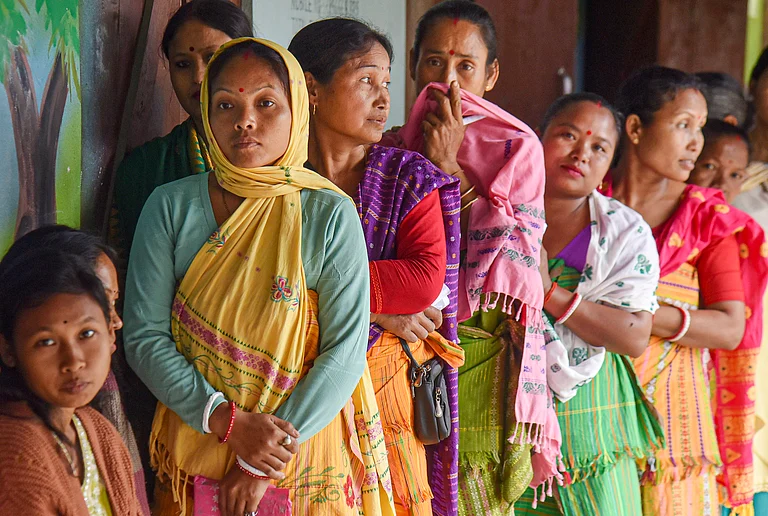
Historical data further complicates any linear reading of voter turnout. High polling percentages have alternately favoured both the LDF and the UDF, often resulting in the defeat of incumbents. Yet, the 2021 election broke this pattern, with the LDF returning to power despite a robust turnout of 74.06 per cent. This suggests that turnout, by itself, is an unreliable predictor of electoral outcomes in Kerala’s highly competitive bipolar system.
Advertisement
The Bharatiya Janata Party (BJP), meanwhile, continues to search for an entry point into this entrenched two-front contest. Its focus on select constituencies in Thiruvananthapuram district reflected a targeted rather than statewide strategy. Party leaders, including Rajeev Chandrasekhar, have framed this election as part of a longer trajectory—one that could eventually disrupt Kerala’s bipolar political structure. However, whether incremental gains translate into a broader breakthrough remains uncertain. "This is the last election in which the CPI(M) and the Congress are fighting each other. Going forward, they will come together to take on the BJP,” he claimed.
Ultimately, the 2026 election underscores a key feature of Kerala’s political landscape: a highly engaged electorate whose behaviour resists simplistic explanations. The high turnout may indeed reflect multiple, overlapping impulses—administrative improvements, economic anxieties, social consolidation, and political mobilisation—all operating simultaneously. Any definitive interpretation will have to wait until the results are declared. Until then, the surge in participation remains less a verdict and more a question—one that both fronts are attempting to answer in their own favour.
Advertisement
Published At: