In this moving and original novel, Alka Saraogi explores the lives of those who crossed into India from East Pakistan in and around 1971 and what happened to them afterwards.
Nearly ten million refugees entered India during that period, but their stories often disappeared from public memory.
This novel speaks directly to contemporary concerns about migration and citizenship in an increasingly bureaucratic world.
The Afterlife of Displacement: Review of 'Register Me as Kulbhushan'
More than a novel about one man's journey, Alka Saraogi's 'Register Me as Kulbhushan' is a meditation on memory, identity and the human need to belong

Summary
In Register Me as Kulbhushan (translated into English by John Vater), Alka Saraogi explores a subject that has always been of interest in Calcutta though in varying ways and varying political climates: the lives of those who crossed into India from East Pakistan in and around 1971 and what happened to them afterwards. Nearly ten million refugees entered India during that period, but their stories often disappeared from public memory once the immediate crisis had passed. Saraogi's novel begins where history books usually end, examining what it means to build a life in a new country while carrying the burden of displacement, loss and uncertain identity.
The novel focuses on a man known by several names—Kulbhushan Jain, Gopal Chandra Das and Bhushan Chacha among them. These changing identities are not simply aliases but markers of a life spent adapting to circumstances and searching for acceptance. As he moves through Kolkata and its many social worlds, he is repeatedly forced to negotiate questions of who he is and where he belongs.
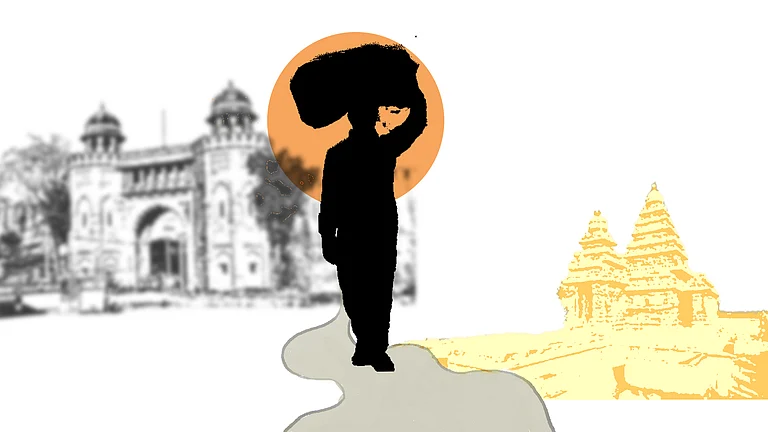
One of the most interesting aspects of the novel is its focus on identity as something shaped not only by memory but also by official recognition. At a time when paperwork increasingly determines citizenship, belonging and legitimacy, Saraogi asks a simple but powerful question: what happens when a person's life cannot be easily documented? Kulbhushan's struggle is not merely to survive but to be acknowledged. He wants his existence recorded, his story recognised and his place in society confirmed. This gives the novel a contemporary relevance that extends far beyond its historical setting.
The book's central image is the “button of forgetting”, a magical device that allows Kulbhushan to erase painful memories whenever he chooses. At first, this seems like a useful way to cope with humiliation, rejection and trauma. But as the story unfolds, forgetting becomes more complicated. The memories that cause pain are often the same memories that help define who we are. By exploring this tension, Saraogi creates a thoughtful reflection on how people live with loss and how much of the past can be left behind before a person begins to lose a sense of self.
Advertisement
What makes the novel engaging is that it does not treat these themes in a heavy-handed way. There is sadness in Kulbhushan's story, but there is also humour, irony and warmth. Saraogi captures the absurdities of everyday life, especially the frustrations of dealing with bureaucracy and social prejudice. Kulbhushan often observes the world with a wry intelligence that makes him an appealing guide through the novel's many twists and turns.
The city of Calcutta is also vividly present throughout the narrative. Rather than serving simply as a backdrop, it becomes part of the story itself, a city that offers refuge but not always acceptance. Saraogi portrays its complexities well, showing how migrants can become part of a place while still feeling excluded from it.
The narrative does not follow a straightforward path. Memories surface unexpectedly, timelines overlap and stories unfold gradually. This fragmented structure reflects the way memory works, particularly for someone trying to piece together a life marked by displacement. Some readers may find parts of the narrative slow or occasionally difficult to follow, especially when the story moves into more reflective territory. However, the structure also helps convey the uncertainty and instability that lie at the heart of Kulbhushan's experience.
Advertisement

If the novel has a weakness, it is that some of its symbolism feels a little too clear at times. The idea of the button of forgetting is powerful, but its meaning is rarely left open to interpretation. There are also moments when the novel's ideas take precedence over narrative momentum. Yet these are relatively minor concerns in a work that is otherwise rich in imagination and insight.
More than a novel about one man's journey, Register Me as Kulbhushan is a meditation on memory, identity and the human need to belong. It asks what remains of a person when records are lost, histories are forgotten and names keep changing. In giving voice to someone who fears being erased from both history and memory, Saraogi shines a light on countless lives that have remained largely unseen.
The result is a thoughtful, moving and often original novel that combines history, imagination and psychological insight. It may not be Saraogi's easiest work, but it is one of her most relevant, speaking directly to contemporary concerns about migration, citizenship and the search for recognition in an increasingly bureaucratic world.
Advertisement
Published At: