In Hindi cinema, vintage cars quietly signalled class aspiration while unintentionally archiving Bombay's changing streets.
Historian Karl Bhote argues that film preserved iconic models like the Fiat and Ambassador long after they vanished from the roads.
Through Studio Joyride, Bhote, Kaizad Engineer, and Aashna Dhiman are documenting the human stories behind these cars before they disappear for good.
Engines Of Memory: How Vintage Cars Became Bombay Cinema's Silent Stars
From the Ambassador to the Fiat Spider, the machines that once defined the streets of Bombay now live on through films and a new generation determined to remember them.

Summary
Steered by Raj Kumar and Sunil Dutt, two sports cars cut through the old Bombay–Pune road. The sequence is framed with a kind of breathless glamour. The traffic is sparse. The air seems clear. The city feels young, almost unburdened.
"One is a Fiat Spider, which still survives," says Karl Bhote. "And the other is an Austin-Healey. They shot it beautifully. You see the two cars racing each other on the old Bombay–Pune road. A lot of street scenes and traffic now feel deeply nostalgic."
He remembers the scene the way some people remember childhood homes—not as trivia, not as film gossip, but as atmosphere.
The sequence appears in Waqt (1965), a film celebrated for its ensemble cast and drama. Yet for Bhote, the cars are as important as the actors. They capture a Bombay that no longer exists in quite the same way.
Bhote is widely regarded as one of India's foremost automotive historians. For decades, he has documented the evolution of cars in the country, tracing ownership records, restoration histories, and the quiet disappearance of models that once filled Indian roads. Alongside acclaimed restorer Kaizad Engineer, who has restored more than 100 cars, he co-founded Studio Joyride, a platform dedicated to documenting India's vintage and classic car culture. Between them, they have access to a network of over 500 Vintage and Classic Car owners across the country.
Long before Studio Joyride became a formal project, however, it was a personal obsession. For Bhote, cars are not simply mechanical objects; they are memory devices. And nowhere are those memories more intact than in the cinema.

Karl Bhote With His 1955 Fiat 1100 Karl Bhote
The Car as Character
Hindi cinema has always understood the power of visual shorthand. Before brand placements and sponsorship deals became a regular feature in cinema, cars quietly shaped narratives. They established status. They hinted at ambition. They signalled morality.
The Fiat 1100 and, later, the Premier Padmini were not glamorous in the Western sense. They were not Ferraris or Cadillacs. They were Indian-made—aspirational, yet attainable. In post-Independence Bombay, they suggested progress without extravagance.
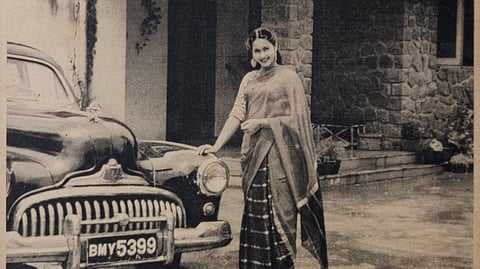
Nutan Beside A Buick Karl's Archive
"The Fiat 1100 and later the Premier Padmini became the backbone of urban India," Bhote explains. "If you look at films from the 1960s and 70s, you can almost map social class through cars."
A young hero on the rise might drive a Fiat. An established industrialist would arrive in an imported vehicle. The taxi driver relied on a Padmini that seemed to run endlessly despite age and wear. The car told the audience what it needed to know before the character spoke.
Advertisement
Cinema captured more than plot. It captured the texture of the city itself—the width of the roads, the presence of tram lines, the rhythm of traffic. The skyline was unbroken by glass towers.
When we revisit those frames today, we are not only watching performances. We are watching Bombay breathe.

Bombay as Accidental Archive
Bollywood did not set out to preserve India's motoring history. Cars appeared because they were necessary. A character needed to arrive somewhere—a romance required motion. A confrontation demanded a dramatic entrance.
Producers rented vehicles from owners. Actors sometimes used their own cars. "Jitendra had a Chevrolet Impala that appeared in several films," Bhote notes. "These were practical decisions. Nobody was thinking about preservation."
Yet, film has a way of preserving what daily life discards.
"Cinema has preserved things we did not think to preserve ourselves," he says. "It shows us how these cars lived."
Advertisement
India's climate is unforgiving. Humidity corrodes metal. Heat cracks dashboards. Spare parts become scarce. A two-minute film sequence can outlast decades of neglect. For historians like Bhote, these images are not indulgent nostalgia. They are research materials.
Class, Aspiration and the Indian Road
To understand why these vehicles matter, one must return to post-Independence India.
The time span between the 1950s and the 1980s was shaped by import restrictions and controlled industrial growth. Domestic manufacturers adapted foreign designs to Indian conditions. The Fiat 1100 became the Premier Padmini. The Ambassador, derived from the Morris Oxford, became the car of bureaucratic authority.
Ownership was not casual; it was a milestone.

Amitabh Bachchan With A Pontiac Karl's Archive
In cinema, that milestone translated into visual drama. A man arriving in a Fiat suggested ambition realised. A woman stepping out of a polished car implied security and social standing. Even the villain's imported sports car carried a moral undertone, hinting at excess or detachment from the ordinary Indian experience.
Advertisement
"Cars reflected who you were or who you wanted to be," Bhote says. "And films understood that instinctively."
Cameras lingered on chrome grills and steering wheels turned with intention. Rear-view mirrors caught glances that suggested romance or suspicion. The vehicle was not passive. It shaped mood and movement.
Today, in an era dominated by SUVs and uniform design, individuality feels distant. The older cars had distinct silhouettes and personalities. They demanded engagement. Driving them was tactile. You felt the road.
Disappearance and Realisation
As India liberalised in the early 1990s, the automotive landscape shifted rapidly. Global brands entered the market. Choice expanded. The Ambassador and the Padmini, once symbols of aspiration, began to feel dated.
Many were scrapped. Others were neglected. In some cases, older cars were destroyed during action sequences in films, valued more for spectacle than preservation.
"Back then, they were just old cars," Bhote says. "Today, they are pieces of history."
Advertisement
The realisation arrived slowly. As urban development intensified and garages gave way to high-rise buildings, storage space dwindled. Restoration costs rose. Younger generations often preferred modern convenience to manual upkeep.
Every year, Bhote notes, cars are lost. Sometimes through neglect. Sometimes, because families do not recognise their historical value.
When a vintage Fiat is dismantled for scrap, something more than metal disappears—a design language; a mechanical rhythm; a way of travelling at sixty kilometres per hour without distraction.
Documentation as Recovery
Bhote's work often begins where cinema ends. He tracks surviving models, reconstructs ownership records and identifies vehicles glimpsed briefly in old films. A chassis number becomes a lead. A registration plate becomes a story.
This is not nostalgia for its own sake. It is about continuity.
His own fascination began with the Fiat 1100 and the Premier Padmini—cars that shaped his childhood. What started as curiosity became structured research. He realised that India's automotive history was fragmented, scattered across private collections and fading memories.
Studio Joyride emerged from that recognition. It set out to document what remained before it disappeared entirely.
While Bhote approaches cars through history and documentation, filmmaker Aashna Dhiman approaches them through people.
The Human Frame
Dhiman, a Mumbai-based filmmaker with a background in journalism and photography, directs much of Studio Joyride's documentary work. She also continues to work as a Director's Assistant in short fiction films and commercials, experiences that shaped her sense of storytelling discipline.
Her interest lies less in technical specifications and more in emotional inheritance.
"It is always a human story first," she says. "A car cannot speak for itself. It becomes meaningful when someone tells you what it meant to them."

Filmmaker Aashna Dhiman Instagram
Catch a glimpse of Studio Joyride:
One of her early projects followed a woman in Pune as she prepared to sell her blue Chevrolet. The vehicle had been part of her family for years. The decision to part with it carried visible weight.
"That was when I understood what we were really documenting," Dhiman reflects. "It was not just restoration. It was a memory. It was letting go."
Her films widen the lens beyond the stereotypical enthusiast. It rather dwells into the happiness and love of bringing old cars to the road; from stories of restoring one’s car in their house garage to making a pact to take one’s car for long-trip road trips every year, it takes you through it all.

Aashna Dhiman At Work With The Studio Joyride Team Studio Joyride
"The families also remember how happy the person was inside their car," Dhiman says. "That is what stays."
In shifting focus from ownership to relationship, Studio Joyride subtly reshapes car culture. The machine becomes a vessel for shared experience.

Women in the Rear Seat
A defining feature of Dhiman's storytelling is her attention to women within these families. In many households, the classic car belongs formally to the father or grandfather. Yet, its presence affects everyone.
"We wanted to understand how this passion ripples down the family," Dhiman explains. "The car might be the father's obsession, but it becomes part of the family's identity."
In one episode, a daughter recalls how the Dodge has been an integral part of all their family weddings, a son who is learning to shift gears in his mother’s Mazda Miata and in another, a wife talks about the happiness of seeing their car become the poster car of the prestigious automotive event in the USA.
Classic Bollywood often framed cars as romantic spaces. Lovers sat in the front seat. Songs unfolded through open windows. Friends piled into the back during carefree sequences. What those films rarely explored was the ordinary intimacy that followed once the camera stopped rolling.

1955 Dodge Kingsway Studio Joyride's YouTube
Studio Joyride fills that space. It lingers on hands resting on steering wheels, on family photographs tucked into dashboards, on quiet pride rather than spectacle. Catch all episodes of Studio Joyride on YouTube, where the team continues to document the stories behind India’s vintage and classic cars.
Cinema, Memory and the Road Ahead
Bollywood may not have intended to become an archive of Indian motoring history, yet it preserved images of roads, skylines and machines that no longer exist in the same form. It captured the Ambassador as authority, the Fiat as livelihood and the sports car as spectacle.
Studio Joyride builds on that archive with intention.
Bhote provides historical context. Dhiman offers emotional depth. Together, they reframe the vintage car not as a relic but as a bridge between eras.
The racing Fiat Spider in Waqt continues to move across screens in restored prints and digital versions. Somewhere in a modest garage in Pune or Mumbai, another engine turns over after months of careful labour. A family gathers around it. A story is retold.
Bombay has changed beyond recognition. Its roads are denser. Its skyline rises sharply. Open stretches that once allowed for cinematic racing are rare. Yet memory persists, carried in film reels and family albums.
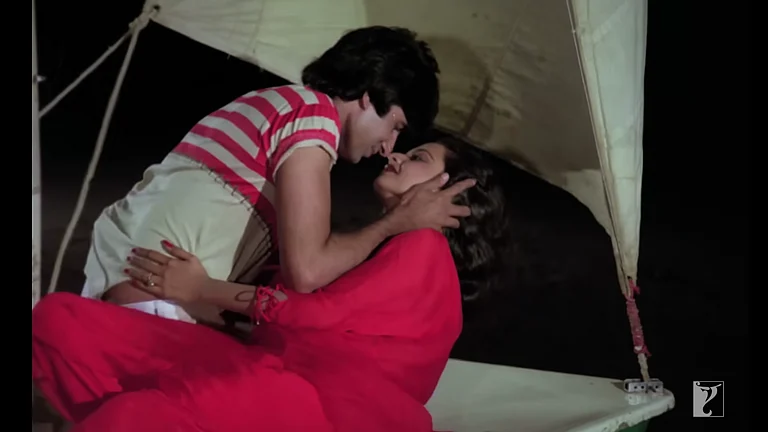
Vintage cars, once ordinary fixtures of the street, have become vessels of recall. In cinema, they were silent co-stars. In homes and workshops, they remain anchors of identity.
As long as someone is willing to document them, ask questions, trace histories and listen to families, the engines will continue to speak.
Perhaps more quietly now. But with purpose.
Published At: